
When Not to Cross a Coastal Bar
Written by John Wren|
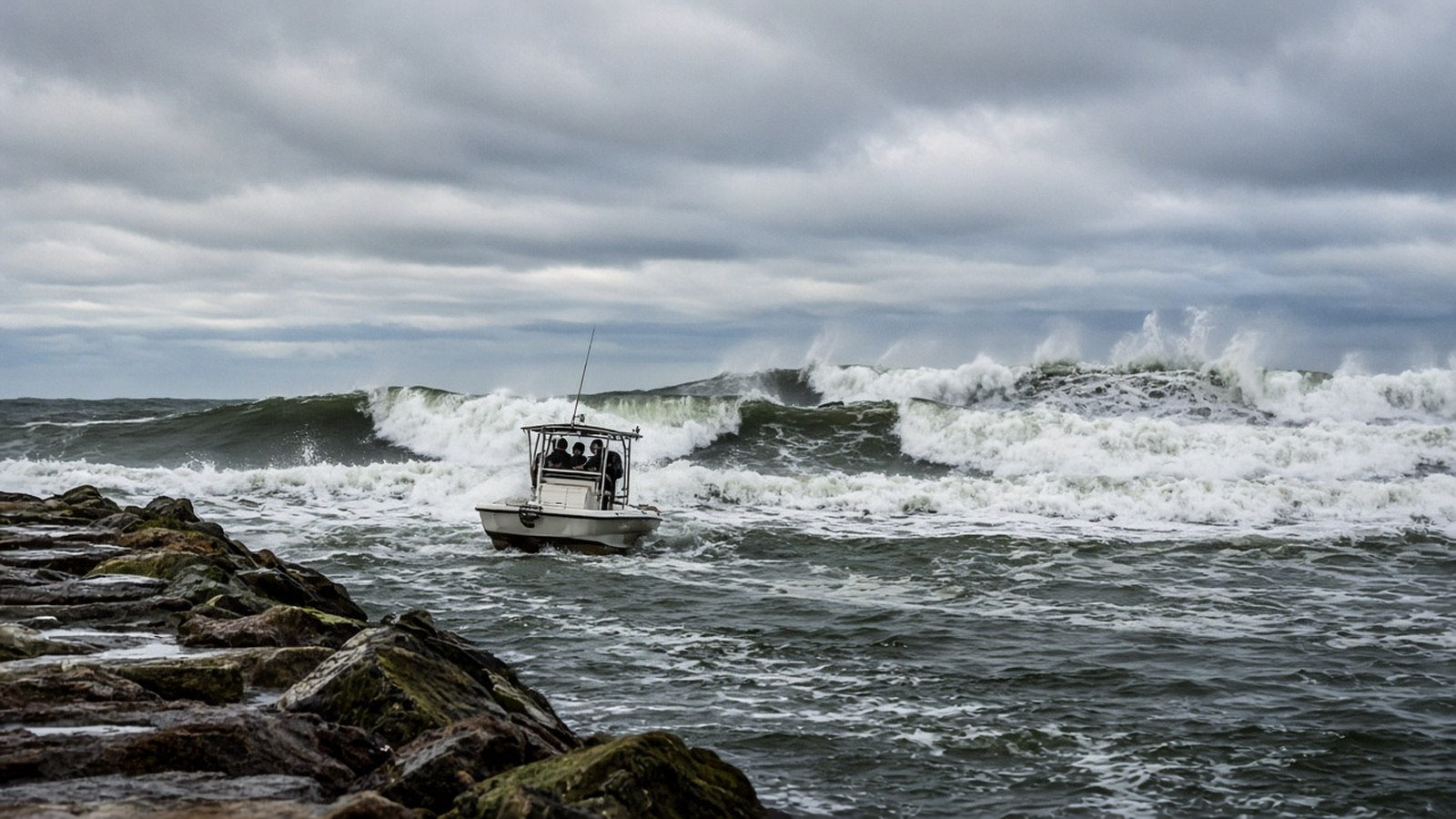
Do not cross when outgoing tidal current opposes onshore wind or swell, when you cannot identify a consistent lull pattern in the waves, or when waves break across the full channel width. Wear PFDs, carry a working VHF radio, and be willing to turn back.
Key takeaways
- Outgoing current against onshore wind or swell is the most dangerous combination.
- Watch several wave sets from a safe distance before committing.
- Wear PFDs before the approach, not after trouble starts.
- Turning back is a correct decision, not a failure.
A coastal bar — the shifting sandbar where a river or inlet current meets ocean swell — turns dangerous fast when outgoing tidal current runs against incoming ocean swell, stacking waves into steep, breaking conditions that can capsize a boat in seconds. The short answer: do not cross when wind opposes an outgoing current, when swell height approaches or exceeds your boat's safe capability, or when you cannot see a clear, consistent pattern in the breaking waves from a safe vantage point before committing.
Short version. Check the tide and current tables before you leave the dock, not after you are already approaching the bar. Watch the bar from a safe distance for at least several wave sets before committing, looking for a consistent lull pattern. If in doubt, do not cross — wait for slack tide or a better window, or simply turn back. Pair this with wind limits for your specific boat and core boat safety practices. Check live prices.
Bar crossings are among the most dangerous routine situations in recreational boating, and the danger is not always obvious from a distance — a bar that looks manageable from a mile out can be genuinely hazardous up close once you are already committed to the approach.
What makes a bar dangerous in the first place
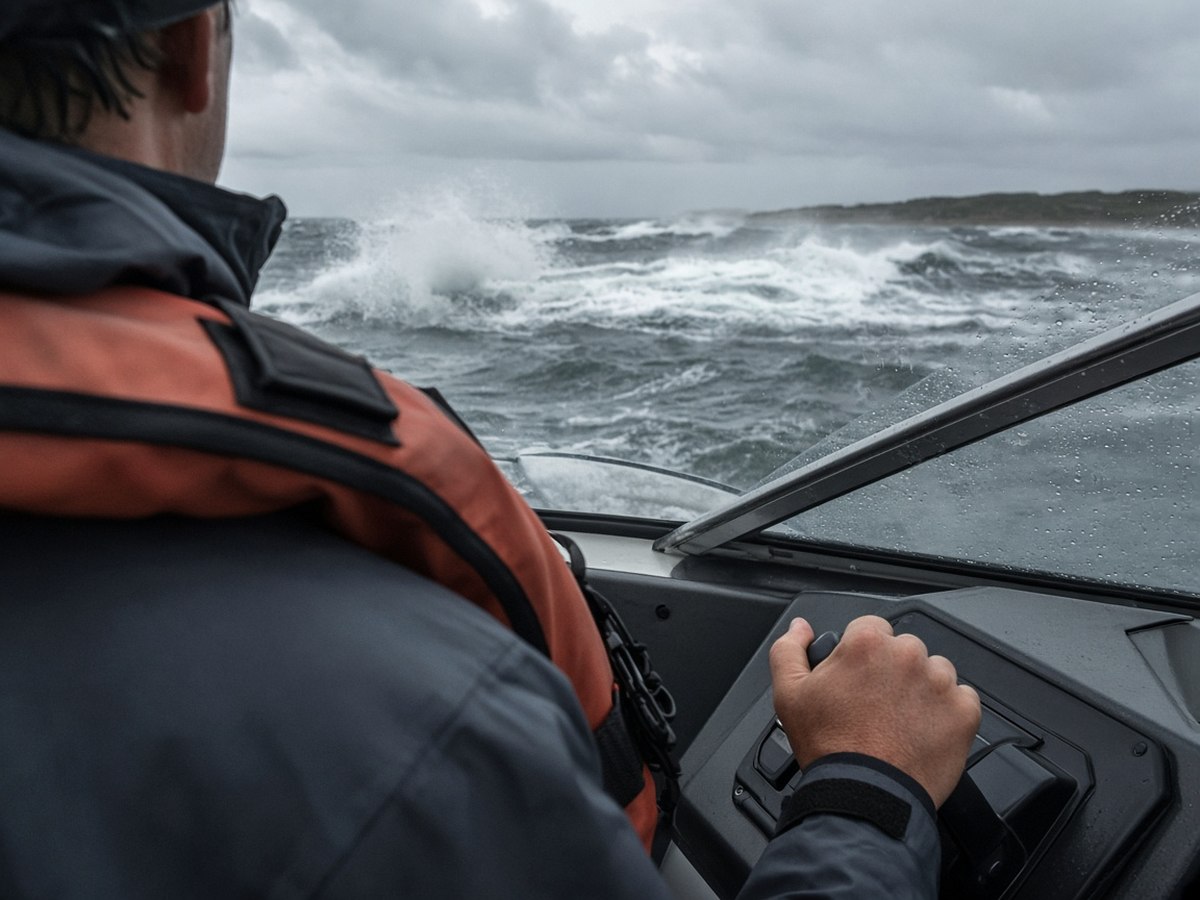
A coastal bar forms where river or inlet current meets open ocean, depositing sediment that creates shallower water than the surrounding channel. That shallower water causes ocean swell to steepen and break, similar to how waves break on a beach — except a bar crossing puts your boat directly in that breaking zone rather than watching it from shore. The danger multiplies dramatically when an outgoing current runs against incoming swell, because opposing current and wave energy stack waves higher and steeper than either force alone would produce.
Wind adds another layer. A stiff onshore wind against an outgoing tide can turn a marginal bar into a genuinely dangerous one within an hour, even without any change in the underlying swell forecast. Local knowledge matters enormously here — a bar that is safe at a given tide and swell combination in one location can be dangerous at the same numbers in a different inlet with a different bottom shape and current pattern.
Reading tide and current before you leave the dock
Check tide tables and current predictions specifically for your bar, not just general sunrise-to-sunset conditions, before you leave the dock. Outgoing tide combined with any meaningful onshore swell or wind is the classic dangerous combination — the ebbing current runs directly against incoming ocean energy and produces the steepest, most unpredictable breaking waves. Slack tide, when current is minimal in either direction, is generally the safest window to cross if swell conditions are otherwise reasonable.
Many coastal areas with well-known dangerous bars publish specific bar-crossing advisories or restrictions through the Coast Guard or local port authority, sometimes including recommended crossing windows tied to specific tide stages. Check for these resources for any bar you plan to cross regularly, and treat a posted bar closure or advisory as a hard stop, not a suggestion open to your own judgment on a given day.
Watching before committing: the discipline that saves lives
Never approach a bar crossing at cruising speed expecting to assess conditions as you go. Stop at a safe distance — far enough that you are not yet in the influence of breaking waves — and watch for at least several full wave sets, typically several minutes, looking for a consistent pattern of lulls between larger wave groups. Waves at a bar often arrive in sets, with several smaller waves followed by a few notably larger ones; timing your crossing to the lull after a large set, rather than during it, is a core technique experienced bar pilots use.
If you cannot identify a clear, repeatable pattern — if the waves look chaotic, inconsistent, or if you see any wave breaking across the entire width of the channel rather than just at the edges — that is a strong signal conditions are not safe to cross regardless of what the tide table or forecast predicted. Trust what you are actually seeing over what you expected to see.
Matching the decision to your specific boat
A boat's safe bar-crossing capability depends heavily on its length, hull design, freeboard, and loaded weight — a small, low-freeboard boat that would be swamped by a three-foot breaking wave might be perfectly manageable in a larger, higher-sided vessel. Know your own boat's realistic limits rather than comparing your decision to what a much larger boat crossed safely in the same conditions.
An overloaded boat, whether from passengers, gear, or fuel, rides lower and handles worse in breaking waves than the same boat properly loaded within its rated capacity. Weight distribution matters too — keep weight low and centered, and never cross a bar with passengers standing or seated in a way that raises the boat's center of gravity at the exact moment stability matters most.

Life jackets on before you approach, not after trouble starts
Every person aboard should be wearing a properly fitted PFD before you begin a bar crossing approach, not stowed in a locker to be grabbed if things go wrong. A capsizing or swamping event at a bar happens fast, often in seconds, and there is frequently no time to locate and don a life jacket once conditions turn. An inflatable PFD rated for rough water use, with a manual-override option for situations where automatic inflation could be a hazard, is a solid choice for active boaters who find bulkier foam vests uncomfortable to wear continuously.
Standard boat safety practice calls for PFDs during any hazardous maneuver, and a bar crossing is exactly that kind of maneuver regardless of how calm the rest of your trip has been. Make wearing a PFD during bar approaches a non-negotiable rule for your boat, not a judgment call made trip by trip.
Communication and a real plan before you cross
A handheld VHF radio, ideally a floating model you can retrieve if it goes overboard, gives you a direct line to the Coast Guard and other vessels in the area if conditions deteriorate during a crossing. Monitor channel 16 as you approach a known dangerous bar, and do not hesitate to call for a conditions report from other boats or the local Coast Guard station if one is available for that specific inlet.

Tell someone on shore your specific plan — which bar, roughly when you expect to cross, and when you expect to return — before you leave. This is basic float-plan discipline that matters on any boating trip, but it matters most on a trip that includes a known hazardous bar crossing, since a delay or problem at the bar is exactly the kind of situation where someone on shore knowing to raise an alarm can matter.
When the right decision is simply to turn back
Turning back after committing to an approach is one of the hardest decisions in boating, because it feels like a failure or a waste of the trip. It is neither. Experienced bar pilots and Coast Guard crews consistently identify "get-there-itis" — the pressure to complete a planned crossing despite worsening conditions — as a major contributing factor in bar-related accidents and fatalities.
If conditions look worse than expected, if you cannot identify a safe lull pattern, or if your gut instinct says something is wrong even without a specific reason you can articulate, turn back and wait for a better window or a different day entirely. No fishing trip, sightseeing run, or schedule is worth the risk a genuinely dangerous bar crossing presents.
Local knowledge beats a generic rule every time
Every bar has its own personality shaped by the specific bottom contour, channel width, and how the surrounding coastline funnels swell and wind. A rule of thumb that works well at one inlet can be badly wrong at another with a different shape. Local marinas, bait shops, harbor patrol offices, and experienced local boaters are often the best source of real-time, bar-specific conditions that no generic forecast captures — a phone call before you launch is worth far more than a general swell forecast pulled from an app.
Many well-known dangerous bars have historical accident data and published local guidance from harbor authorities or the Coast Guard specifically because of a track record of incidents. Look up whether your specific bar has this kind of documented history and any associated advisories before you assume your own read of the conditions is sufficient, especially the first several times you cross a bar you are not intimately familiar with.
Seasonal and regional differences worth knowing
Winter storm swell along many coastlines produces larger, more consistent wave energy at bars that can remain hazardous for days after a storm system has passed offshore, even under clear skies and light local wind. Do not assume calm current weather at your location means calm conditions at the bar — check swell forecasts specifically, not just wind and precipitation forecasts, since ocean swell can travel enormous distances from a storm system that never affects your local weather at all.
Sandbar shape and depth at many bars shift meaningfully after big storm events or seasonal current changes, meaning a channel that was in one position last season may have migrated or shoaled by the time you return. Treat your memory of a bar's layout from a previous season as a starting point for caution, not a reliable, current map, and be willing to reassess conditions freshly every single time regardless of how many times you have crossed successfully before, since a bar that behaved predictably all last season can be entirely different after one significant storm event.
| Condition | Risk level | What to do |
|---|---|---|
| Slack tide, calm swell | Lowest risk window | Still watch for a wave-set pattern before crossing |
| Outgoing tide, onshore wind or swell | High risk — classic dangerous combination | Wait for slack tide or a different day |
| Waves breaking across the full channel width | Very high risk regardless of tide stage | Do not cross — turn back |
| No clear lull pattern visible | Unpredictable, high risk | Watch longer or abandon the crossing |
Our take: check tide and current before you leave, watch the bar for a real pattern before committing, wear PFDs and carry a working VHF radio, and be genuinely willing to turn back. That discipline is what separates routine bar crossings from the ones that make the local news. Check live prices.
Frequently asked questions
When is it most dangerous to cross a coastal bar?
When an outgoing tidal current runs against an onshore wind or incoming swell. That opposing-force combination stacks waves higher and steeper than either factor alone.
How do I know if a bar is safe to cross?
Stop at a safe distance and watch for several full wave sets, looking for a consistent lull pattern. If you cannot identify a clear pattern or see waves breaking across the full channel, do not cross.
Should I wear a life jacket for a bar crossing?
Yes, always, put on before you begin the approach. A capsizing or swamping event happens too fast to grab and don a PFD once trouble starts.
What is the safest tide stage to cross a bar?
Generally slack tide, when current is minimal in either direction, assuming swell and wind conditions are otherwise reasonable. Check tide tables before you leave the dock.
Is it okay to turn back after starting a bar approach?
Yes, and it is often the correct decision. 'Get-there-itis' — pushing through worsening conditions rather than turning back — is a major factor in bar-related accidents.
Do I need a VHF radio for a bar crossing?
A handheld VHF radio, ideally a floating model, gives you a direct line to the Coast Guard and other vessels if conditions deteriorate. Monitor channel 16 during known hazardous crossings.