
How to Wash Your ATV After an Off-Roading Trip Without Damaging It
Written by John Wren|
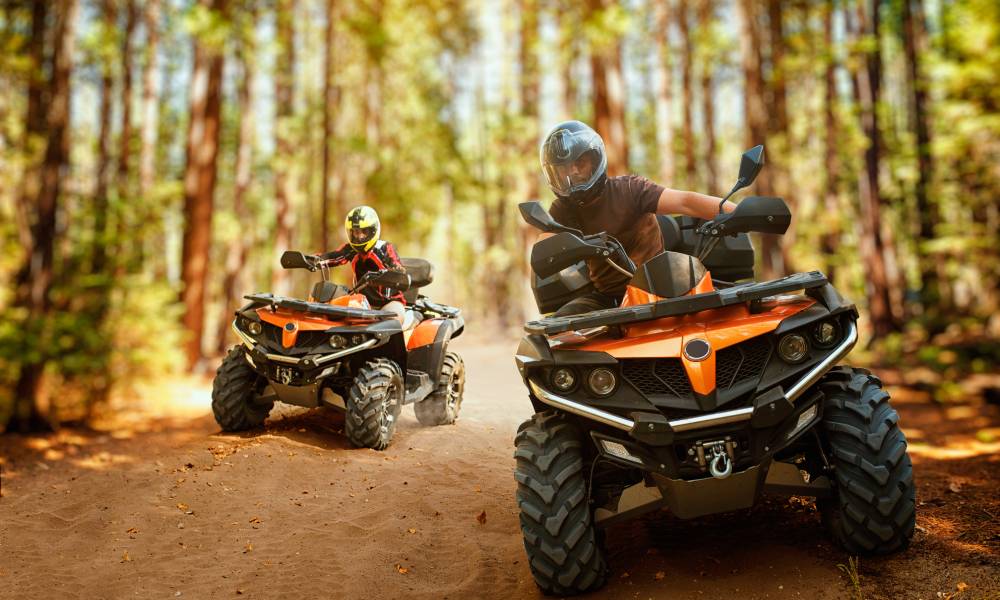
Rinse from the top down and let caked mud soak before scrubbing. Use low pressure near wheel bearings, suspension pivots, electrical connectors, and the air intake. Dry and re-lubricate the chain or driveline after every wash.
Key takeaways
- Soak caked mud before scrubbing — don't blast it dry.
- Keep high pressure away from bearings, pivots, and electrical connectors.
- Check the air filter after any muddy or water-crossing ride.
- Always re-lubricate the chain and pivots after washing.
Washing an ATV correctly after off-roading is less about looking clean and more about preventing the mud, silt, and grit packed into every joint and bearing from grinding away at seals and moving parts long after the ride is over. The short answer: rinse from the top down before you scrub, use low pressure near bearings, seals, and electrical connections, and dry and re-lubricate anything that got a real soaking before you park it for the week.
Short version. Let caked mud soak and soften with a low-pressure rinse rather than blasting it dry with high pressure, which just drives grit deeper into seals. Avoid direct high-pressure spray on wheel bearings, the air intake, and any electrical connector. Dry the chain or belt drive and re-lubricate as needed, and check the air filter every time mud was part of the ride.
Why a proper wash matters more than it looks like it should
Mud and silt are abrasive once they dry, and packed mud left in wheel bearings, suspension pivots, and the chain or belt drive works like grinding paste every time those parts move. A quick rinse that leaves grit packed into a bearing seal does more long-term damage than skipping the wash entirely and cleaning it properly the next day. The goal of washing an ATV is not cosmetic — it is removing abrasive material from the places it actually causes wear.
Wash from the top down, rinse before you scrub
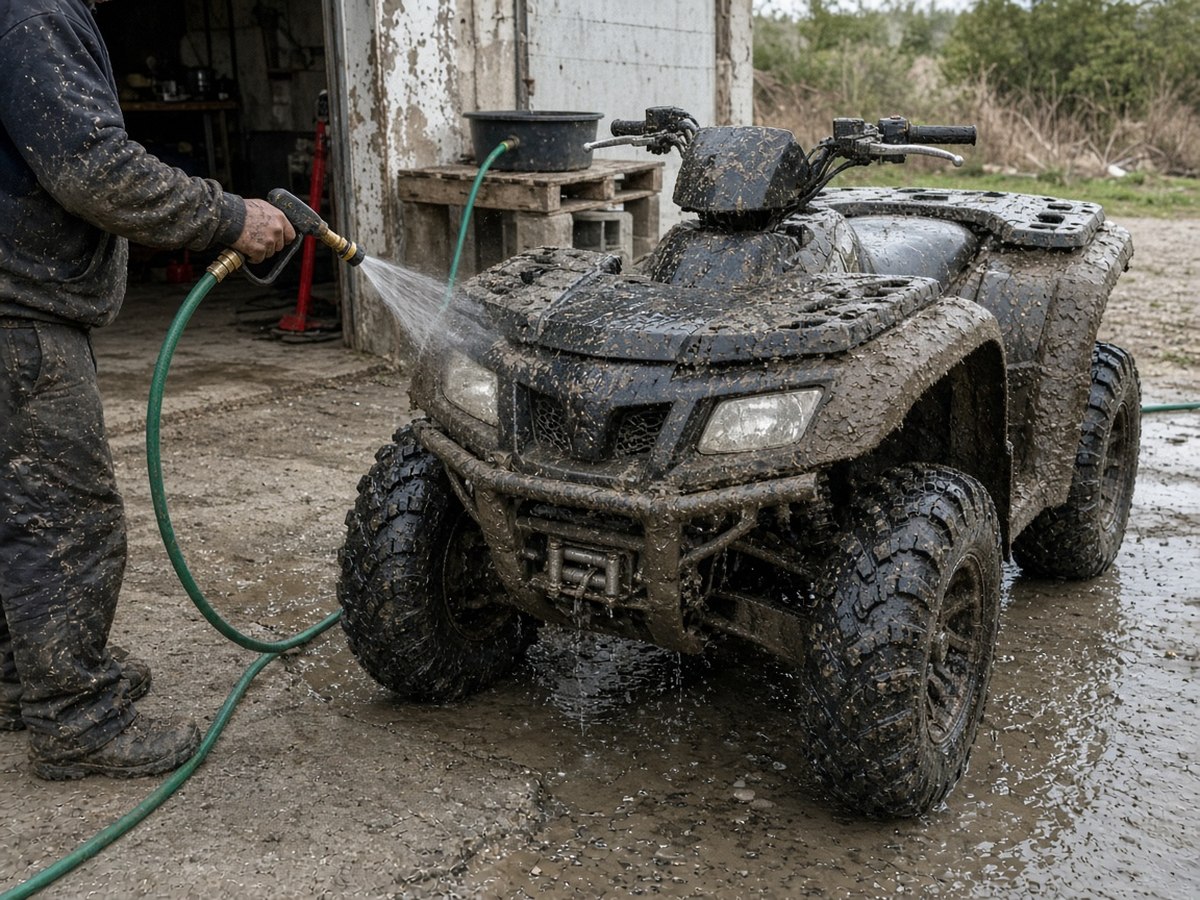
Start with a low-pressure rinse from the top of the machine down, letting water soften caked mud before you attempt to scrub or blast it loose. Attacking dry, caked mud directly with a high-pressure washer or a stiff brush can drive grit deeper into seams and seals rather than lifting it away cleanly. A soak time of several minutes on heavily caked areas, followed by a gentle rinse, removes far more material with far less risk than an aggressive first pass.
Areas that need low pressure, not a blast
Wheel bearings, suspension pivot points, and any exposed grease fitting should get low-pressure water only, since high-pressure spray can force water past seals designed to keep grease in and water out — the opposite of what a wash is supposed to accomplish. Electrical connectors, the air intake, and the airbox deserve the same caution; water forced into an electrical connector can cause corrosion and intermittent failures that are frustrating to diagnose weeks later.
Cover or avoid direct spray on the exhaust outlet while the engine is cold, since water can travel up into the muffler and cause internal rust over time with repeated exposure. A gentle rinse from a reasonable distance handles the exterior of these components without forcing water into places it should not go.
Drive chain, belt, and driveline care after a muddy ride
A chain-drive ATV needs the chain rinsed of grit, dried, and re-lubricated with a chain-specific lubricant after any genuinely muddy ride — riding with a dry, gritty chain accelerates wear on both the chain and the sprockets it runs on. Belt-drive machines need the belt housing checked for mud packed around the belt and pulleys, since a belt running against packed debris wears unevenly and can slip under load.
CV boots and driveline joints deserve a visual check after a muddy ride for any tears or damage that could let contaminants into the joint itself — a small tear that goes unnoticed can turn into a failed CV joint within a season of continued muddy riding.
Check the air filter every time mud was part of the ride
Mud and water splashing near the intake can compromise even a well-sealed air filter housing, and a contaminated air filter is one of the fastest ways to damage an engine through ingested grit. Pull and inspect the air filter after any ride where water crossings or heavy mud were involved, and clean or replace it per the manufacturer's guidance rather than assuming a quick glance is sufficient.
Drying and post-wash lubrication
After rinsing, dry the machine with a chamois or let it air dry in a way that does not leave standing water in low points where it can promote corrosion. Re-lubricate any grease fittings, the chain if applicable, and any pivot points that were exposed to water during the wash — a wash without a follow-up lubrication step can leave moving parts more vulnerable to rust and wear than before you started, since you have washed away existing grease along with the mud.
How often to wash after regular off-roading
A machine ridden regularly in mud or wet conditions benefits from a wash after nearly every ride, since caked mud left to dry and harden becomes significantly harder to remove safely later, requiring more aggressive methods that risk the seals and bearings a gentler, more frequent wash would protect. A machine ridden mostly on dry trails needs washing far less often, and over-washing a dry-trail machine mostly just wastes time without meaningful benefit.
Cold-weather washing considerations
Washing an ATV in freezing or near-freezing temperatures adds a real risk: water trapped in cables, brake lines, or hinge points can freeze and cause components to bind or crack. If you must wash in cold weather, work quickly, dry thoroughly with compressed air where possible on cables and linkages, and store the machine somewhere it can finish drying before temperatures drop further overnight. Skipping a wash entirely after a cold-weather ride and instead brushing off loose mud by hand, saving the full wash for a warmer day, is often the more practical choice.
Pre-storage washing before an extended layup
An ATV headed into extended storage — over winter, for instance — deserves a more thorough wash and dry than a quick between-rides rinse, since mud and moisture left in place for months does far more damage than the same contamination sitting for a few days before the next ride. Wash thoroughly, dry completely, lubricate every grease point and the chain, and consider a light coat of corrosion inhibitor on exposed metal surfaces before a machine sits unused for an extended period.
| Area | Wash approach | Watch-out |
|---|---|---|
| Wheel bearings, pivots | Low pressure only | High pressure forces water past seals |
| Chain or belt drive | Rinse, dry, re-lubricate | Do not skip re-lubrication after washing |
| Air intake, electrical | Gentle rinse, avoid direct blast | Water can cause corrosion or ingestion |
| Caked mud areas | Soak first, then rinse | Do not scrub dry mud aggressively |
Our take: soak and rinse from the top down, keep high pressure away from bearings and electrical connections, and always finish with a dry-and-lubricate pass on the chain or driveline. That order is what keeps a muddy ATV from turning into an expensive bearing replacement two seasons early.
Cleaning products that actually help
A pH-neutral vehicle wash soap cuts through mud and organic grime without stripping wax or attacking plastic trim the way harsher degreasers can. Reserve stronger degreasers for genuinely oily or greasy areas like the engine bay, and rinse them thoroughly rather than letting them sit longer than the product label recommends. A soft-bristle brush handles most mud removal without scratching plastic body panels, while a stiffer brush is appropriate only for wheels and undercarriage areas built to take more abuse.
Use the wash as a routine inspection opportunity
A wash is also the best time to spot developing problems — a loose bolt revealed once mud is cleared away, a small tear in a CV boot, a bearing that feels rough when you spin the wheel by hand. Build the habit of a quick visual and hands-on check immediately after washing, while the machine is clean enough to actually see small issues, rather than waiting for a scheduled maintenance interval to catch problems that started weeks earlier.
CVT and belt-drive machines need extra care
Machines with a continuously variable transmission (CVT) have a belt housing that must stay dry and free of mud intrusion, since water or grit inside the CVT housing causes belt slippage and accelerated wear on the sheaves. Check the CVT drain hole after any water crossing or deep mud ride to confirm it is clear and draining properly, and never direct high-pressure water at the CVT housing intake or exhaust vents.
A wash routine that actually protects the investment
Treat a proper post-ride wash as part of the cost of owning and riding an ATV in mud and wet conditions, not an optional chore. The fifteen to twenty minutes a careful wash takes is trivial compared to the cost of a bearing, CV joint, or CVT belt replacement caused by neglected mud and grit. Build the habit into your ride routine the same way you would check tire pressure or fuel before heading out, and the machine will reward you with a much longer service life between major repairs.
A simple wash kit worth keeping on hand
A dedicated wash kit for the ATV — a bucket, pH-neutral soap, a soft brush, a stiffer wheel brush, a chamois, and a small can of chain lubricant — kept in the garage or shed removes the friction of "I'll do it later" that leads to caked mud sitting for days. Keeping the kit stocked and accessible near where you park the machine after a ride makes the fifteen-minute wash routine far more likely to actually happen every time, rather than only on the occasions you remember or have extra time.
Seasonal differences in wash frequency and technique
Spring and fall riding often means the wettest, muddiest conditions of the year, which calls for the most disciplined wash routine of any season. Summer dust, by contrast, is less abrasive when dry but can pack into the same problem areas once a water crossing or rain shower turns it to mud mid-ride. Adjust your expectations and wash frequency to the actual conditions you rode in that day rather than a fixed weekly schedule, since a dry, dusty ride needs far less attention than a genuinely muddy one.
Involving kids in the wash routine safely
If younger riders in the family help with the wash, keep them away from high-pressure equipment and any chemical cleaners, and assign tasks like the gentle rinse or drying with a chamois rather than anything involving a pressure washer or degreaser. Turning the wash into a shared post-ride routine, rather than a chore that falls entirely on one person, also builds good habits early — a rider who learns to wash and inspect their own machine from a young age carries that discipline into adulthood. That habit pays off for decades, long after the specific machine has been sold or traded in. Consistency, not intensity, is what actually protects an ATV over its working life.
A pH-balanced wash soap is the bottle that belongs in that kit — suds that lift mud without stripping whatever protection is already on the plastics.
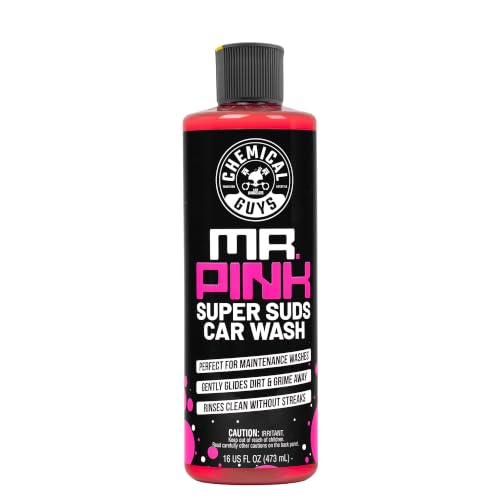
Chemical Guys Mr. Pink Super Suds, 16 oz
pH-balanced foam for a bucket wash. Safe on paint, plastic, and trim. Confirm the live bottle size before you add it to the cart.
Frequently asked questions
Can I use a pressure washer on my ATV?
Yes for general exterior cleaning, but keep high pressure away from wheel bearings, suspension pivots, electrical connectors, and the air intake, where it can force water past seals.
Should I wash my ATV after every muddy ride?
Yes, or as close to it as practical. Caked mud left to dry becomes harder to remove and more abrasive to seals and bearings the longer it sits.
Do I need to lubricate my ATV after washing it?
Yes. Washing removes grease along with mud, so re-lubricate the chain, grease fittings, and pivot points after every wash to prevent accelerated wear.
Why should I check the air filter after a muddy ride?
Mud and water splashing near the intake can compromise the filter housing, and a contaminated filter is one of the fastest ways to introduce damaging grit into the engine.
Is it bad to spray water directly on the exhaust?
Direct spray into a cold exhaust outlet can let water travel into the muffler and cause internal rust over time. Rinse the exterior gently instead.
What is the biggest mistake people make washing an ATV?
Blasting dry, caked mud directly with high pressure instead of soaking it first. This drives grit deeper into seals rather than lifting it away.