
Soto WindMaster vs MSR PocketRocket 2
Written by John Wren|
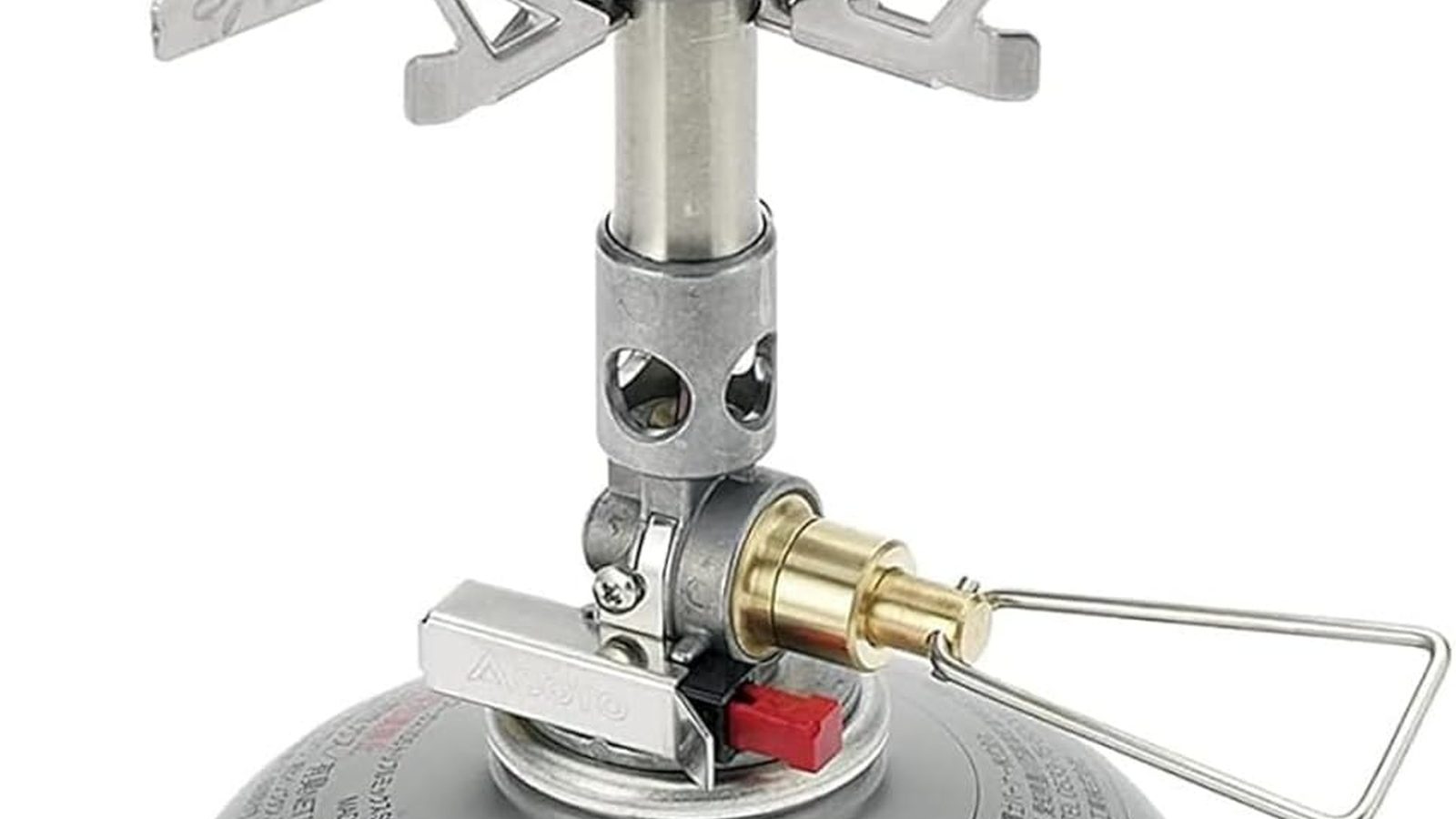
Choose the Soto WindMaster with the 4Flex when the site is windy or the pot is wide. Choose the MSR PocketRocket 2 when you want the 2.6-ounce stove that folds into its case. Neither takes camping propane.
Key takeaways
- WindMaster card includes the 4Flex. Canister sold separately.
- PocketRocket 2 is 2.6 ounces on MSR's sheet.
- Both take threaded isobutane mix, not camping propane.
- Soto's wind claim is two cups. MSR's still-air claim is a liter.
Soto WindMaster with the 4Flex, or the MSR PocketRocket 2, is a canister-stove choice for a pack. Neither one is a Jetboil cup and neither one is a two-burner propane kitchen. Buy the WindMaster when the site is windy and you want Soto's regulated burner with the wider pot support. Buy the PocketRocket 2 when you want the smaller folding stove MSR publishes at 2.6 ounces, with arms that tuck into the little case. Fuel is a threaded isobutane mix canister, sold separately on both. Neither stove is happy on straight propane from a camping cylinder.
Short version. The PocketRocket against a two-burner is a different fight. This one is two upright canister stoves. An overnight kit still needs a pot, a lighter as backup, and water you already treated. A headlamp matters more than the stove once the sun is down and you are looking for the valve. Check live prices. Confirm the pot support that is actually in the bag.
The WindMaster card is the stove with the 4Flex pot support. Soto's older kit that included both the TriFlex and the 4Flex is a different package. The stove body is the same idea. The support in the bag is the thing you will notice when a wide pot rocks. The PocketRocket 2 card is the ultralight folding stove, not the original PocketRocket and not the Deluxe. Read the name on the case before you decide the ounces match a review you remember.
| Job | Soto WindMaster with 4Flex | MSR PocketRocket 2 | Our call |
|---|---|---|---|
| A windy boil for one pot | Regulated burner, pot sits close, 4Flex for a wider pot | Folding arms, a small WindClip, still wants a wind break | WindMaster |
| The lightest stove that still simmers a little | About 2.3 ounces bare, about 3 ounces with the 4Flex | 2.6 ounces on MSR's sheet | PocketRocket 2 if the case is the whole stove |
| A skillet and a pot at once | Wrong tool | Wrong tool | A two-burner |
| Straight camping propane | Not this valve | Not this valve | A propane stove |
| Cold morning, canister getting weak | Micro regulator is the point | A plain canister stove fades as pressure drops | WindMaster, and keep the canister warm |
Soto publishes about 2.3 ounces without a pot support and about 3.0 ounces with the 4Flex. MSR publishes 2.6 ounces for the PocketRocket 2. Canisters are extra. Do not compare a bare burner weight to a stove that includes its arms.
Who should buy the WindMaster, and who should buy the PocketRocket 2?
Buy the Soto WindMaster with the 4Flex if you cook in wind, you use a pot that is wider than a mug, or you care that the flame stays useful as the canister cools. Soto builds the burner so the pot sits close to the flame, and the concave head acts like a small windscreen. The 4Flex is the four-arm support for a larger pot. A narrower TriFlex exists and is a separate piece. If your pot is a tall mug, the 4Flex still works. If your pot is a wide two-person pot, the 4Flex is why you bought this kit instead of a three-arm stove that lets the pot walk off.
Buy the PocketRocket 2 if the stove has to disappear into a corner of the pack and the meal is a boil, not a sauté. MSR's sheet puts it at 2.6 ounces. The arms fold, the stove lives in a small hard case, and a WindClip gives you something to do about a breeze that is not a full windscreen. It is the stove people already know from the pack-versus-tote comparison. It is still a canister stove. It still hates a gale on a ridge with no rock to hide behind. The difference is that the WindMaster is built around that problem and the PocketRocket 2 is built around packed size.
Buy neither one if dinner is a skillet and a pot at the same time, or if the fuel you already own is a green camping-propane cylinder. Those are different valves. Forcing a propane cylinder onto an isobutane stove, or the other way around, is how people invent leaks. The two-burner in the tote is the car-camp tool. These two are the backpacking tools.
What the WindMaster with the 4Flex is actually for
Soto's WindMaster is an upright canister stove with a micro regulator and a piezo igniter tucked into the burner post so the igniter is less likely to snap off in a pack. Soto's published output is 2,800 kcal per hour, 3,260 watts, 11,000 BTU. Soto says it burns about an hour and a half on an 8-ounce canister and that it will boil two cups in under two and a half minutes in strong wind. That boil claim is two cups, in the conditions Soto used. It is not a promise that a liter in a breeze on your ridge will match a still-air lab number from a different brand. Read it as a wind claim, not as a universal clock.
The regulator is the cold-morning feature. A plain canister stove gets lazy as the canister pressure drops. A regulated burner holds output longer. It does not make a frozen canister into a summer canister. Keep the canister in your jacket until you screw it on. Do not run 100 percent propane. Soto says the regulator wants a mix such as butane, isobutane, and propane, and that straight propane is prohibited. The plastic cap stays on the canister when you pack it, so the valve stays clean. Sand in that valve is a leak you will discover at the worst site.
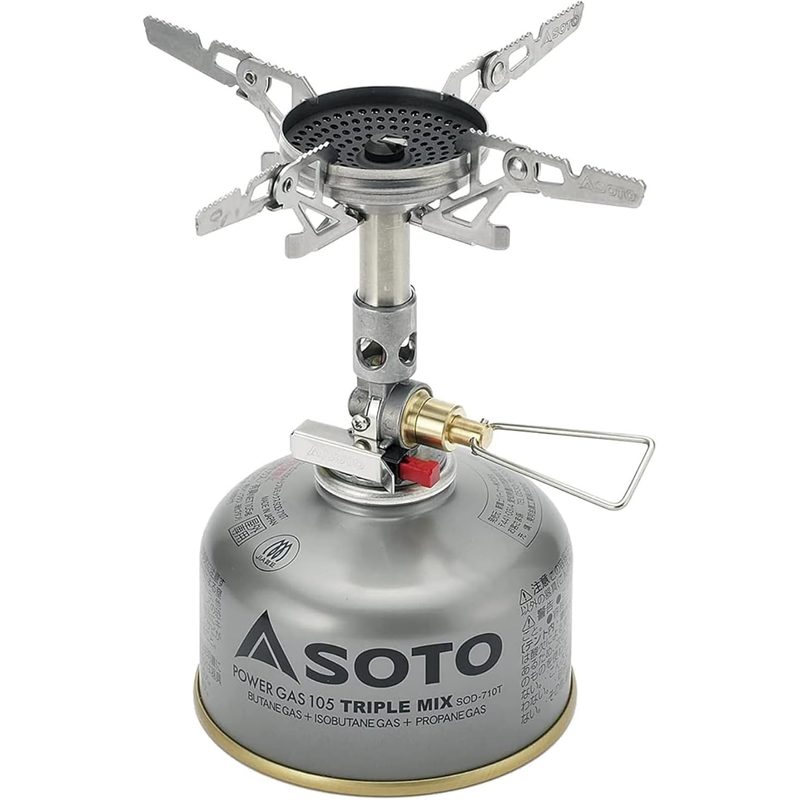
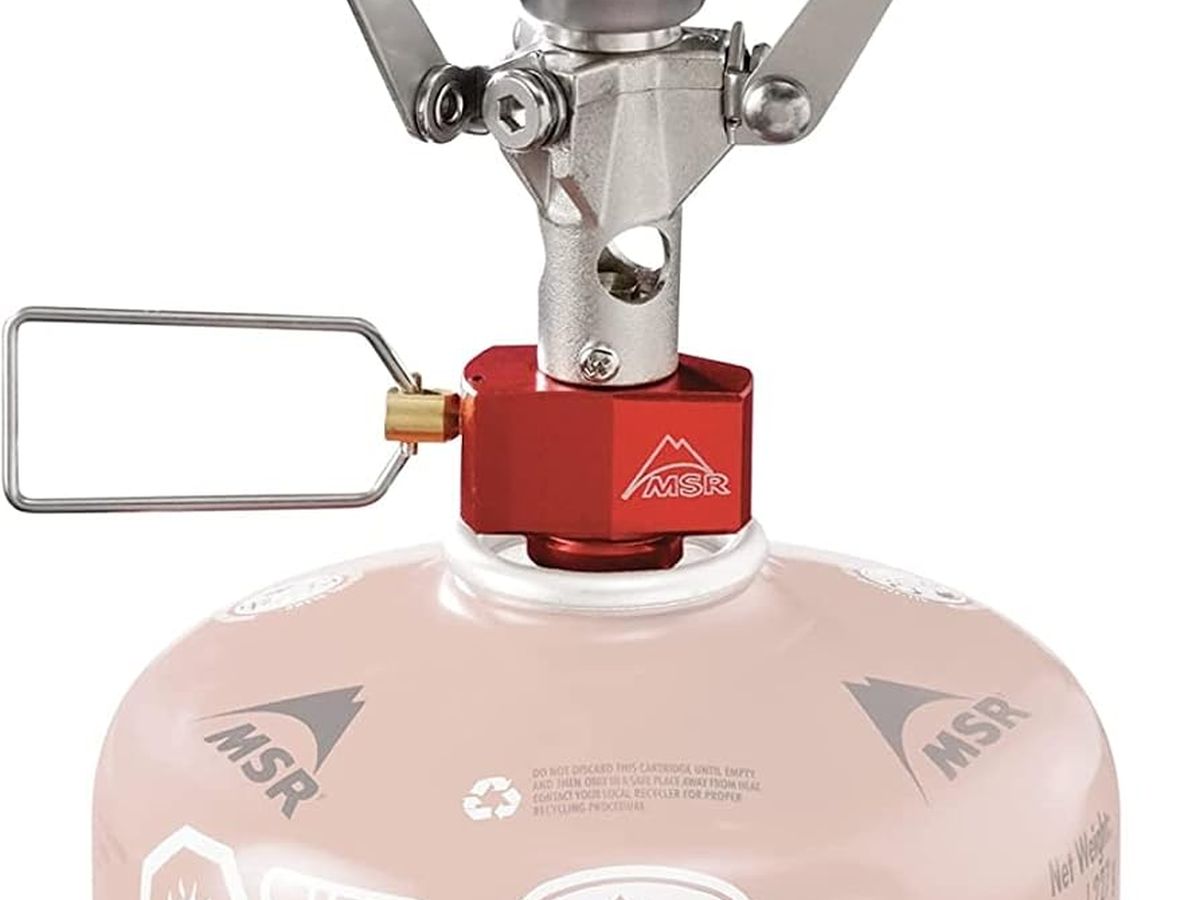
Do: set it on a stable, flat surface, not on duff that can smolder and not in a sandy bowl that packs the base. Soto tells you to keep the base clean and off the sand. Don't: walk away from a lit stove in a tent vestibule with a synthetic quilt in the breeze. A canister stove in a tent is how quilts melt. Cook outside, lid on the pot, and know where the shutoff is. Do: confirm the 4Flex is in the kit you received. A stove body alone is not this card.
What the PocketRocket 2 is actually for
PocketRocket 2 is MSR's small folding canister stove. On MSR's sheet it is 2.6 ounces. The pot supports fold in, the stove stores in a hard case about the size of a fist, and the valve will turn the flame down from a roar toward a simmer that is still a canister simmer, not a kitchen simmer. MSR's published boil for a liter in still air is about three and a half minutes. Still air, a lid, and a liter. Your windy evening with a half-open pot will be slower. That is weather, not a broken stove.
The WindClip is a clip. It is not a full windscreen wrapped around the burner. Use a rock, a pack, or your body as a break, and do not wrap a foil screen tight around a canister stove. A tight screen reflects heat back onto the canister. Canisters are not supposed to get hot. If the canister is too hot to hold, you built a bad kitchen. Move the screen, or move the stove.
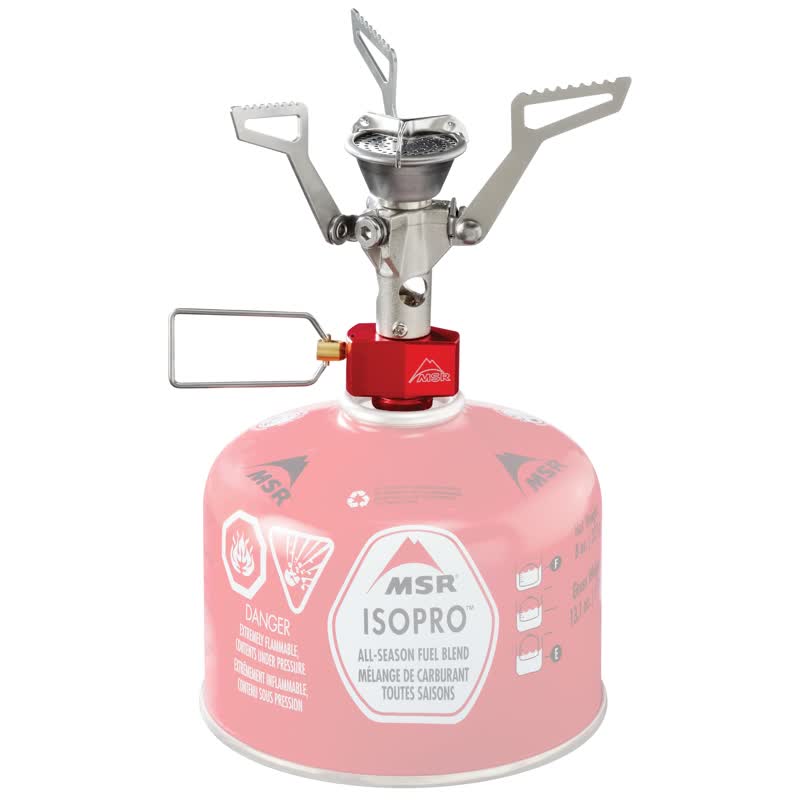
Do: carry a small lighter even though the PocketRocket 2 has a piezo. Piezos fail wet, fail cold, and fail after a season of grit. A lighter in a zip bag is the backup that keeps dinner on time. Don't: put a cast-iron skillet on three folding arms. The arms are for a backpacking pot. A heavy skillet belongs on a two-burner or a proper stove stand. Do: screw the canister on square. A cross-threaded canister hisses. If it hisses, shut it down outside, let it sit, and do not "test" it in the tent.
Fuel, wind, and the boil you will actually get
Both stoves take a threaded isobutane-mix canister. The common four-ounce and eight-ounce cans are the ones that screw on. A camping-propane cylinder from the barbecue aisle does not. Buy the canister the stove was built for, and pack the canister where a leak cannot fill your sleeping bag with gas. Upright, cap on, outside the food bag if the cap is missing. A leaking canister in a closed pack is a bad morning.
Wind is the real fuel thief. A flame that blows sideways heats the air, not the pot. The WindMaster's close pot and concave head are the design answer. The PocketRocket 2's answer is a smaller stove plus a wind break you provide. Neither answer is "turn it up and hope." A lid cuts the time more than a brand argument does. A pot that is mostly water and a little metal boils faster than a thick souvenir mug. Start the clock when the stove is sheltered, not when you are proud of cooking on a pass.
Cold fuel is the other thief. A canister that slept in the open will feel empty at breakfast and normal at noon. Sleep with it, or put it in a jacket for a few minutes before you light the stove. The WindMaster's regulator helps once there is pressure to regulate. It does not invent pressure in a frozen can. If you winter-camp for real, a liquid-feed stove is a different tool. These two are three-season canister stoves that can be pushed colder if you manage the canister.
The pot is part of the stove
A WindMaster with the 4Flex will hold a wider pot than a PocketRocket's folding arms will hold without drama. That is the practical split on a two-person trip when one pot is doing all the water. A PocketRocket 2 under a narrow pot is stable. The same stove under a wide, full pot in a gust is the video people send of dinner on the ground. Match the support to the pot. If you only boil in a mug, either stove is enough and the PocketRocket's packed size wins. If you regularly set a 1.5-liter pot on the burner, the 4Flex is the adult decision.
Stability is also the ground. A stove on a thin rock that tips is a burn and a grass fire. Clear a patch to mineral soil, or use a fire pan where the rules say so. A foam pad is not a stove board. Do not set a canister stove on a sleeping pad, a picnic table of unknown finish, or a car bumper. The flame is small. The mistake is not.
What actually fails
The piezo fails first, on both stoves, if you count on it as the only ignition. Carry a lighter. The O-ring and the canister threads fail next, usually because sand or because someone cross-threaded a can and kept cranking. Look at the threads. If they are chewed, stop. A stove that will not stop hissing is retired, not "watched."
Pot supports bend when people use them as a handle or when a pack lands on them. Bend them back only if they still lock. A support that folds under a full pot is done. The WindMaster's 4Flex is a separate piece you can lose in the kitchen sink at home. Pack it in the stuff sack every time, not "on the counter until morning." The PocketRocket's arms are attached, which is why people lose fewer of them and also why a bent arm is the whole stove.
The other failure is fuel pride. An almost-empty canister lights, boils half a mug, and dies while the meal is half hydrated. Carry a second small canister on any trip where a cold dinner matters, or weigh the canister before you leave. A kitchen scale at home tells you more than shaking the can.
What this fight is not
It is not an integrated cup system with a cozy and a heat indicator. Those boil fast because the pot and the burner are a matched pair. You can still use a WindMaster or a PocketRocket under a separate pot, which is the point of both stoves. It is not a white-gas stove, a wood stove, or a tablet stove. It is not the two-burner that lives in the tote. If the trip is a car camp and a skillet, stop here and read that comparison instead of pretending a 3-ounce burner is a kitchen.
It is not a promise about minutes. Soto's wind claim is two cups. MSR's still-air claim is about three and a half minutes for a liter. Different water, different wind, different pots. Use the claims to understand the design, then time your own pot once at home so the trail is not the experiment.
So which canister stove should you buy?
Buy the Soto WindMaster with the 4Flex if wind, a wider pot, or a cold canister is the problem you actually have. Buy the MSR PocketRocket 2 if you want the 2.6-ounce folding stove and a boil in a sheltered spot is the whole meal. Both take a threaded isobutane-mix canister. Neither takes camping propane. Carry a lighter, a lid, and a second canister when the trip is longer than the fuel you measured. Confirm the 4Flex is in the Soto kit, and confirm the case says PocketRocket 2. Then boil water you already treated, outside, with the shutoff in reach.
Frequently asked questions
Soto WindMaster or MSR PocketRocket 2?
WindMaster with the 4Flex for wind and a wider pot. PocketRocket 2 for the smaller 2.6-ounce folding stove and a sheltered boil.
Do these stoves include fuel?
No. Both take a threaded isobutane-mix canister, sold separately. A camping-propane cylinder is the wrong valve.
Which one is lighter?
Soto publishes about 2.3 ounces without a pot support and about 3 ounces with the 4Flex. MSR publishes 2.6 ounces for the PocketRocket 2. Compare the stove you will actually carry, arms included.
Will the WindMaster boil faster in wind?
That is the design. Soto's claim is two cups in under two and a half minutes in strong wind. MSR's published liter time is about three and a half minutes in still air. They are not the same test.
Can I put a skillet on either stove?
No. These are backpacking pot stoves. A skillet and a second pot belong on a two-burner.
What if the piezo will not light?
Carry a lighter. Piezos fail wet and fail full of grit. The lighter is the backup on both stoves.