
How to Pack a Camping First-Aid Kit
Written by Outdoors Magazine|
Start with a camping first-aid kit that covers ordinary cuts, blisters and other minor problems, then adapt it to your group and the time it would take to reach help. Keep a small pouch with you on outings, stock a larger reserve at camp if practical, and write down a way to call for help that does not depend on one phone, one person or one road staying available.
Key takeaways
- Start with a basic inventory and match it to your group and realistic time to help.
- Keep the small day pouch reachable when your group is away from camp.
- Share a route and check-in plan, and restock after every trip.
Start with a camping first-aid kit that covers ordinary cuts, blisters and other minor problems, then adapt it to your group and the time it would take to reach help. Keep a small pouch with you on outings, stock a larger reserve at camp if practical, and write down a way to call for help that does not depend on one phone, one person or one road staying available.
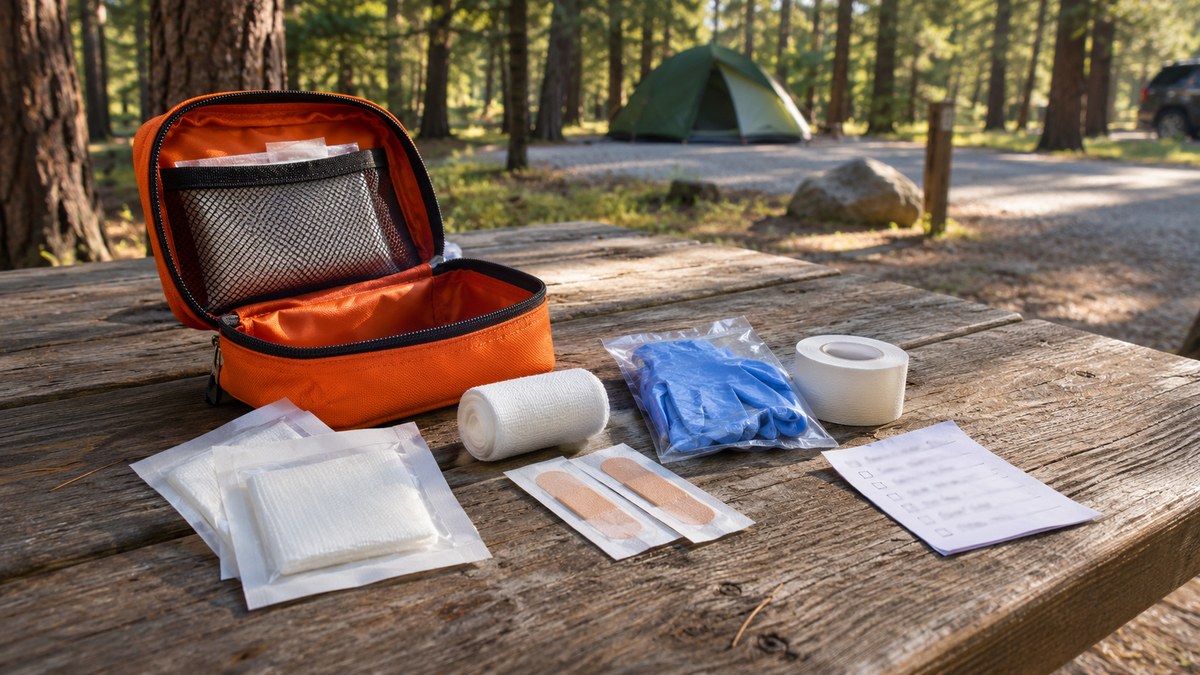
AI-generated editorial illustration of basic first-aid supplies laid out for a campsite inventory.
What belongs in a basic camping first-aid kit?
A basic camping first-aid kit starts with adhesive bandages in several sizes, sterile gauze and dressings, medical tape, nonlatex gloves, tweezers and a first-aid guide. Build from a published checklist, then add personal essentials and extra supplies for the people, activities and length of your trip.
The American Red Cross first-aid kit checklist gives a family-size reference, not a mandatory list or a complete answer for every campsite. It includes items such as an emergency blanket, a breathing barrier, nonlatex gloves, differently sized dressings and an instruction booklet. Take inventory rather than assuming the word “outdoor” on a ready-made kit makes it complete. Many packaged kits count each small item as a separate piece. Sixty pieces may still leave you with only two of the size of dressing you expect to need most.
A useful way to review the basics is to sort them into three groups: items for covering a small injury, supplies you need to find quickly if someone asks for help, and personal items that belong to a particular camper. Put the first two in clearly identified pockets. Keep sterile packets sealed and readable. If two sizes look identical from the outside, use a removable label on the organizer rather than on the individual sterile package. Make the inventory list short enough that a person who did not pack it can find the right pocket.
Do not stock personal medicine by copying a list written for strangers. Each person should plan their own medicines, storage and backup supply with the appropriate clinician or pharmacist. Don't rely on a shared kit as a substitute for an individual's prescribed supplies. Ask the group to tell you what location information they want shared in an emergency, without broadcasting private health details. The list on the kit can simply say where to find a participant's own supplies if they have chosen to tell the group.
How should distance from help change what you pack?
Plan around the time it may take to get help, not the mileage from town. Account for the walk back to a road, unreliable cell service, a locked gate or weather that slows travel. A remote campsite calls for an accessible kit and communication plan, not just a larger bag.
Compare two hypothetical weekends. The first is at a developed campground where the car sits beside the tent and a confirmed road leads to town. You still need a kit, but a small shared pouch plus a separate car reserve makes sense if everyone knows where to find both. The second is a hike-in site reached by a rough trail. If the person carrying the only kit goes off to collect water, the rest of the camp loses access to it. In that second setting, give each group that separates from camp its own basic supplies and a clear plan for reconnecting.
The National Park Service Ten Essentials advises visitors to adapt a premade kit to their trip and medical needs. Think beyond the medical compartment. Can you find the trailhead after dark? Is there a safe route out if a bridge or low crossing is unusable? Which person knows where you parked? A map, independent light, weather protection and a way to signal for help belong to the larger trip plan. They do not have to be stuffed inside the first-aid pouch to matter.
Pick a realistic alternate destination or shorter itinerary if you discover that every exit depends on a crossing in bad weather, cell service that has not been verified, or a driver the group cannot replace. Buying more supplies does not solve those gaps. A smaller outing can be the better answer for a group still learning its equipment, particularly one with several children or people unfamiliar with the area.
What should ride in a daypack instead of staying at camp?
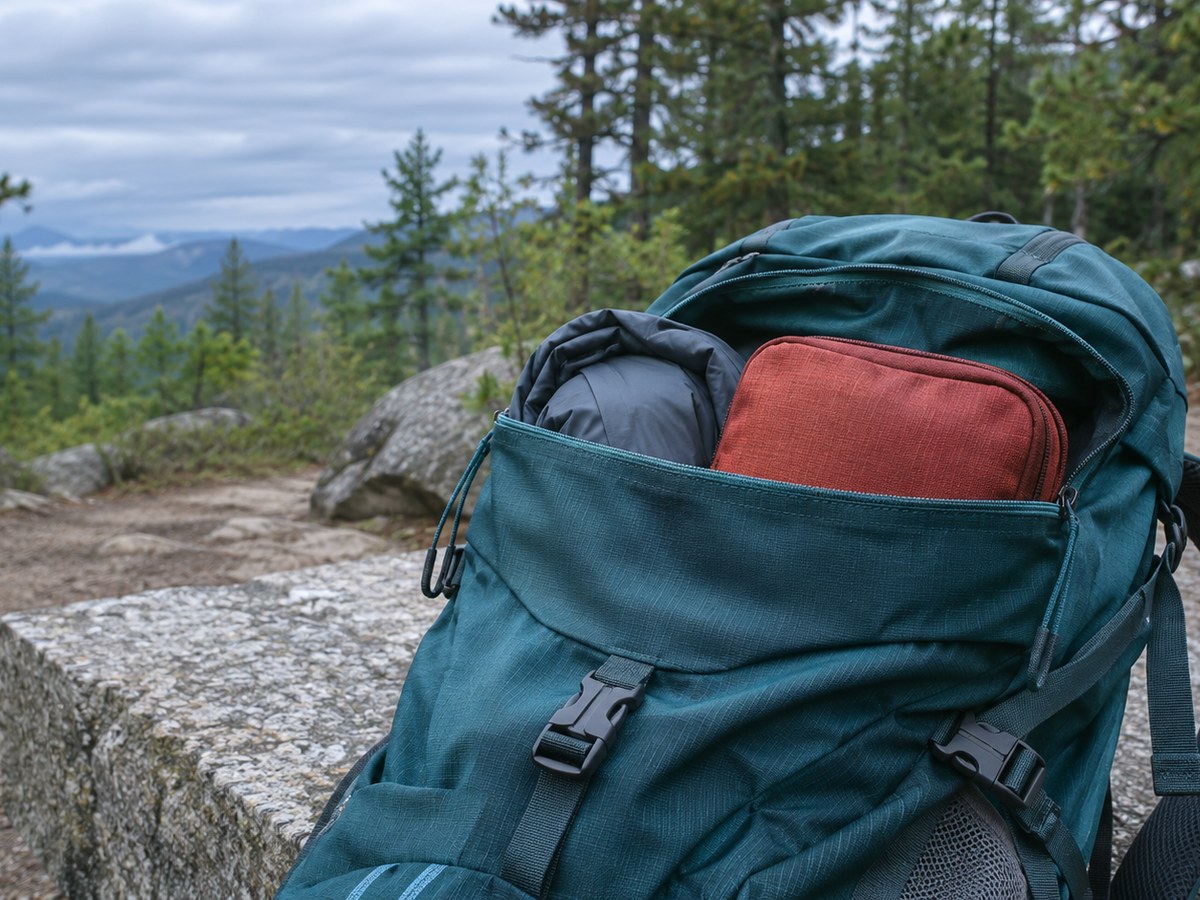
Carry the supplies your day group could reasonably need away from the tent or vehicle. Keep the small pouch somewhere another person can find without unloading the pack. Leave reserve supplies at camp only if everyone knows where they are and can reach them without the primary packer.
At a campsite, it is easy to confuse what you own with what you actually have nearby. One group lies down for a nap. Another walks to a trail overlook. The keys go with someone looking for the campground host. A well-stocked box in a locked vehicle can be useless to the people who need it. Decide where the camp reserve lives, and agree on who carries the day pouch before splitting up. If there are multiple groups, check that every group can solve the small problems it might encounter without waiting for the others to return.
An external or top pocket can work, but a pouch exposed to spray or rain needs practical moisture protection. Don't assume bright fabric or a zipper means waterproof. Use a clean, dry protective bag when needed, and check it again if the pack was soaked. Keep the kit separate from leak-prone toiletries or a water reservoir. Avoid burying it below a stove, damp socks or loose batteries that could crush, dirty or obscure packaging.
Try a quick retrieval test before traveling. Ask another person to find the pouch, point out the gloves and one dressing without opening the sealed wrapper, and put the pouch back in its standard spot. This isn't a treatment drill or a substitute for training. It checks a surprisingly common issue: pockets that make perfect sense to the person who packed them and no sense to anyone else.
How do you adapt a kit for more people or more days?
Add replenishment for supplies the group could use more than once, rather than doubling every tool. Review trip length, group size, expected conditions and whether resupply is realistic. Assign a kit owner who can track used items and move reserve supplies into the day pouch before the next outing.
For a large family group staying near the vehicle, extra sizes of ordinary bandages and an organized camp reserve may matter more than another pair of tweezers. For a group walking between camps, make sure a single damaged bag cannot wipe out all your essentials. Moving reserve dressings and gloves into a second dry pack is one way to spread the load. Don't divide them so finely that a person has to open multiple packs to locate the basic supplies, and don't add unfamiliar equipment just because an online list calls it essential.
Walk through the activities you actually expect. A short campground stroll, a bicycle loop and a full day hauling a canoe between lakes present different equipment and communication problems. If your group has recently switched footwear, expects damp trails or will be out for longer than usual, check the supply of foot-care items your group already knows how to use. Camp cooking also makes the first-aid pouch more likely to be needed after dark. Put a light where more than one person can find it without emptying a tent.
Plan around who is coming, not just how many. A family with a child and an adult with a known allergy may need to allocate time before leaving to discuss the plan privately. A friend who joins after the gear check needs to know the location of shared gear and the group's emergency plan, even if they bring a personal kit. The NPS camping preparation guide is a useful reference for connecting first aid to the rest of the trip plan rather than treating the pouch as your entire safety setup.
What should go on the kit's emergency card?
Write the campsite or trailhead name, the best usable location information, your planned return time and how to contact help. Give a copy of the route and check-in plan to someone who is not on the trip. Use the card alongside a map and a communication device, not instead of them.
The most useful card is the one another member of your party can read after dark. Record the official name of the campground, loop and site number where available, the road or trailhead used to enter, and a backup exit you actually verified. At a dispersed site, write the location in the same coordinate format your map uses and note any road junction that is easy to confuse. Do not assume that a phone pin will load without data. A saved offline map or paper copy lets people compare what they wrote with the terrain.
The NPS trip planning guide treats the trip plan as something to share before departure. Give your contact an agreed time to expect you back, a realistic buffer for normal delays and a clear instruction about whom to call if you're overdue. Before departing, check the current park or land manager page for the appropriate reporting contacts. When service is available in the United States, call 911 for a serious emergency. Do not send someone to search for a signal until the group has considered the risks of separating and the alternatives it planned for.
If the itinerary depends on a satellite-enabled device, check the maker's instructions, operating limitations and any subscription or setup requirement before the trip. Don't promise a fast rescue based on the device alone. The weather, terrain and location still affect response. Ensure someone else can operate the device and understands which part of the plan it covers. Keep charging and battery protection with your communications equipment, not at a campsite you may have left hours earlier.
When should you inspect and restock a camping kit?
Check the kit before each trip and restock it as soon as you return. Replace expired items and damaged or opened sterile packages. After a wet trip, inspect the pouch for moisture and check each packet instead of assuming the outer bag kept everything dry.
At home, lay out the contents on a clean, dry surface. Compare what is there to a checklist and to your actual trip plan. Turn over every packet to check for a torn seal, damage or an expired date. Replace items before repacking rather than relying on a mental note once the trip gets closer. Open and close the organizer with the supplies already in place; a zipper under strain or a pouch that springs open wastes both space and time when you need it.
Record what you used, what ran low and what nobody could find. A barely used kit may still have an accessibility problem if everyone had to ask you where it was. Conversely, unused specialized equipment is not evidence that the trip would have been unsafe without it; review it against training, terrain and the next trip. Make the inventory date visible, and avoid leaving medicines or temperature-sensitive supplies in a vehicle between trips. Follow their labels and individual storage instructions.
A compact kit works best when it is part of a familiar routine: check the contents at home, confirm where the pouch goes when you reach camp, identify which group is carrying it away from camp, and restock it on return. None of those steps requires a claim about which commercial kit is best. Each one makes it more likely that your group will have the right supplies at hand and know when the problem has outgrown them.
If you plan to spend time far from dependable help, consider training suited to the places you visit. This guide is a packing and planning reference, not medical guidance or a substitute for a qualified first-aid course. For a serious emergency, use the appropriate emergency contact promptly; do not delay seeking support while looking through the pouch. For a separate overview, see first-aid tips for outdoor trips.
Frequently asked questions
What belongs in a basic camping first-aid kit?
A basic camping first-aid kit starts with adhesive bandages in several sizes, sterile gauze and dressings, medical tape, nonlatex gloves, tweezers and a first-aid guide. Build from a published checklist, then add personal essentials and extra supplies for the people, activities and length of your trip.
How should distance from help change what you pack?
Plan around the time it may take to get help, not the mileage from town. Account for the walk back to a road, unreliable cell service, a locked gate or weather that slows travel. A remote campsite calls for an accessible kit and communication plan, not just a larger bag.
What should ride in a daypack instead of staying at camp?
Carry the supplies your day group could reasonably need away from the tent or vehicle. Keep the small pouch somewhere another person can find without unloading the pack. Leave reserve supplies at camp only if everyone knows where they are and can reach them without the primary packer.
How do you adapt a kit for more people or more days?
Add replenishment for supplies the group could use more than once, rather than doubling every tool. Review trip length, group size, expected conditions and whether resupply is realistic. Assign a kit owner who can track used items and move reserve supplies into the day pouch before the next outing.
What should go on the kit's emergency card?
Write the campsite or trailhead name, the best usable location information, your planned return time and how to contact help. Give a copy of the route and check-in plan to someone who is not on the trip. Use the card alongside a map and a communication device, not instead of them.
When should you inspect and restock a camping kit?
Check the kit before each trip and restock it as soon as you return. Replace expired items and damaged or opened sterile packages. After a wet trip, inspect the pouch for moisture and check each packet instead of assuming the outer bag kept everything dry.