
Okuma OKC30 vs KastKing KK-Centron4000
Written by John Wren|
Choose Okuma model OKC30, ASIN B00QSZB3QG, for the 232-gram spinning reel and the labeled mono capacities. The card prints no drag. Choose KastKing part KK-Centron4000, ASIN B071Y3L7N4, for the 5.2 gearbox cell and the 17.5-pound drag cell. The color cell says Centron. The ounce lines do not agree.
Key takeaways
- OKC30 weighs 232 grams on the cell. The title says 7BB+1RB and 5.0:1. There is no drag cell.
- The Okuma line cell is monofilament: 4/300, 6/185, and 8/145.
- KK-Centron4000 prints a 17.5-pound drag and a 5.2 gear. The item-weight cell says 15.2 ounces.
- The KastKing highlight says 12.1 ounces and the summary says 13.9. The color cell says Centron.
Buy the Okuma Ceymar, model OKC30, ASIN B00QSZB3QG, when you want the black spinning reel whose title prints 7BB+1RB and a 5.0:1 gear and whose item-weight cell prints 232 grams. Buy the KastKing Centron, manufacturer part KK-Centron4000, ASIN B071Y3L7N4, when you want the card whose part number says 4000 and whose drag cell says 17.5 pounds, and when you will ignore a color cell that says Centron, three different ounce figures, and a description that also sells the 500. These are spinning reels. They are not the same size, and they are not the fillet knives on the same desk.
Short version. A Pflueger President 25 and a Shimano Sedona FI 2500 are the other 2500-class pair. A Daiwa BG2500 and a PENN Battle IV 2500 are the sealed-drag pair. An Ugly Stik GX2 and a Shakespeare Cherrywood are the rods those reels sit on. Trilene XL and Sufix Elite are the monofilament the Okuma line-type cell is willing to name. Match the model stamp before you match the word spinning.
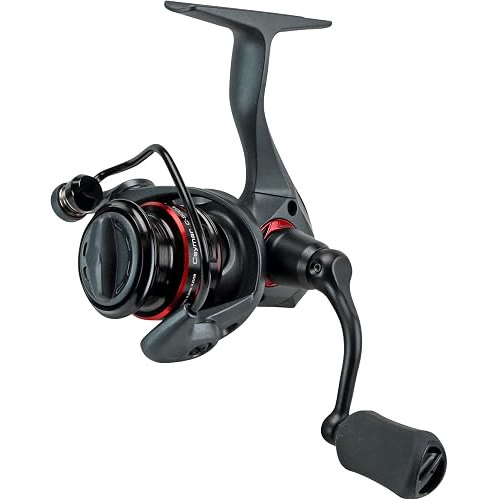
The Okuma title is OKUMA Ceymar C-30 Fishing Spinning Reel 7BB+1RB Gear Ratio 5.0:1 Light Weight. The brand cell says OKUMA. The model name, the model number, and the manufacturer part number all read OKC30. The ASIN is B00QSZB3QG. The color cell says Black. The hand-orientation cell says Ambidextrous. The fishing-technique cell says Spinning. The material cell says Aluminum. The bearing-material cell says Stainless Steel. The special-feature cell says Rust Resistant. The item-weight cell says 232 grams. The number-of-items cell says 1. The line-capacity cell says 4lb/300yds; 6lb/185yds; 8lb/145yds. The fishing-line-type cell says Monofilament. That is the whole useful identity of this card. It does not print a drag figure. It does not print a gearbox-ratio cell. The 5.0:1 lives in the title only. It does not print a braid capacity. It does not print an ounce weight next to the 232 grams.
232 grams is a listing weight you can put on a scale. If you convert it, 232 grams is about 8.2 ounces. The card does not print that ounce figure, so do not cite ounces as an Okuma cell. Cite 232 grams. A reel that weighs 232 grams is a light spinning reel. It is not a size-4000 reel and it is not the KastKing card whose item-weight cell says 15.2 ounces. Do not average the two weights and order a spare spool for the average. Spools are cut for one body.
The title's 7BB+1RB is seven ball bearings plus one roller bearing. The card does not print a second bearing count that disagrees with the title. Believe the title until the reel in your hand has a different stamp. The 5.0:1 gear is a slow retrieve compared with a 6.2:1 reel. The card does not print inches of line per turn, so do not invent a retrieve length from a different Ceymar chart and paste it onto OKC30. If you need line per crank, measure a full turn on the reel you unpack. The line-capacity cell is three mono loads: 4-pound for 300 yards, 6-pound for 185 yards, and 8-pound for 145 yards. Those three pairs can all be true of one spool if the diameters differ. They are not a braid rating. The line-type cell says Monofilament and stops. A spool that will hold braid is a different claim. This card does not make it.
The material cell says Aluminum. A spinning reel can have an aluminum spool and a graphite body, or an aluminum body and a graphite rotor. The cell does not say which part is aluminum. Do not read Aluminum as a promise that the whole reel is metal, and do not read it as a promise that the handle knob is metal. The special-feature cell says Rust Resistant. Rust resistant is not waterproof and it is not a saltwater rating. The card does not print an IP code. Rinse it if you fish the inlet. The card does not say the rinse is required, and it does not say the reel is sealed. The hand-orientation cell says Ambidextrous. That usually means the handle swaps. The card does not print the tool or the direction of the swap. Check the handle before you assume a left-hand retrieve is already installed.
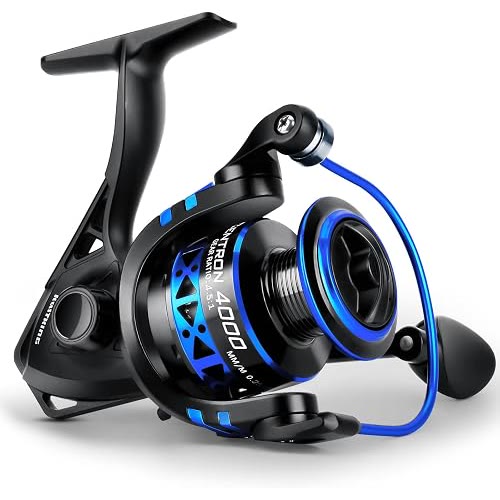
The KastKing page title that sits on the size chip says KastKing Centron Spinning Fishing Reels, 4000 Size, Black, with a highlight line of max drag 17.5 lb, 9+1 BB, 12.1 oz, CNC aluminum spool, 5.2:1 gear ratio. The product-information part number is KK-Centron4000. The manufacturer is Eposeidon. The ASIN is B071Y3L7N4. The model-name cell says Centron. The color cell also says Centron. Centron is the series name, not a color. The size-chip sentence says Black. The bullets say black-blue for the Centron and white-blue for the Centron Lite. Three color statements are on one listing. The part number is the one that says which size this order is supposed to be: KK-Centron4000. If the reel that arrives is stamped 500, 1000, 2000, 3000, or 5000, you did not receive the part number. The description on the same ASIN says size 500 is perfect for ice fishing. That sentence is a series sentence. It is not the part number.
The item-weight cell says 15.2 ounces. The highlight on the size-chip title says 12.1 oz. The product-summary line says 13.9 oz. An A+ table for the Centron Lite prints 9.1 ounces and a 12-pound drag. Four weights and two drags cannot all be KK-Centron4000. Use 15.2 ounces as the item-weight cell, 12.1 ounces as the highlight, and 13.9 ounces as the summary, and weigh the reel. Do not average them into a 13-ounce reel and then compare that average with Okuma's 232 grams. 232 grams is about 8.2 ounces. Even the lightest KastKing figure on this page, the Lite table's 9.1 ounces, is a different model. The 4000 part is the heavier card. The Okuma is the lighter card. That comparison survives whichever of the three 4000-ish ounce lines you distrust.
The gearbox-ratio cell says 5.2. The title says 5.2:1. Those agree. 5.2 is not 5.2:1 written the same way, but it is the same ratio. The Okuma title says 5.0:1 and has no ratio cell. A tenth of a turn is not a reason to pick a reel. The size difference is the reason. The fishing-reel-maximum-drag cell says 17.5 pounds. The series table also says 17.5. The Lite table says 12. The Okuma card prints no drag number at all. Do not borrow a drag figure from a Ceymar brochure and paste it onto OKC30. If you need a drag number for the Okuma, it is not on this card. The KastKing drag you can cite is 17.5 pounds, and you should say which line you are citing, because the Lite row on the same page says 12.
The line-capacity cell says 110/10. The series table, labeled Size30, says braided line 30/330 and 40/270, and mono 8/330 and 10/270. Size30 is not size 4000. A 110/10 cell does not say which number is the pound test and which is the yards. Ten-pound line for 110 yards is a readable guess. One hundred ten pounds for 10 yards is not a spinning-reel capacity. The card does not label the pair. The Okuma cell labels its pairs as 4lb/300yds and so on. The KastKing cell does not. The fishing-line-type cell says Braided, Fluorocarbon, Monofilament Line. That is broader than the Okuma cell, which says Monofilament only. Broader is not a measurement. It means the card is willing to name three line families. It does not mean the 110/10 cell is a braid capacity.
The material cell says Aluminum, Graphite. The handle-material cell says Aluminum. The bearing-material cell says Stainless Steel. A graphite frame with an aluminum spool and an aluminum handle can make all three cells true. The bullets also say a narrow graphite frame and a CNC aluminum spool. Read Aluminum, Graphite as two materials on one reel, not as a choice you click. The included-components cell says Spinning Reel. The number-of-items cell says 1. The bullets describe a Centron and a Centron Lite, a collapsible handle on the Lite, and sizes 500 and 1000 for ice. One item is what the count cell promises. A second reel in the box would break the count. A missing handle would break the title. The collapsible handle is the Lite sentence. KK-Centron4000 is not the Lite part number.
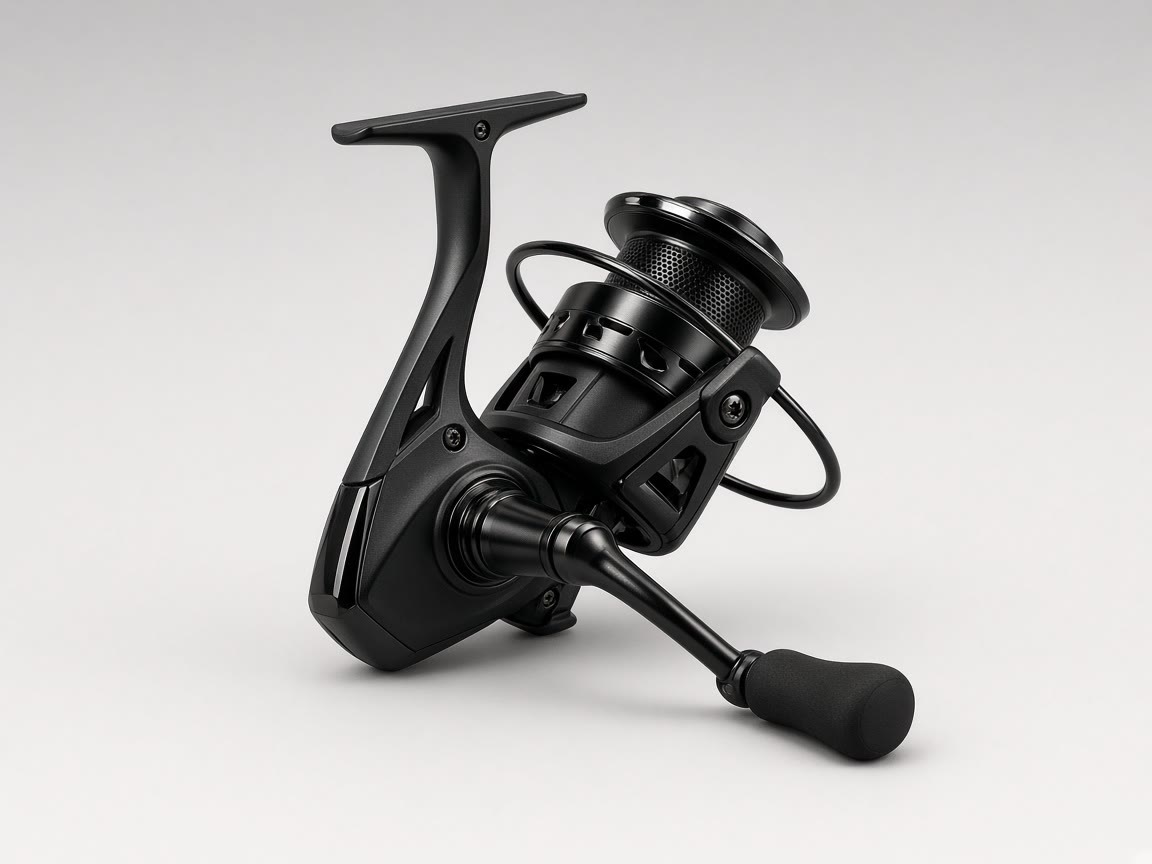
| Job | Okuma OKC30 | KastKing KK-Centron4000 | Buy |
|---|---|---|---|
| What you are holding | Ceymar C-30, one spinning reel | Centron part KK-Centron4000 | Okuma for the 30-size card. KastKing for the 4000 part number. |
| Gear | Title says 5.0:1. No ratio cell. | Cell says 5.2. Title says 5.2:1. | The ratio is not the decision. The size is. |
| Weight | 232 grams. No ounce cell. | Cell 15.2 oz. Highlight 12.1 oz. Summary 13.9 oz. | Weigh it. Do not average the KastKing lines. |
| Drag | No drag cell | Drag cell 17.5 lb. Lite table says 12. | Cite 17.5 only for the 4000 cell, not for the Lite row. |
| Line | Mono only. 4/300, 6/185, 8/145, labeled. | Braid, fluoro, mono. Capacity cell 110/10. Size30 table is not this part. | Okuma if you want the labeled mono loads. |
Who should buy the Okuma, and who should buy the KastKing?
Buy OKC30 if you want model OKC30, the black color cell, the 232-gram weight cell, the 7BB+1RB title, the 5.0:1 title, and the labeled mono capacities, and if you will accept that this card prints no drag number and no braid capacity. Buy it if a 30-size reel is the body you wanted, not a 4000. Buy KK-Centron4000 if you want the 4000 part number, the 17.5-pound drag cell, the 5.2 gearbox cell, and the line-type cell that names braid, fluorocarbon, and mono, and if you will ignore a color cell that says Centron, a description that praises the 500, and three ounce figures that do not match. Buy it if you will weigh the reel instead of trusting 12.1, 13.9, or 15.2 until the scale agrees with one of them.
Do not buy the Okuma because a brochure you did not open promised a drag this card never printed. Do not buy the KastKing because the series table's Size30 braid numbers looked like a 4000 spool. Do not buy either reel as a baitcaster, a spincast, or a fly reel. Both technique cells say Spinning. Do not buy a second copy to fix a color cell. One order of OKC30 is one reel. One order of KK-Centron4000 is one reel. If you wanted the white-blue Lite with the collapsible handle, this part number is the wrong row.
What OKC30 is actually for
This card is a light spinning reel in a record that is quiet about drag and braid. The useful identity is OKC30, ASIN B00QSZB3QG, 232 grams, black, ambidextrous, spinning, 7BB+1RB in the title, 5.0:1 in the title, and three labeled mono loads. Aluminum is the material cell, not a parts diagram. Stainless steel is the bearing-material cell. Rust resistant is the special-feature cell, not an IP rating. Monofilament is the only line family the line-type cell names. The 4-pound, 6-pound, and 8-pound loads are the capacities you can quote. A 10-pound mono load is not on this card. A 15-pound braid load is not on this card.
Use it on a light spinning rod, the sort of stick the Cherrywood and Ugly Stik cards describe in the 6-foot-6 class, not on a musky rod and not on a surf stick. The card does not print a line rating for the rod, so match the reel's 4-to-8-pound mono cell to a rod whose own card is in that band. A 5.0:1 gear is a crank you use when the fish is close and the lure is light. It is a poor match for a burn retrieve that wants a 7:1 baitcaster. The card does not say the handle is already on the left. Ambidextrous means you should look. The page was unavailable when this card was opened. Unavailable is a stock state, not a spec. The cells above are the cells. Stock changes. The model number does not.
What KK-Centron4000 is actually for
This card is one Centron spinning reel whose part number says 4000, sitting on a page that also explains the rest of the series. The useful identity is KK-Centron4000, ASIN B071Y3L7N4, the 5.2 gearbox cell, the 17.5-pound drag cell, the stainless-steel bearing cell, and the line-type cell that names three families. The color cell that says Centron is the broken field. The size-chip word Black and the bullet's black-blue are the color claims. The 15.2-ounce item-weight cell is the weight cell. The 12.1-ounce highlight and the 13.9-ounce summary are the conflicts. The 9.1-ounce Lite row is a different reel. The 110/10 capacity cell is unlabeled. The Size30 braid table is a different size. The ice-fishing sentence about the 500 is a different size.
Eposeidon is the manufacturer cell. KastKing is the brand cell. Order by the part number, not by the brand sentence that lists every size from 500 to 5000. The included line says a spinning reel. It does not say a rod, a spare spool, or a line. A combo page that pairs a Centron with a Crixus rod is a different ASIN. Do not expect that rod in this box. The anti-reverse feature cell and the one-way bearing in the bullets are the same idea in two fields. They are not a second drag. The CNC aluminum spool is a bullet and a special-feature cell. It is not a line capacity. A power-launch lip is a bullet. The card does not print the lip diameter.
How do you spool them without mixing the two cards?
Spool the Okuma with monofilament inside the cell: 4-pound, 6-pound, or 8-pound. The yards in the cell are the full-spool claims, not a minimum. Stop before the line rubs the frame. The card does not print a braid backing recipe, so a braid-to-mono setup on OKC30 is your experiment, not the card's. Spool the KastKing only after you decide what 110/10 means by reading the line on the spool you bought. If you put 10-pound mono on it, you are guessing that 110 is yards. If you put 30-pound braid on it because the Size30 table said 30/330, you are using a different size's row. Fill either reel so the line lays evenly. A 5.0:1 and a 5.2:1 do not change the spooling direction. The Okuma card does not say which way the bail faces when the line goes on. The KastKing card does not either.
Set the drag on the KastKing against the 17.5-pound cell, not against the Lite's 12-pound row, and not against a fish you have not hooked. A drag cell is a maximum the card prints. It is not the setting you fish. The Okuma gives you no maximum to cite. Set it by pulling line with a scale if you own one, and do not pretend the missing cell said 15 pounds. Rinse both after salt. Rust resistant on the Okuma and a graphite-and-aluminum material cell on the KastKing are not seals. The cards do not print a service interval. Oil is not in either included line.
What actually fails on these two cards?
The Okuma card fails when a shopper wants a printed drag and treats a blank as a zero. It fails when Monofilament is ignored and a braid capacity from another Ceymar size is ordered as if it were OKC30. It fails when Aluminum is read as an all-metal body. It fails when 232 grams is converted, rounded, and then quoted as an official ounce cell. It fails when 5.0:1 is compared with a 6.2:1 reel as if the card had printed line per crank. It fails when unavailable is read as discontinued. The cells are still the cells.
The KastKing card fails when Centron in the color cell is read as a finish. It fails when 12.1, 13.9, and 15.2 are averaged. It fails when the 9.1-ounce Lite row is received and the buyer thinks the 4000 part was light. It fails when the ice-fishing 500 sentence is obeyed on a KK-Centron4000 order. It fails when 110/10 is copied as 110-pound line. It fails when the Size30 braid table is copied onto the 4000 spool. It fails when a collapsible Lite handle is expected in this box. It fails when a rod from a combo ASIN is expected beside the reel.
What is this comparison not?
This is not a claim about which reel casts farther. Neither card prints a cast distance. This is not a review of every Ceymar size. OKC30 is the C-30 card. A C-10 or a C-65 is a different model. This is not a review of every Centron size. KK-Centron4000 is the part. A 3000 Centron is a different part even when it shares ASIN furniture on a messy parent page. This is not a price quote. The price changes. Use the buttons if you want the live listing. This is not a rod article and it is not a line article. Those links are the other tools on a spinning outfit. This is not a sealed-drag comparison with the BG and the Battle, and it is not a 2500-class comparison with the President and the Sedona. Those reels are named so you do not order this pair when you wanted that pair.
So which spinning reel should you buy?
Buy the Okuma if you want model OKC30, ASIN B00QSZB3QG, 232 grams, the black cell, the 7BB+1RB title, the 5.0:1 title, and the labeled mono capacities, and if you will live without a drag cell and without a braid cell. Buy the KastKing if you want part KK-Centron4000, ASIN B071Y3L7N4, the 5.2 cell, the 17.5-pound drag cell, and the three-family line-type cell, and if you will throw out the Centron color cell, the 500-size ice sentence, the Size30 capacity table, and whichever ounce line the scale rejects. Buy neither if you wanted a baitcaster, a printed Okuma drag, or a white-blue collapsible Lite. The part number is the decision. The extra rows on the KastKing page are the warning.
The Water Warrior Fishing film, "Tackle Review #1: Okuma Ceymar C30 + Boyd Duckett Ghost Rod! VALUE and QUALITY!!," shows an Okuma Ceymar C30 and a rod. The title does not name model OKC30's ASIN, and the clip does not show the KastKing Centron or part KK-Centron4000. Use it for a Ceymar C30 in a hand. Do not use it as a measurement of the 15.2-ounce cell or of the 110/10 capacity line.
Frequently asked questions
Okuma OKC30 or KastKing KK-Centron4000?
OKC30 if you want the 232-gram cell, the 5.0:1 title, and labeled mono capacities. KK-Centron4000 if you want the 4000 part number, the 5.2 gear cell, and the 17.5-pound drag cell.
How much does the Okuma card say the reel weighs?
The item-weight cell says 232 grams. The card does not print an ounce weight. About 8.2 ounces is a conversion, not a cell.
What drag does the KastKing card print?
The maximum-drag cell says 17.5 pounds. A Centron Lite table on the same page says 12 pounds. The Okuma card prints no drag number.
What fishing line does each card name?
OKC30 names monofilament only, at 4, 6, and 8 pounds. KK-Centron4000 names braid, fluorocarbon, and monofilament. Its capacity cell says 110/10 and does not label which number is yards.
Why does the KastKing color cell say Centron?
Centron is the series name, not a color. The size-chip sentence says Black. The bullets say black-blue. The part number KK-Centron4000 is the row to order.
Does the video show both reels?
No. The Water Warrior Fishing clip shows an Okuma Ceymar C30 and a Boyd Duckett Ghost rod. It does not show the KastKing Centron or part KK-Centron4000.