
How to Set Fishing Reel Drag Without Guessing
Written by Outdoors Magazine|
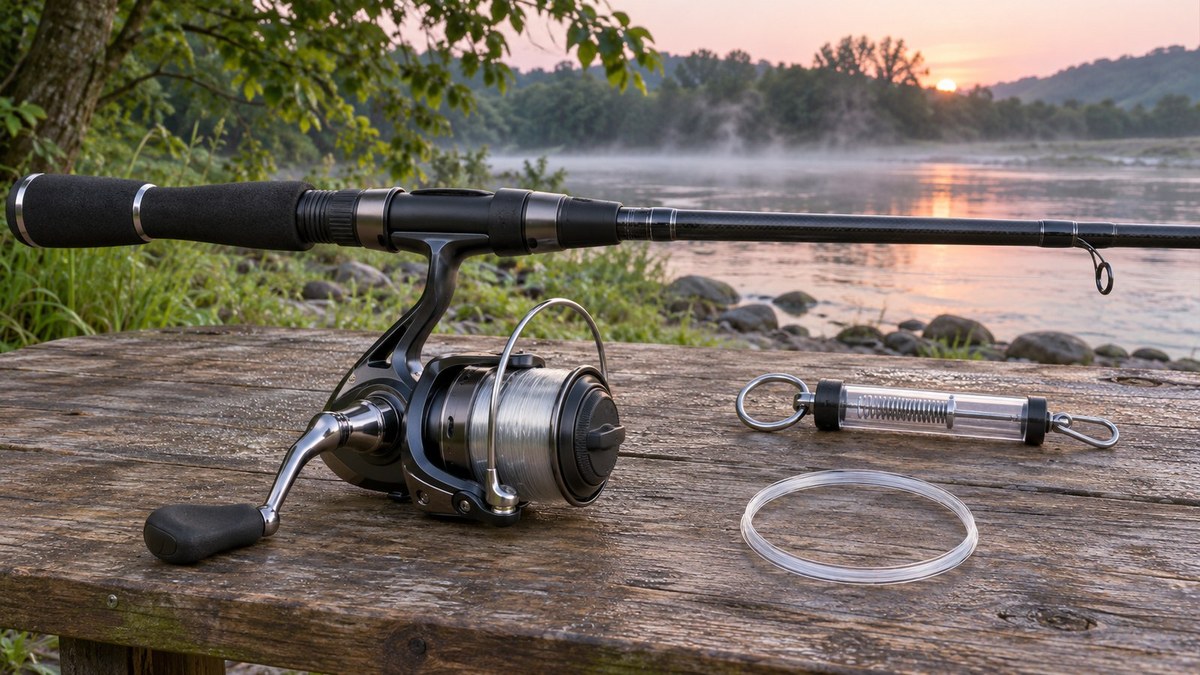
Set reel drag with the reel on the rod and the line through the guides. Start loose, use a spring scale to read the pull as line comes off the spool, and adjust a little at a time. Use the instructions for your exact reel, and allow for weaker knots, leaders or a lighter rod.
Key takeaways
- Measure drag with the reel engaged and line through the guides.
- Follow the exact equipment manuals and start conservatively.
- Do not pull against a hook or deliberately try to break the line.
Set reel drag with the reel on the rod and the line through the guides. Start loose, use a spring scale to read the pull as line comes off the spool, and adjust a little at a time. Use the instructions for your exact reel, and allow for weaker knots, leaders or a lighter rod.
A scale can make a drag adjustment repeatable. AI-generated editorial illustration.
Pulling line with your fingers can tell you that the spool moves, but it cannot tell you whether it starts to move at two pounds or five. That difference can matter on a light setup, especially when you change the leader or put an old reel back on a different rod. A scale turns the adjustment into something you can repeat. The goal is not to discover where the line breaks. It is to establish a conservative setting while the equipment is still intact and before a fish or snag puts it under load.
What does fishing reel drag actually control?
The drag controls how much pull is needed to take line from the spool while the reel is engaged. It lets the fish pull against controlled resistance instead of making the line take the entire load. Casting brakes, spool tension and the reel’s maximum drag rating answer different questions.
On many spinning reels you adjust fighting drag with the knob on the front of the spool. Some use another control, so identify it from the manual first. On many low-profile baitcasters it’s the star beside the handle, rather than the small spool-tension knob or a numbered casting-brake dial. The Abu Garcia low-profile manual treats fighting drag and spool tension as separate adjustments. If you change the wrong one during a test, stop and restore the intended setting instead of compensating elsewhere.
Think about two observations: how much pull gets the spool moving and whether line continues to come off smoothly once it moves. A large initial jump is not the same thing as a slightly high steady reading. The setting you want is usable tension, not the greatest number the reel can show. A published maximum says something about the reel’s design; it doesn’t certify your line, knots, rod or terminal equipment for that load.
A lever-drag reel may have a separate preset and operating positions rather than a knob or star you can treat the same way. Use the exact manufacturer’s instructions for when to adjust the preset, which position to measure and what spool fill to use. The examples here focus on common light- and medium-duty spinning or baitcasting setups. They are not instructions for rigging a heavy offshore outfit.
How much drag should you start with?
Start below the working limit of the weakest relevant part of the setup, not a fraction of the braid label by itself. Some manufacturers suggest about one-third of line strength for particular gear. Use your own manuals, allow for knots and wear, and use less when the equipment or conditions call for it.
Shimano’s game-gear guidance describes one-third of line breaking strain as a general starting point for that context. The Abu Garcia manual also gives a similar reference but says line, technique and conditions can change the choice. Neither supplies a guarantee about the actual strength of your leader and knots. Check the line and rod ratings, what is actually tied on, and whether any manufacturer prescribes a more conservative approach. Use a lower starting point if the setup is unfamiliar; don’t increase the drag to see which part fails.
For a fictional example, imagine 20-pound main line tied to an 8-pound leader on an outfit approved for the intended fishing. One-third of the 20-pound label is about 6.7 pounds, too close to the leader’s labeled strength to use as the initial target in this example. One-third of the 8-pound label is about 2.7 pounds before allowing for knots, abrasion and manufacturer limits. Starting at 2 pounds would be a more conservative illustrative choice for that hypothetical setup, provided the equipment instructions support it. These are arithmetic and example numbers, not recommended universal settings.
Use line in sound condition. Replace a damaged leader or retie a suspect knot rather than hoping a lower setting will make it reliable. If switching rods, recheck the appropriate tension even when leaving the spool unchanged. Light-wire hooks or tiny terminal connections can also make a different setting appropriate, although they should be removed before the bench measurement. Keep a short note on the actual combination, such as the rod, reel, line, leader and scale reading. That makes a future change obvious.
How do you measure drag with a spring scale?
Mount the reel, run the line through the guides and attach a suitable scale securely without a hook or lure. With the reel engaged, have a helper pull smoothly, following the maker’s test orientation. Read the force as line starts and continues moving. Make small adjustments only after releasing the tension.
Choose a scale whose range and markings make the expected pull readable. A high-capacity scale with large graduations may be of little use on a light outfit. Check that it reads zero at rest and that the unit is pounds of force rather than kilograms on a second scale. Use a clear area away from other people, and remove any terminal tackle that can fly or catch. Wear eye protection, keep faces and hands clear of stretched line, and never wrap line around a hand. Attach the test line to a secure scale attachment without exposing a sharp point.
Have the person holding the rod and the person holding the scale agree on the direction of pull. Follow the angle or procedure specified in the instructions for the exact rod and reel. Shakespeare’s spinning reel manual illustrates using a helper and a stated rod angle for that equipment; that angle is not a universal command. Avoid sharp rod bends and do not lift the tip high under load. Keep the pull steady and low enough to stay comfortably inside the equipment’s ratings.
Start with very light drag so the line pays out readily. Pull smoothly and read the force, then relax the line before changing the control. Repeat after a small turn, and use similar movement and orientation each time. Do not jerk the scale, reel against it or use a fixed point to pull until something breaks. If the spool does not release when expected, stop the test and check the setup. Tightening further does not diagnose a problem.
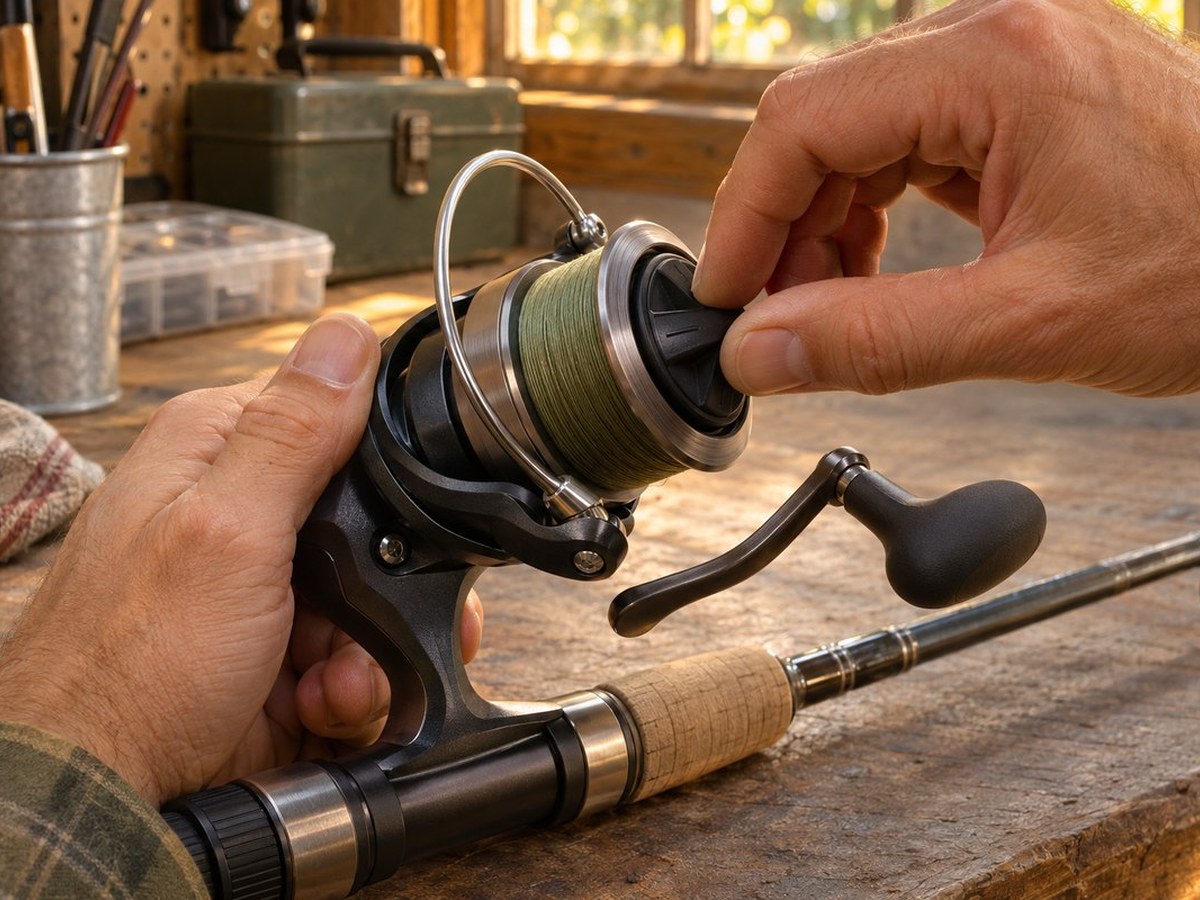
Keep the setup check separate from a troubleshooting check. If the reel gives a smooth reading on the bench but behaves differently when you switch to a spare spool, compare the line, leader and how full the spool is before touching the adjustment again. If the same setup repeatedly sticks or releases in jumps at light tension, stop pulling and use the manufacturer's service guidance rather than trying to free it with a harder yank.
What can make a drag reading misleading?
Jerking the scale, changing the rod angle or starting with different amounts of line on the spool can change the reading. Check that the line moves from the spool rather than slipping at a knot, binding in a guide or running off in free spool. Repeat the same test before changing the setting.
A twitch at the start may come from the person pulling. Take a second or third steady reading before assuming the reel has a problem. If you get a pronounced repeated startup jump or the line stops and starts instead of leaving evenly, do not just keep tightening. Recheck the line path, spool fill and external controls against the manufacturer’s directions. If no simple setup error explains it, stop using that arrangement and consult the maker or a reputable service shop before trusting it under load. Do not take the reel apart to correct an unexplained reading without knowing its instructions.
Check the simple mistakes first. On a spinning reel a forgotten open bail is not a drag test. On a baitcaster a disengaged spool is not one either. Watch the spool during the test if you can safely do so. If the spool stays still while the line moves, stop and establish where it is slipping. Improvised fixes could hide the symptom without restoring controlled release.
The amount of line left on a spool can matter because the line pulls from a different effective radius as the spool empties. A reading taken with the spool at normal fishing fill is a starting check, not a claim that pull remains identical through a long run. Record the setup along with the number. Keep the test repeatable rather than comparing a near-empty workshop spool with one freshly filled on the water. If the previous trip was in salt, see our separate post on rinsing a fishing reel for care steps; cleaning is not a substitute for verifying the setup.
When should you check your drag again?
Check again when you change the leader, line, rod or spool, or when the reel feels different after storage or service. On the water, start with the conservative setting you measured and reassess if the setup changes. If you’re unsure why drag is behaving differently, stop rather than tightening under load.
A useful pre-trip check takes less time than trying to reconstruct what setting you used last month. Inspect the line near its connections, check that the control was not bumped or loosened during transport, and give the spool a smooth pull with the equipment unloaded and no hook attached if you are doing a measured test. If you use several rods that look alike, mark the notes or line details so you do not apply a setting from the wrong outfit.
If the line is paying out as intended while fishing, that is what the drag is for. Don’t close it completely to stop an unexpected run. Sound tackle and a moderate setting do not remove the risk of a fish reaching cover, but a harder setting can transfer the problem to the line or rod. Treat repeated slipping at a very low pull, unexpected binding or changes after impact as reasons to inspect the equipment safely rather than setting by feel. Once off the water, compare the reading against your notes and find what changed.
The next time you set up a reel, write down the actual combination and the measurement method, not just a number. Include the reel and rod, line and leader labels, starting spool fill, the way you held the rod and the pull that let line move steadily. If you later change a part, compare like with like. The value of using a scale is knowing where you started and how to get back there, not chasing a perfect figure.
A second-person check is useful when you cannot tell what caused an unusual reading. Have your helper describe when the spool began moving before you share the number you expected. If your readings vary widely, check whether the scale was zeroed, the pull stayed in the same direction and the line followed the same path. If the measurements still disagree, leave the setting conservative and set that rig aside until you can identify why. Do not average obviously inconsistent tests and treat the result as a verified measurement.
Frequently asked questions
What does fishing reel drag actually control?
The drag controls how much pull is needed to take line from the spool while the reel is engaged. It lets the fish pull against controlled resistance instead of making the line take the entire load. Casting brakes, spool tension and the reel’s maximum drag rating answer different questions.
How much drag should you start with?
Start below the working limit of the weakest relevant part of the setup, not a fraction of the braid label by itself. Some manufacturers suggest about one-third of line strength for particular gear. Use your own manuals, allow for knots and wear, and use less when the equipment or conditions call for it.
How do you measure drag with a spring scale?
Mount the reel, run the line through the guides and attach a suitable scale securely without a hook or lure. With the reel engaged, have a helper pull smoothly, following the maker’s test orientation. Read the force as line starts and continues moving. Make small adjustments only after releasing the tension.
What can make a drag reading misleading?
Jerking the scale, changing the rod angle or starting with different amounts of line on the spool can change the reading. Check that the line moves from the spool rather than slipping at a knot, binding in a guide or running off in free spool. Repeat the same test before changing the setting.
When should you check your drag again?
Check again when you change the leader, line, rod or spool, or when the reel feels different after storage or service. On the water, start with the conservative setting you measured and reassess if the setup changes. If you’re unsure why drag is behaving differently, stop rather than tightening under load.