
Bahco 396-LAP vs Silky 340-13
Written by John Wren|
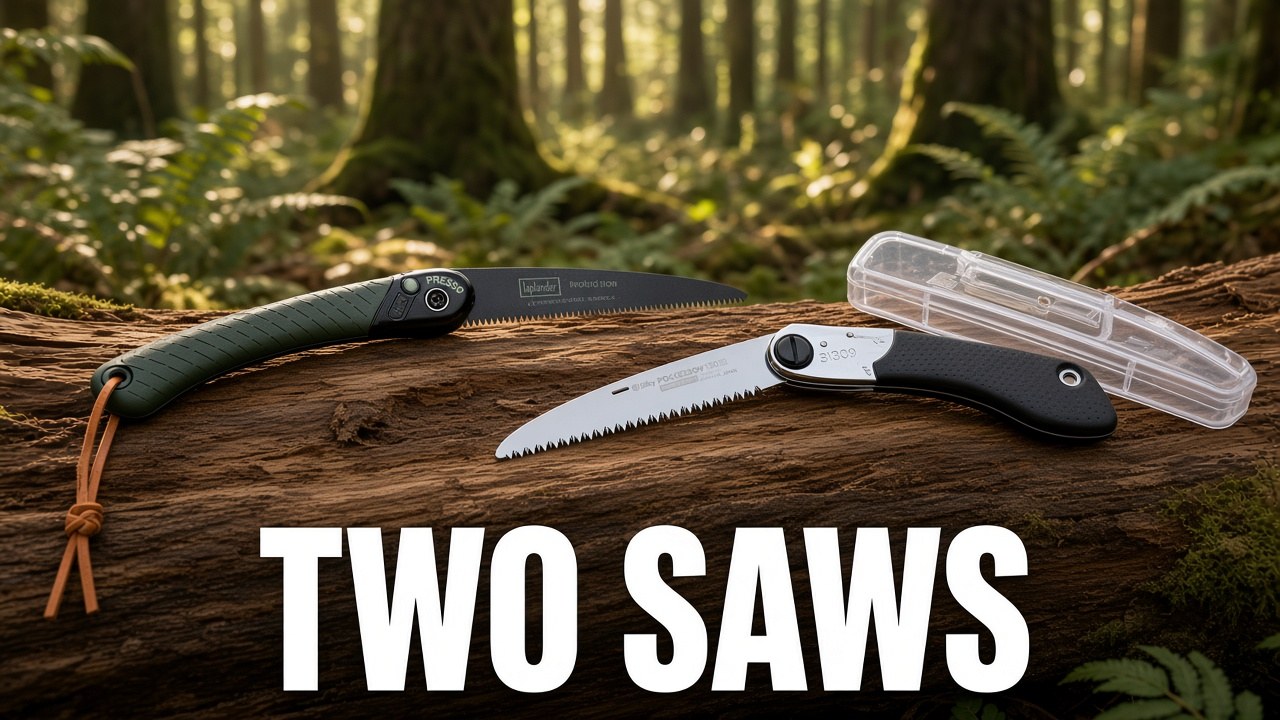
Choose Bahco 396-LAP for the green saw whose bullets say a 7-1/2-inch blade, XT 7 TPI, a lock open and closed, and a leather strap. The teeth cell says 7. Choose Silky PocketBoy 340-13, UPC 713976369889, for the 130-millimeter blade, two lock positions, and a hard plastic case. The teeth bullet says 8.5 per inch. The teeth cell says 10. Use the bullet's unit.
Key takeaways
- 396-LAP bullets say a 7-1/2-inch blade, 7 TPI, and a 9-inch handle.
- The Bahco card lists more than one UPC. The dimension cell is a carton.
- 340-13 is the 130 mm PocketBoy, UPC 713976369889, with a case.
- The Silky teeth bullet says 8.5 tpi. The teeth cell says 10.
Buy the Bahco folding saw, model 396-LAP, part 396-LAP, ASIN B0001IX7OW, when you want the green saw whose bullets name a 7-1/2-inch blade, XT teeth at 7 teeth per inch, a safety lock open and closed, and a 9-inch two-component handle with a leather strap. Buy the Silky PocketBoy, model 340-13, ASIN B000CED1QY, when you want the 130-millimeter medium-tooth saw the bullet names, with a hard-chrome blade, two lock positions, and a hard plastic belt case in the included line. The Bahco blade-length cell says 19 centimeters. The Silky blade cell says 13 centimeters and the bullet says 5.1 inches. Those are the numbers to photograph. The tooth cells do not agree with the bullets on either card.
Short version. A knife is a blade you push. A filter is water. A fire steel lights the wood after the saw has made it. A tablet treats water and does not cut a limb. The saw is the tool that turns a branch into a length you can feed a stove or lash a ridge.
The Bahco card's manufacturer is Snap-On Industrial Brand BAHCO. The part number is 396-LAP. The color is green. The blade-length cell says 19 centimeters. The item-length cell says 7.5 inches. A 7-1/2-inch blade and a 7.5-inch item length can be the same blade or the same closed tool, and the card does not say which. The bullets say a 7-1/2-inch blade and a 9-inch handle, so the open saw is longer than 7.5 inches if both of those sentences are about different parts. The product-dimension cell says 7.87 by 7.87 by 11.81 inches. That is not a folded saw in a pocket. It is a carton, or it is wrong. The item weight says 7.52 ounces. The teeth cell says 7. The bullet says XT 7 TPI, which is 7 teeth per inch, so that pair can agree if the cell means teeth per inch and not seven teeth on the whole blade. Seven teeth on a 7-1/2-inch blade would be a different saw. Read TPI as the bullet's unit.
The Bahco UPC field lists more than one string: 791429557403, 013523085843, 827165724165, and 741725994990. The GTIN cell says 07311518172367. Those are not one barcode. Photograph the sticker on the saw you received and match it to one of them. Do not pretend the card picked a winner. The bullets add a rust-protected low-friction coating, a safety lock that works open and closed, a leather strap, and a green-and-dry-wood, plastic, and bone cutting line. Bone is on the card. A folding camp saw that lists bone is still a saw, not a kitchen knife. The handle is two-component plastic. The card does not say the teeth are impulse-hardened in a sentence I am quoting beyond the XT name. Do not add a hardness number.
| Job | Bahco 396-LAP | Silky 340-13 | Buy |
|---|---|---|---|
| A pocket folding saw | Bullet blade 7-1/2 in. Cell 19 cm. Handle bullet 9 in. | Bullet 130 mm / 5.1 in. Blade cell 13 cm. | 396-LAP for the longer blade sentence. 340-13 for the shorter one. |
| Teeth | Bullet XT 7 TPI. Teeth cell 7. | Bullet 8.5 tpi, also written as 10 per 30 mm. Teeth cell 10. | Believe the bullet's unit. The cells are bare numbers. |
| The lock | Safety lock open and closed. | Two positions: inline and flush. | 396-LAP if closed-lock is the sentence. 340-13 if you want the flush option named. |
| What is in the box | Leather strap in the bullets. No case in the included line I am using. | Included line: case and saw. Hard plastic belt case in the bullet. | 340-13 if the case is why you are buying. |
| Weight | 7.52 ounces | 5.92 ounces | Weigh it. The Silky is the lighter cell. |
Bahco 396-LAP, ASIN B0001IX7OW. Silky PocketBoy 340-13, UPC 713976369889, ASIN B000CED1QY. A large-tooth PocketBoy and a 170-millimeter saw are different models.
Who should buy the Laplander, and who should buy the PocketBoy?
Buy 396-LAP if you want the 7-1/2-inch blade, the 7 TPI bullet, and a lock the bullets say works both open and closed, plus a strap. You are accepting a dimension cell that looks like a shipping carton, a blade cell of 19 centimeters that is longer than 7.5 inches, and a pile of UPCs. Nineteen centimeters is about 7.5 inches only if you round hard. 19 centimeters is 7.48 inches, which is the bullet. The item-length cell's 7.5 inches matches the blade bullet and does not match a 9-inch handle. So the item length is the blade, the handle is extra, and the 11.81-inch dimension is the mailer. That reading is the only one that lets the card agree with itself. If the saw in your hand is 19 centimeters of blade and the handle is 9 inches, you got the bullets.
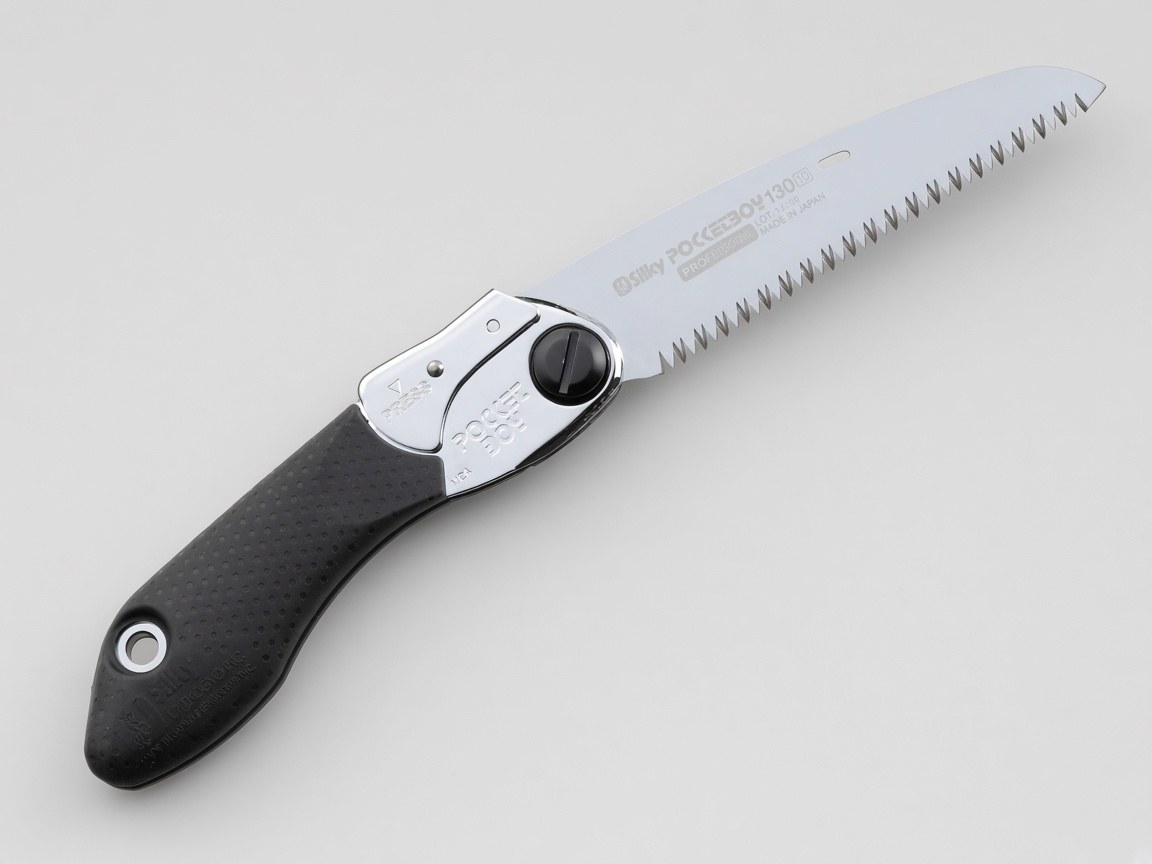
Buy 340-13 if you want the smaller saw, the case, and the two lock positions. The bullet says 5.1 inches and 130 millimeters. The blade cell says 13 centimeters, which is 130 millimeters. That pair agrees. The teeth bullet says 8.5 teeth per inch and also 10 teeth per 30 millimeters. The teeth cell says 10. Ten per 30 millimeters is not 10 per inch. The cell dropped the unit. Use 8.5 per inch, or 10 per 30 millimeters, and ignore a bare 10. The weight cell says 5.92 ounces against the Bahco's 7.52. The UPC is 713976369889. The GTIN is 04903585340133. The cut-capacity bullet says 2.6 inches. The kerf says 1.3 millimeters. A different bullet says thickness 1.4 millimeters. Kerf and blade thickness are not the same measurement. Do not collapse them.
Do not buy the Laplander if you needed a belt case in the included line. Do not buy the PocketBoy if you needed a 7-1/2-inch blade. A medium-tooth 130-millimeter saw is a different cut than a 7 TPI 7-1/2-inch saw. Coarse teeth take a bigger bite in green wood. Finer teeth leave a smoother face and can feel slower in wet limbs. The cards do not print a speed test. The tooth sentences are the difference you can actually buy.
What the 396-LAP card is actually for
This is a folding camp and job-site saw with a green handle, a coating the bullets call low-friction and rust-protected, and a lock at both ends of the swing. The leather strap is the carry sentence. A strap is not a sheath. The teeth are exposed in a way the Silky case is trying to prevent, unless you fold it and trust the closed lock. The closed lock is the sentence that makes the strap reasonable. If the lock does not hold shut, the strap is a way to cut a pocket. Test the lock on day one, pointing the teeth at the ground.
The cutting line names green wood, dry wood, plastic, and bone. Green wood is the camping job. Dry hardwood is slower and can load the teeth. Plastic is a camp-chair accident waiting to be useful. Bone is a field-dressing sentence the card chose to print. It is not a suggestion to use the saw as a cleaver on a rock. A saw binds when the kerf closes. Wedges are not in the box. The card does not include gloves. A folding saw still cuts the hand that steadies the branch.
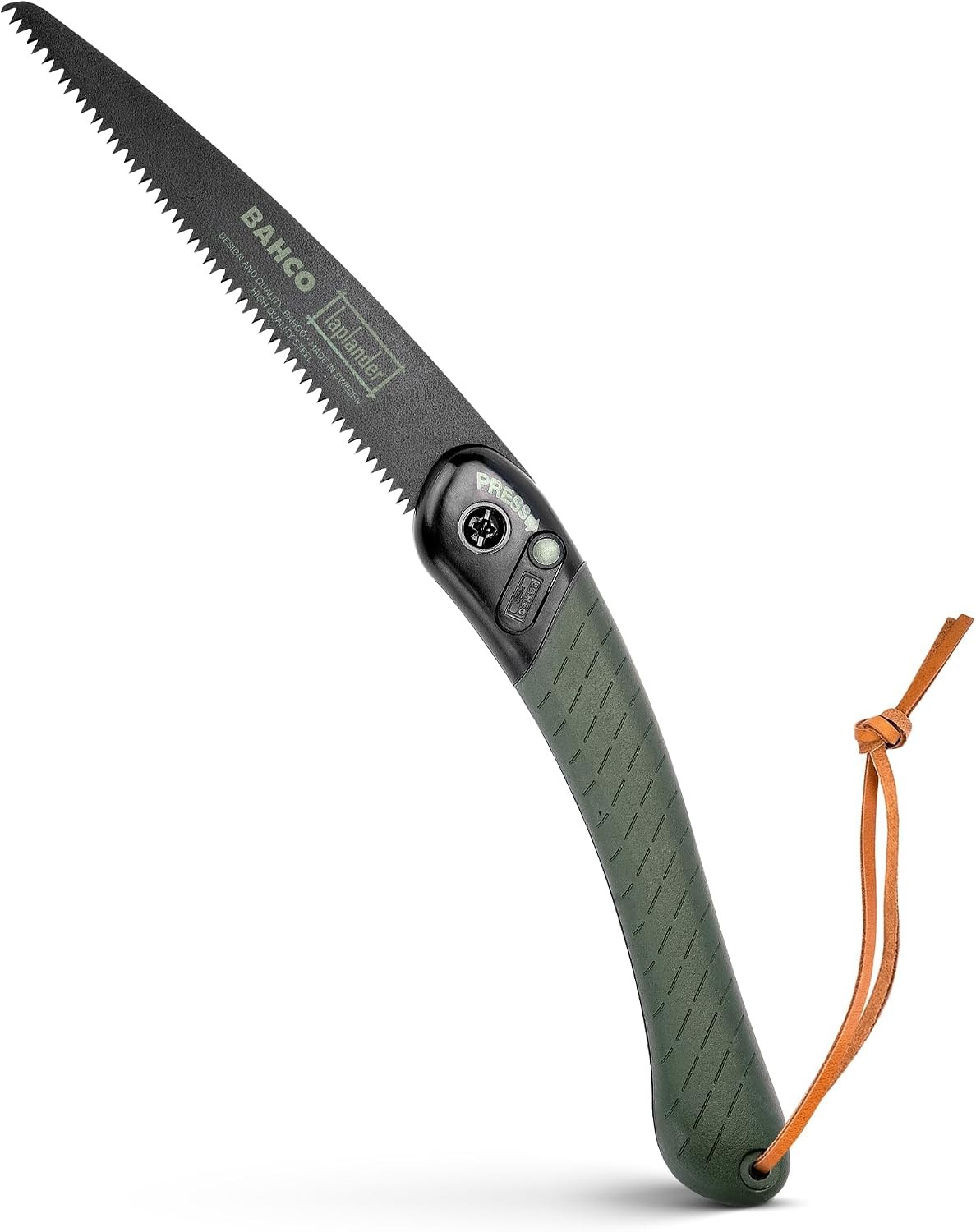
Do: match part 396-LAP and a 7-1/2-inch blade. Don't: pick a UPC at random from the four strings and argue with the warehouse. Don't: read the 7.87-by-11.81 dimension as the folded size in a pocket. Don't: assume seven teeth total because the teeth cell says 7. The bullet says 7 TPI.
What the 340-13 card is actually for
The PocketBoy bullet set is a small saw with a rubber handle, a hard-chrome blade, a 2.6-inch cut capacity, a 1.3-millimeter kerf, a 1.4-millimeter thickness line, and two locks: one inline with the handle and one flush. Inline is the long reach. Flush is the position that lets the handle sit differently against a branch. The hard plastic belt case is in the bullet and in the included line, which says case and saw. That is the carry system the Bahco does not print. The item dimensions say 11.42 by 2.36 by 1 inch. The item length says 11.42 inches. A 130-millimeter blade plus a handle can approach that length open. It should not be 11 inches folded. Read 11.42 as the open tool or as a padded mailer, and measure the closed saw yourself. The card does not split open length from closed length in two labeled cells.
Medium teeth are the model 340-13 sentence. A large-tooth PocketBoy is a different model number. If the teeth look like a raker pattern with big gullets, check the model before you decide the 8.5 TPI bullet was a lie. Chrome is a rust claim, not a sharpness claim. A chrome blade still dulls. The card does not print a sharpening angle. These teeth are often a profile people replace rather than file. The card does not say the blade is disposable. Do not invent a replacement-blade policy.
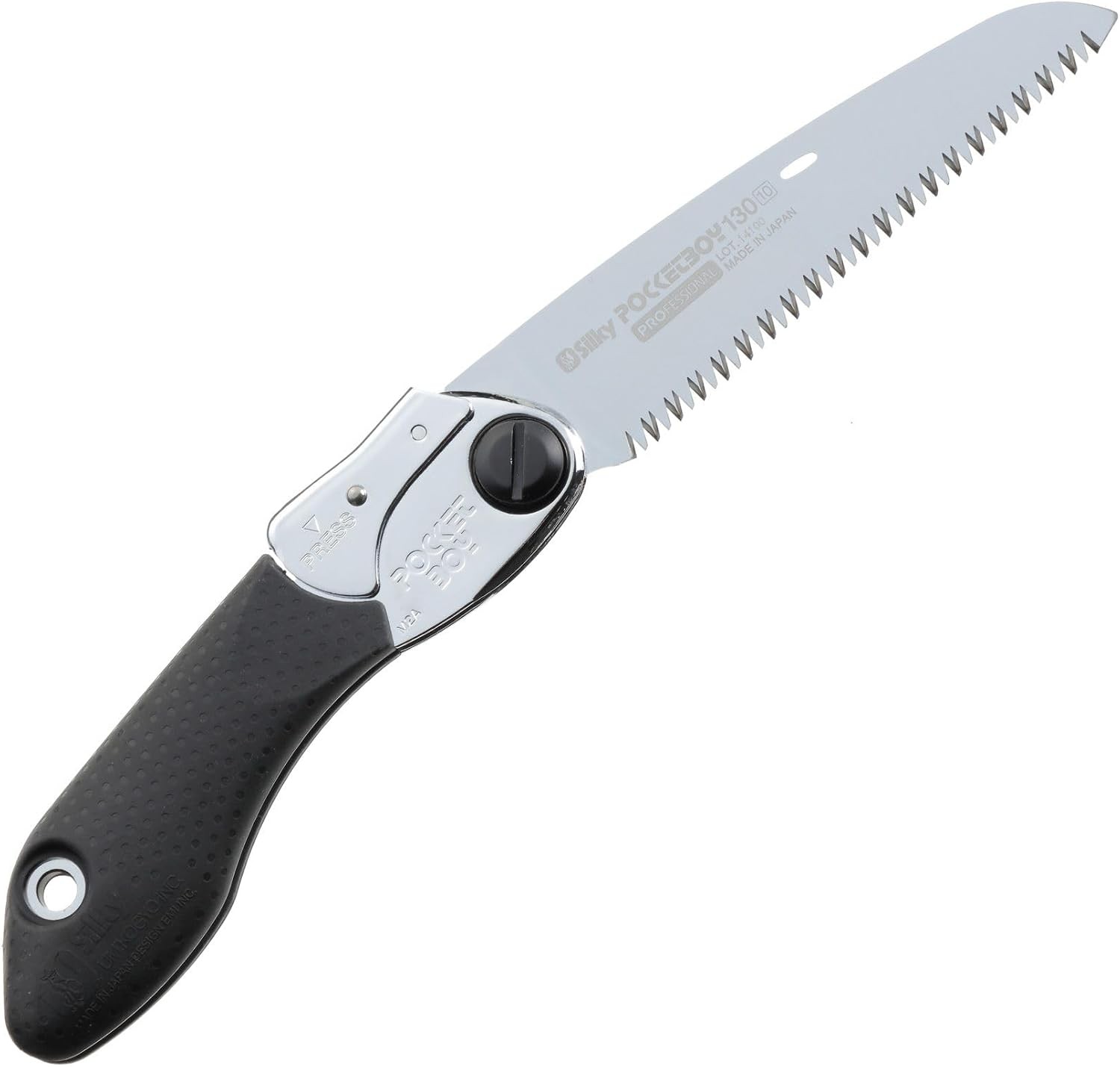
Do: match 340-13, UPC 713976369889, and a 130-millimeter blade. Don't: buy a 170-millimeter Silky and call it a PocketBoy 130. Don't: convert the teeth cell's 10 into 10 teeth per inch. The bullet already did the unit conversion, and it is 8.5 per inch. Don't: skip the case. It is the reason the included line is longer than "saw."
How to cut with either card without binding the blade
Support the limb so the kerf opens. A branch that sags pinches a 1.3-millimeter kerf immediately. The Silky's cut capacity of 2.6 inches is the bullet's limit on what the stroke can finish, not a dare. The Bahco card does not print a cut capacity. A 7-1/2-inch blade can reach a larger limb and still bind. Start with the weight of the branch held by your other hand or by a fork, and keep the teeth out of the dirt. Grit in the gullets is how both coatings stop mattering.
Lock the blade before the first stroke. On the Bahco, confirm the open lock and later the closed lock. On the PocketBoy, pick inline or flush and feel the click. A half-lock folds the saw on your knuckles. Push saws and pull saws are not the same stroke. These cards do not print the word pull in the bullets I am using. Learn the stroke from the teeth orientation on the saw you hold. Forcing the wrong direction bends a thin blade. The 1.4-millimeter thickness line on the Silky is a thin blade. The Bahco card does not print a thickness.
That clip is a Bahco Laplander review. It is not a measurement of the Silky 340-13, and it is not a lab check of the 19-centimeter cell against the 7-1/2-inch bullet. Use it to see the green saw fold and lock.
That second clip compares folding saws. It is not a certificate that model 340-13 and model 396-LAP were the only two on the bench. If a different tooth pattern appears, it is a different card. Watch the stroke. Do not import a winner from the title.
What actually fails on these two cards
The Bahco fails when you reorder a different blade length in the same green family and only read Bahco. It fails when you trust one of four UPCs and the sticker shows another. It fails when you pocket it using the 7.87-inch dimension and the carton was what that cell described. It fails when the closed lock is weak and the strap puts teeth against cloth. It fails when you wanted a case and the bullets only gave you a strap.
The Silky fails when the model is a large-tooth PocketBoy or a longer Gomboy and you only read Silky. It fails when you treat the teeth cell's 10 as 10 TPI. It fails when you treat 1.3-millimeter kerf and 1.4-millimeter thickness as a contradiction you must resolve by returning a good saw. They are different measurements. It fails when the 11.42-inch length is not the closed size you hoped to pocket, because the card never labeled it closed. It fails when the case is missing and the included line promised case and saw.
The shared failure is a dull or pinched cut blamed on the brand. Dirt, a closing kerf, and the wrong stroke will make both cards look bad. The other shared failure is buying the tooth pattern you did not read. Seven TPI and 8.5 TPI are not the same gullet.
What this comparison is not
It is not a knife, an axe, or a chainsaw. It is not gloves, wedges, or a sheath beyond what each card prints. It is not a promise that bone, plastic, and green wood cut with the same effort. It is not a sharpness warranty. Neither card prints a tooth-life number in the bullets I am using.
It is not a reason to average the cells. Nineteen centimeters is the Bahco blade cell. Thirteen centimeters is the Silky blade cell. The bullets already speak inches. Use the bullet when the cell has no unit, and use both when they are the same length in different clothes.
So which folding saw should you buy?
Buy the Bahco 396-LAP when you want the 7-1/2-inch, 7 TPI blade, the open-and-closed lock, and the strap, and you will treat the carton dimensions and the extra UPC strings as fields to check rather than as the saw. Buy the Silky 340-13, UPC 713976369889, when you want the 130-millimeter blade, the case, and the two lock positions, and you will read 8.5 teeth per inch instead of the bare teeth cell. The Laplander is the longer blade sentence. The PocketBoy is the lighter weight cell and the one that includes a case.
Frequently asked questions
Laplander or PocketBoy for a pack saw?
396-LAP if you want the 7-1/2-inch, 7 TPI blade and a closed lock with a strap. 340-13 if you want the 130-millimeter blade, the case, and the two lock positions.
Do the tooth cells match the bullets?
The Bahco bullet says 7 TPI and the teeth cell says 7. Read that as teeth per inch, not seven teeth on the blade. The Silky bullet says 8.5 per inch, or 10 per 30 millimeters. The teeth cell says 10 and drops the unit.
What comes in each box?
The Bahco bullets include a leather strap, not a hard case. The Silky included line says case and saw, and the bullet says a hard plastic belt case.
Why is the Bahco dimension almost 12 inches?
The dimension cell says 7.87 by 7.87 by 11.81 inches. The blade bullet is 7-1/2 inches and the handle bullet is 9 inches. Treat the big cell as a carton. Measure the folded saw.
Which Silky model is 340-13?
The 130-millimeter medium-tooth PocketBoy, UPC 713976369889. A large-tooth PocketBoy and a longer Gomboy are different models. The blade cell says 13 centimeters, which matches 130 millimeters.
Is kerf the same as blade thickness?
No. The Silky card prints a 1.3-millimeter kerf and a 1.4-millimeter thickness. Those are different measurements. The Bahco card does not print a thickness.