
Anker 10,000 mAh vs Nitecore NB10000 Gen 2
Written by John Wren|
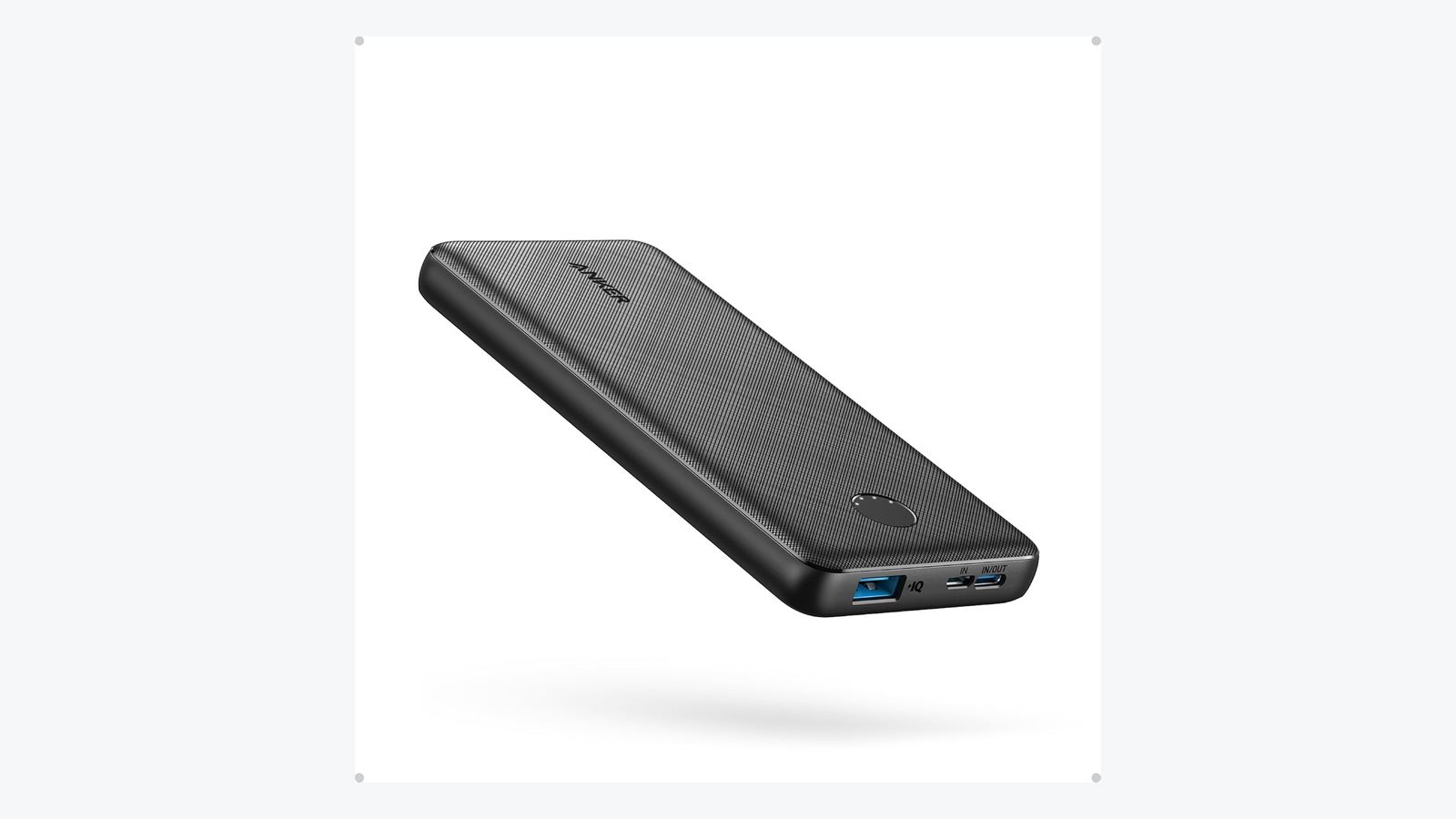
Choose the Anker model A1229 when you want 10,000 mAh with USB-C and USB-A at about 8.6 ounces and a cable in the box. Choose the Nitecore NB10000 Gen 2 when you want 10,000 mAh at about 5.29 ounces with 18-watt USB-C and Quick Charge.
Key takeaways
- Anker A1229 is 10,000 mAh, about 8.6 ounces, USB-C and USB-A.
- NB10000 Gen 2 is 10,000 mAh, about 5.29 ounces, 18-watt ports.
- Carry the bank in the cabin, not in a checked bag.
- A 20,000 mAh pack is a different weight class.
Buy the Anker power bank model A1229 when you want a 10,000 mAh pack with USB-C in and out, a USB-A port, and 5-volt 3-amp charging in a brick that weighs about 8.6 ounces. Buy the Nitecore NB10000 Gen 2 when you want the same 10,000 mAh in a thinner carbon-fiber pack, about 5.29 ounces, with 18-watt USB-C Power Delivery both ways and an 18-watt Quick Charge port. Both are pocket chargers for a trip. A 20,000 mAh brick, or a 5,000 mAh lipstick cell, is a different tool. Read the milliamp hours and the model on the listing before you trust a photo of a black rectangle.
Short version. The daypack is what carries it. A towel does not charge a phone. A packing cube can hide the bank under a shirt until you need it at the gate. The bank is the spare battery for the map, the boarding pass, and the headlamp that still takes a cable. Check live prices. Confirm 10,000 mAh, not a lookalike with a bigger number printed in fine type and a smaller cell inside.
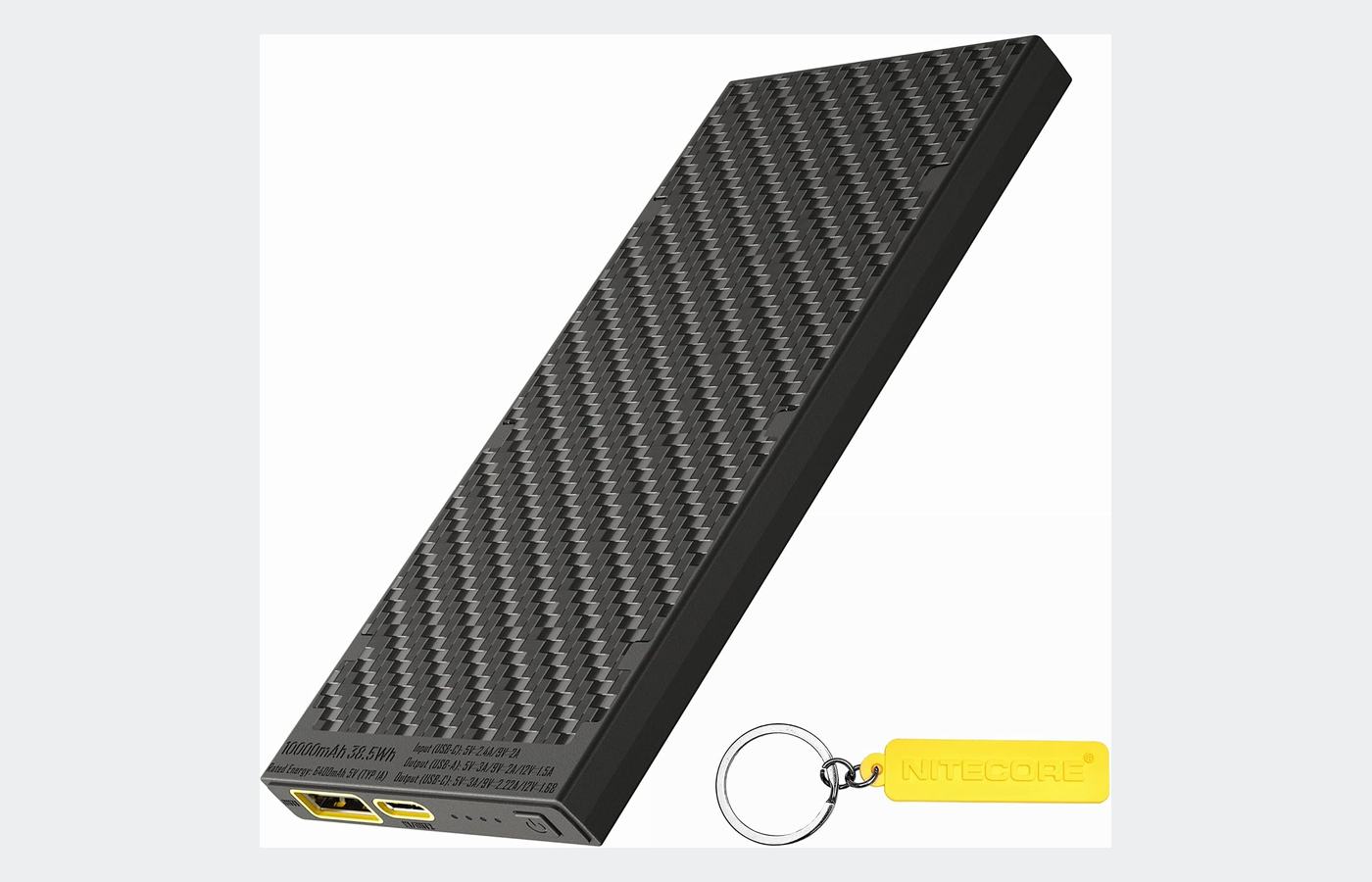
This comparison is two 10,000 mAh packs you can still buy for a carry-on. The Anker card is model A1229: about 5.99 by 2.81 by 0.61 inches, 8.6 ounces, USB-C plus USB-A, a USB-C cable in the box. The Nitecore card is the NB10000 Gen 2: about 4.8 by 2.32 by 0.42 inches, 5.29 ounces, two-way 18-watt USB-C and 18-watt Quick Charge. If the listing is a cable bundle from another seller, or a Gen 1 brick with a Gen 2 title, close it. The ounces are the point. A heavy bank stays in the hotel. A light bank stays in the pocket.
| Job | Anker A1229 | Nitecore NB10000 Gen 2 | Buy |
|---|---|---|---|
| A pocket bank you will actually carry | About 8.6 ounces, 0.61 inch thick | About 5.29 ounces, 0.42 inch thick | Nitecore |
| USB-A for an older cable | USB-C and USB-A | USB-C and a Quick Charge port | Anker if the cable is USB-A |
| Faster charge into a modern phone | 5 V / 3 A on this card | 18 W PD and 18 W QC on this card | Nitecore |
| A cable in the box | USB-C to USB-C included | Read the listing; this card is the bank and a tag | Anker if you own no cable |
| A week offline with no outlet | 10,000 mAh is a refill, not a generator | Same cell class | Neither, bring a second plan |
Anker's card is A1229, 10,000 mAh. Nitecore's card is the NB10000 Gen 2, 10,000 mAh. A 20,000 mAh Anker, or a cable-only bundle, is a different product.
Who should buy the Anker, and who should buy the Nitecore?
Buy the Anker A1229 if you want the straightforward 10,000 mAh block and you still own a USB-A cable. USB-C handles charging the bank and charging the phone. USB-A handles the headlamp, the older phone, and the cable that has lived in your dopp kit for years. The listed size, about 6 inches by 2.8 inches by a little over half an inch, fits a jacket pocket and a packing cube. At 8.6 ounces it is not the lightest 10,000 mAh pack you can buy. It is the one that does not ask you to understand a wattage chart before you plug in. Five volts at three amps is the speed this card claims. That is a normal phone charge, not a laptop charge.
Buy the Nitecore NB10000 Gen 2 if the bank has to disappear into a running vest, a hip belt, or a coat you already notice when it is heavy. About 5.29 ounces and under half an inch thick is the argument. The frame is a carbon-fiber polymer, which is why it feels more like a thin slab than a brick. Eighteen-watt USB-C Power Delivery, both directions, and an 18-watt Quick Charge port are the speed this card claims. Two devices can take power at once. A modern phone will finish sooner than it will on a 5-volt 3-amp port, if the phone accepts that rate. The listing that matches this card includes the bank and a small tag. Do not assume a pile of extra cables is in the carton unless that listing says so.
Do not buy either one for a laptop day. Ten thousand milliamp hours, at the voltage these cells use, is a phone-and-headlamp budget. A 13-inch laptop will drink it and ask for more. A carry-on pack can hold a bigger bank if that is the trip. This comparison is the pocket class. How many times it fills your particular phone depends on that phone's battery, the screen you left on, and the cold. A percentage on the bank is more honest than a slogan about "two full charges."
What the Anker A1229 is actually for
Anker's A1229 on this card is the 10,000 mAh PowerCore-style pack: black, USB-C input and output, USB-A output, about 8.6 ounces, about 5.99 by 2.81 by 0.61 inches, with a USB-C to USB-C cable in the box. The cable matters if your kit is a tangle of half-dead cords. You can leave the included cable tied to the bank with a small band and stop borrowing one at the gate. PowerIQ on the listing is Anker's name for a port that negotiates with the device. You still use a decent cable. A frayed cable makes a good bank look slow.
Use it on a travel day when the phone is the ticket, the map, and the message that you landed. Top the bank up in the room at night so the morning starts at full. A bank that leaves the house at 40 percent is a paperweight by the time you need it. The ports are on the short end. Set it in a cube with that end up so you are not unpacking shirts to plug in on a train. 5 volts at 3 amps will not win a speed contest against an 18-watt pack. It will charge a phone while you eat, which is the job most travel days actually have.
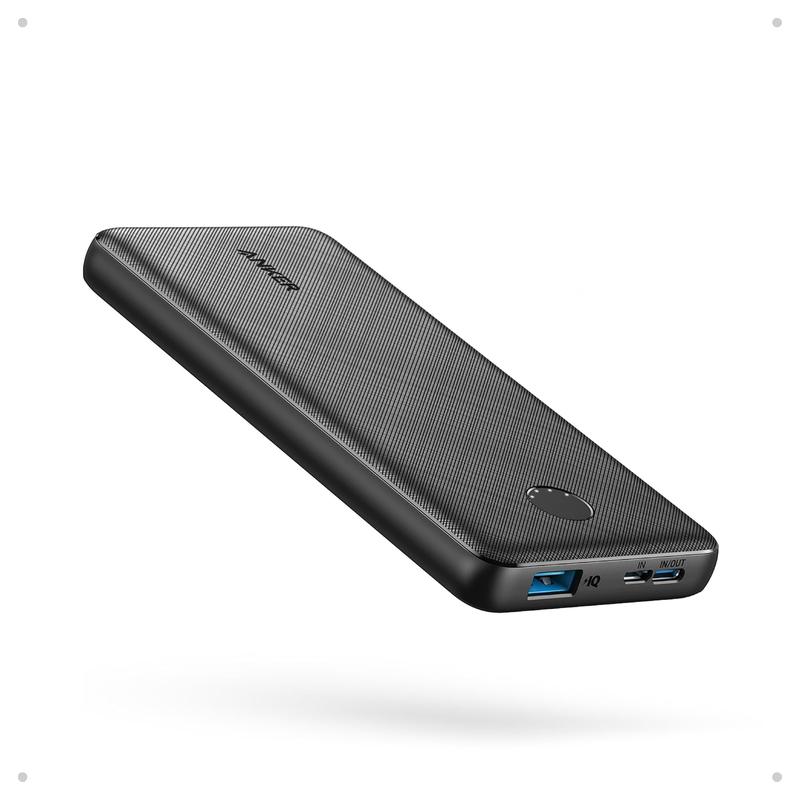
Do: carry it in the cabin, not in a checked bag, the way airlines want lithium packs carried. Don't: bury it under a pillow while it charges. These slabs get warm. Warm on a nightstand is normal. Hot in a bed is a reason to unplug it. Don't: assume every black Anker 10K is this model. A1229 is the number. A thicker 10K with different ports is a different bank.
What the NB10000 Gen 2 is actually for
Nitecore's NB10000 Gen 2 on this card is the slim 10,000 mAh pack: about 5.29 ounces, about 4.8 by 2.32 by 0.42 inches, carbon-fiber polymer, 18-watt two-way USB-C Power Delivery, and 18-watt Quick Charge. The weight is why trail people buy it. Five ounces lives in a hip-belt pocket or a jacket without rewriting the rest of the kit. The thin body slides into a packing cube beside a passport sleeve instead of claiming its own corner. Gen 2 is the mark on the bank. A first-generation NB10000 with a different port layout is not this card, even if the milliamp hours match.
Eighteen watts is a phone rate and a headlamp rate, not a notebook rate. USB-C both ways means the same port fills the bank and empties it, which is one less cable to identify in the dark. The Quick Charge port is there for devices that still want that handshake. Plug in, look at the bank's indicator, and look at the phone. If the phone says it is charging slowly, try the other port or a different cable before you decide the cell is tired. A cheap cable is the usual culprit. The carbon shell is tough for a pocket. It is not a case you can stand on, and it is not waterproof because a listing once said a different Nitecore was splash resistant. This card's features name the cell, the watts, and the weight. Treat rain the way you treat a phone: pocket, zipper, dry.
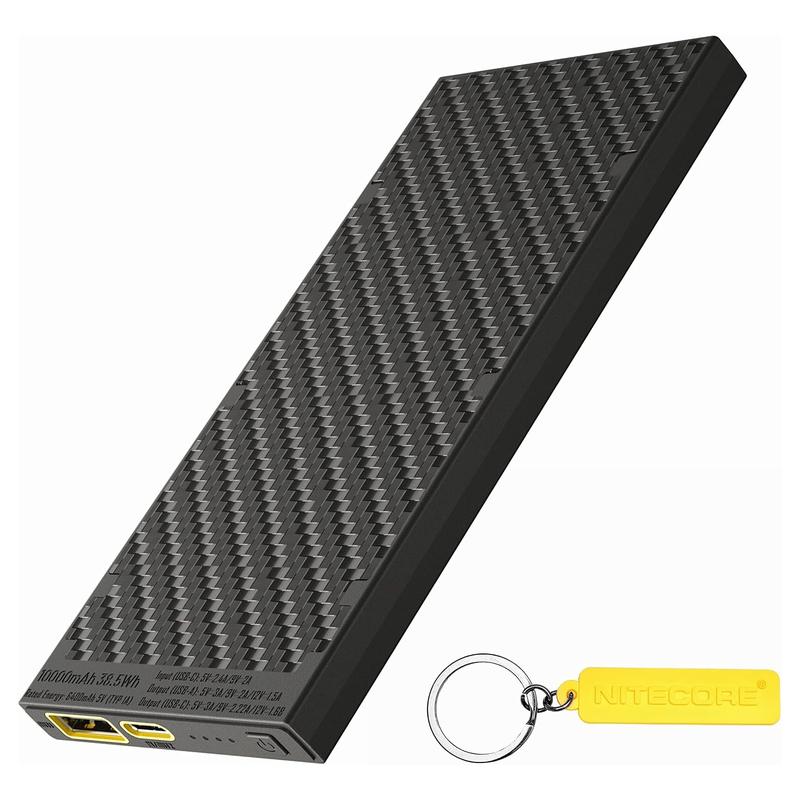
Do: charge it before a flight and start the day with the indicator full. Don't: run it to empty and then store it empty for a season. Lithium cells prefer a partial charge if they will sit for months. Don't: buy the Gen 2 because a photo showed a cable you needed. Count the accessories in the title. The bank is the product. A cable you already trust is the rest.
How to carry a bank so it is legal and useful
Lithium power banks go in the cabin, in a carry-on or a pocket, not in the suitcase you check. That is the rule that keeps a problem in the cabin where it can be dealt with, instead of in the hold. Keep the bank where you can pull it out at security without unpacking the cube that holds your socks. A zipper pocket on the daypack is the right home. A loose bank in a bag of keys will scratch, and the port will fill with grit.
Charge the bank from a wall brick you trust, not from a mystery USB port in a bus seat if you can avoid it. Then charge the phone from the bank. Daisy-chaining three unknown adapters is how people end up with a warm brick and a phone that gained two percent. One cable, one bank, one phone is a system you can debug. If you also carry a headlamp that charges by cable, give it the port that matches its plug and do it in the room, not on a windy overlook with the only cable dangling over a crack.
Cold shrinks what you can get out of the cell. A bank that felt full in the hotel will look weaker at a windy gate or on a dawn trail. Keep it in an inside pocket, close to you, if the day is actually cold. Heat is the other limit. A dashboard, a closed car, and a sunny rear shelf are where these packs get ruined. The pocket is the storage. The dashboard is not.
What actually fails on a pocket power bank
Cables fail first. A port that wobbles, a cable that only works at one angle, and a phone that charges when you hold the plug in are cable problems. Swap the cable before you blame the cell. Ports fail next, usually because a pack was forced in at an angle in a tight pocket. If a port is loose, retire the bank. A loose port is a heat problem waiting for a flight.
Capacity fails as a promise when the number on the box is a dream. 10,000 mAh on the cell is not 10,000 mAh delivered to the phone, because the voltage has to be converted and some energy leaves as heat. Both of these cards are in the same class. Neither will run a weekend of navigation, photos, and a hotspot with battery to spare. If the trip has no outlet for three days, carry a second bank or a plan to use the phone less. Do not "solve" it with a no-name pack that prints 50,000 on the label and weighs less than a deck of cards.
The other failure is the wrong model in a black case. Anker sells many 10K shapes. A1229, with USB-C and USB-A and the 8.6-ounce size, is this card. Nitecore's NB10000 Gen 2, at about 5.29 ounces and 18 watts, is the other card. A bundle that adds a flashlight cable, or a Gen 1 with a different weight, is a different buy. Read the model. Then read the ounces. If the listing will not tell you the weight, you do not yet know what you are carrying.
What this fight is not
It is not a wall charger, and it is not a solar panel. The bank stores energy. Something else has to fill it. It is not a towel, a cube, or a backpack, even though those are what surround it in a travel kit. The towel still dries you. The bank still needs a dry pocket. It is not a power station for a campsite coffee maker. Those are a different weight class and a different airline conversation.
It is not a reason to leave the phone on a bright screen for the whole hike. The lightest bank in the world cannot outrun a screen that never sleeps. Airplane mode, a paper backup of the ticket, and a bank that started full will beat a heavier brick you forgot to charge.
So which power bank should you buy?
Buy the Anker A1229 when you want 10,000 mAh, USB-C and USB-A, a cable in the box, and you can live with about 8.6 ounces. Buy the Nitecore NB10000 Gen 2 when you want the same class of cell at about 5.29 ounces, with 18-watt USB-C and Quick Charge, and you already own a cable. Carry it in the cabin. Charge it before you leave. Ignore any black brick that will not tell you the model and the weight.
Frequently asked questions
Anker 10,000 mAh or Nitecore NB10000 Gen 2?
Anker A1229 if you want USB-C and USB-A, a cable in the box, and can carry about 8.6 ounces. NB10000 Gen 2 if you want about 5.29 ounces and 18-watt USB-C and Quick Charge.
Are both packs 10,000 mAh?
Yes. That is the cell class on both cards. The phone receives less than the labeled number because conversion wastes some energy as heat. A 20,000 mAh bank is a different product.
Will either one charge a laptop?
Do not plan on it. These are phone and headlamp packs. A laptop wants a larger bank and a higher wattage than the 5-volt 3-amp Anker or the 18-watt Nitecore on these cards.
Where do I put it on a plane?
In the cabin, in a carry-on or a pocket. Lithium power banks do not belong in the checked suitcase. Keep it where you can take it out without unpacking the cubes.
Does the Nitecore include a cable?
This card is the bank and a small tag. Do not assume a pile of cables. The Anker A1229 listing includes a USB-C to USB-C cable. Pack a cable you have already tested either way.
How do I store it between trips?
Leave a partial charge on it, not empty and not on a hot dashboard. Charge it the night before you fly. A bank that leaves the house at half will be a paperweight by the gate.