
Peak Design Packing Cube Medium vs Eagle Creek Pack-It Isolate
Written by John Wren|
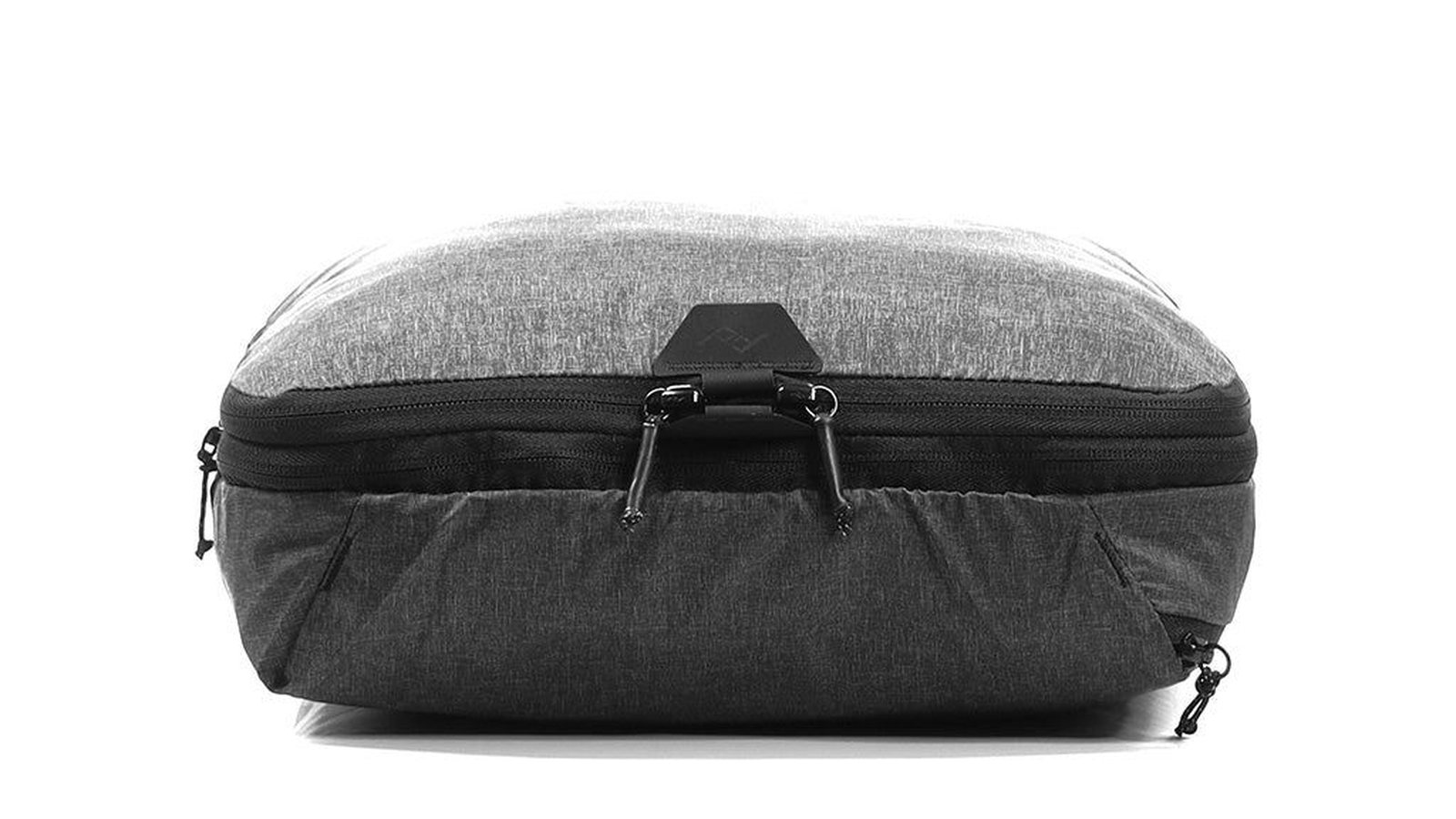
Choose the Peak Design Packing Cube Medium if you open it every night and want a clean side and a dirty side. Choose the Eagle Creek Pack-It Isolate compression cube if the job is to flatten soft clothes so a carry-on still closes.
Key takeaways
- Peak Design medium opens flat and splits clean from dirty.
- Isolate compression flattens loft.
- Confirm medium, not a small cube in a medium photo.
- A cube is a brick inside the bag, not the bag.
Peak Design Packing Cube Medium vs Eagle Creek Pack-It Isolate Compression Cube is a suitcase-organizer fight: a weatherproof cube with a tear-open zipper and a dirty-clothes pocket, against a lighter compression cube that squeezes a pile of shirts down to a flatter slab. If the cube lives in a travel pack you will open every night, buy the Peak Design medium. If the cube’s job is to crush a down jacket and a stack of T-shirts so a carry-on still closes, buy the Isolate compression cube. Neither is the backpack. The backpack is a different purchase you already made or still need to make.
Short version. A 45-liter travel bag is the shell. A carry-on pack is the other shell. A hiking pack is a trail, not a boarding group. An overland kit can still use a cube for the clothes that have to stay apart from the stove. Check live prices.
A packing cube is a bag inside the bag. It keeps a shirt from mating with a damp swimsuit, and it lets you pull one brick of clothes instead of unpacking the whole suitcase on a hostel floor. Compression is a second decision. It helps with loft and air. It does not help with a boot, a book, or a camera. Crush what is soft. Leave what is hard in its own place.
| Job | Peak Design medium | Eagle Creek Isolate cube | Our call |
|---|---|---|---|
| Open it every night on a bed | Tear-away zipper, clean and dirty sides | A compression zip and a top handle | Peak Design |
| A puffy jacket that owns the suitcase | An expansion zip helps | Compression is the point | Isolate |
| A wet swimsuit apart from the shirts | Secondary pocket | Use a separate small bag | Peak Design |
| Ounces, a lot of cubes | Heavier, tougher shell | Eagle Creek lists the medium around 2.9 ounces | Isolate if you are counting |
| The backpack itself | Not a pack | Not a pack | Pick the bag first |
Confirm Peak Design Packing Cube Medium, model BPC-M if you want the medium charcoal cube, not the small and not the shoe cube. Confirm Eagle Creek Pack-It Isolate Compression Cube, not the older Specter set and not a packing folder. Medium is a size. Read the inches.
Who should buy the Peak Design cube, and who should buy the Isolate?
Buy the Peak Design medium if you live out of a carry-on and you want one cube that opens flat, splits clean clothes from worn clothes, and survives a wet counter. Buy the Isolate if your problem is loft: a jacket, a fleece, a pile of cotton that will not sit still until something squeezes it. Buy a small set of cubes, not one heroic cube. One cube the size of the suitcase is just a suitcase with an extra zipper.
Measure the bag you already own. A Farpoint and an Allpa do not have the same mouth. A cube that will not pass the opening is a cube you will unpack in the lobby. A 45-liter travel pack will swallow a medium cube and still want a second one for the kit that is not clothes.
What the Peak Design medium is actually for
The Peak Design Packing Cube Medium is the middle size in that cube line, the charcoal BPC-M if that is the color in the listing. Peak Design builds it from a weatherproof recycled shell, with an UltraZip that is meant to tear open across the top instead of creeping around three sides like a cheap cube. A second opening is the dirty-clothes side, so yesterday’s shirt does not live on top of tomorrow’s. An expansion and compression zipper lets the cube grow or shrink a step. The company calls the shell a lifetime item in their own guarantee language. That is their warranty story. It is not a promise you can drag the cube behind a taxi.
The Peak Design Packing Cube Medium is the medium cube. Confirm medium, not small, not large. Check live prices. The medium is the one that holds a few days of shirts and underwear for one person, not a week of cold-weather layers and not a single T-shirt. If you overstuff it, the tear-away zip still has to close. A cube that only closes when you sit on it is too full, and the compression idea belongs to the other product.

Do: put worn clothes in the dirty side the first night, so the habit exists before the cube is a crisis. Don’t: put a wet swimsuit in the clean side because the dirty side was full. A wet suit belongs in its own thin bag even if the shell is weatherproof. Weatherproof means a spill. It does not mean a cube is a dry bag you can dunk. Do: use the handles Peak Design put on the cube. Don’t: yank the zipper pull sideways until the slider skips a tooth. If the slider skips, stop. Forcing it is how a “lifetime” zipper becomes a repair.
What the Isolate compression cube is actually for
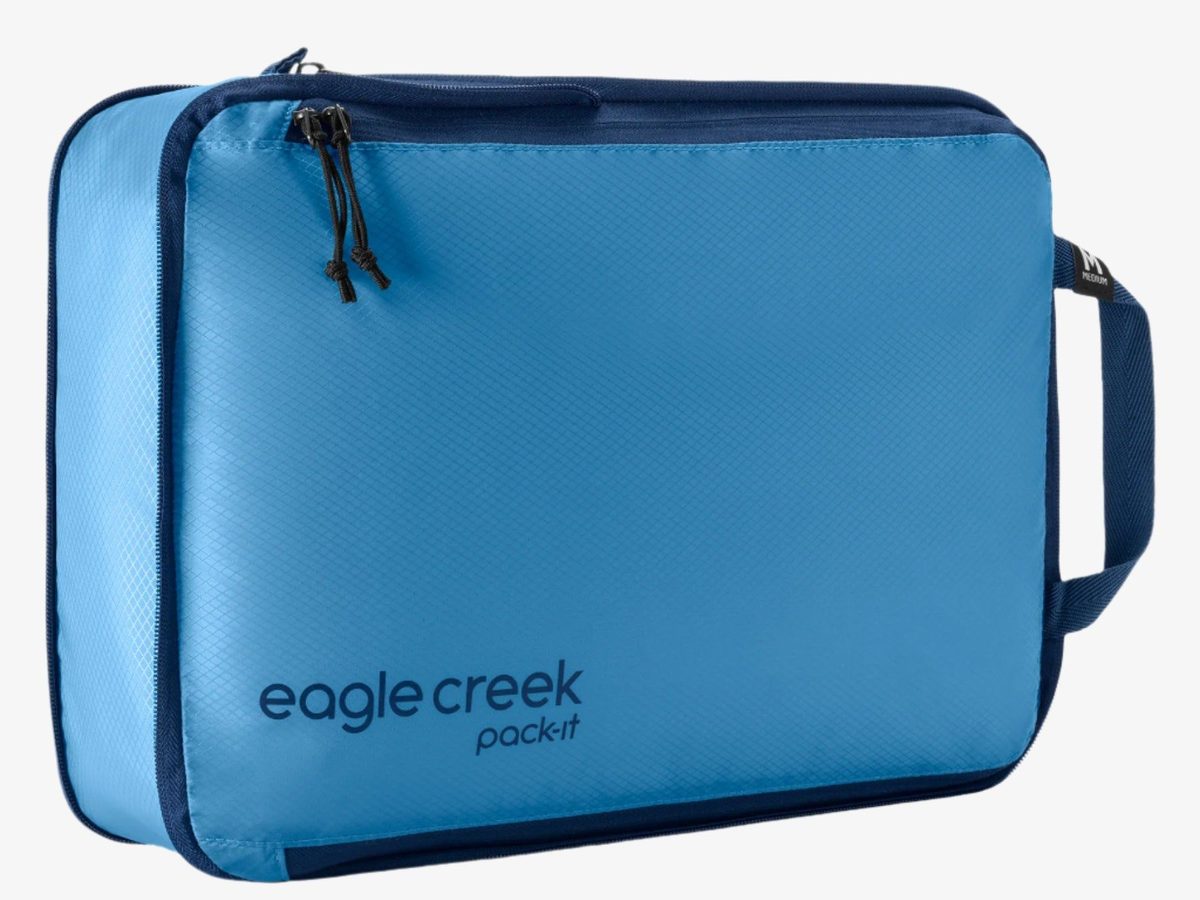
The Pack-It Isolate Compression Cube is Eagle Creek’s light cube with a second zipper that draws the pile down. Eagle Creek describes the medium as roughly 14 by 10 inches, about three inches tall before you compress it and about an inch tall after, with a weight around 2.9 ounces. The fabric is their light ocean-recycled nylon, translucent enough that you can see a color through it, with a top handle. Compression is for puff and for air. You fold clothes, zip the main compartment, then run the compression zipper until the cube goes flat. You stop when the zipper resists. A zipper that needs a knee is past the design.
The Eagle Creek Pack-It Isolate compression cube is the compression cube. Confirm Isolate and compression, not a Specter cube from an older photo and not a folder that folds a dress shirt. Check live prices. The medium is one person’s compressible clothes, not two people’s jackets. If you need more, buy a second medium or a small, not a single cube you will hate. Translucent fabric helps when you are half awake. It is not a window. Dark socks still look like dark socks.

Do: compress soft layers only. Don’t: compress a toiletry kit, a cable, or a boot and then wonder why the zipper failed. Do: leave a little air so the cube still flexes into the bag. Don’t: compress a down jacket into a brick every day of a month-long trip and expect the loft to survive forever. Loft comes back if you let it rest. It does not come back from being a pancake for a year in a closet.
Shirts in the cube. Hard things outside it.
Roll or fold shirts, underwear, and a light layer. Put the cube in the bag with the handle where your hand will find it. Put shoes in a separate bag, even a plastic one, because a cube is not a shoe cave and dirt in the threads of a cube is forever. Put liquids in a pouch that can leak without soaking the only dry shirt. The Peak Design dirty pocket is for worn clothes that are dry enough. A soaked layer goes outside the cube, in a thin sack, until it dries.
Toiletries stay out. A shampoo cap opens itself in a cube. Cables stay in a small pouch so they do not migrate into a sleeve. Overland gear — a stove, a fuel canister, a knife — does not go in a packing cube. Fuel and a compression zipper are a bad paragraph. The cube is clothes. The camp kit is the camp kit.
Pick the bag, then the cube that fits its mouth.
A clamshell pack wants cubes that match the panels. A top-loader wants cubes narrow enough to drop through the collar. Farpoint against Allpa is that conversation. Travel 45 against Black Hole MLC is the larger version of it. Buy the bag you will carry, then buy the cube that fits. A medium Peak Design cube in a 45-liter travel pack is a natural pair because Peak Design sizes them to live together. The same cube in a small personal item may be the only thing that fits, which is a clue you bought the wrong size cube.
A trail pack can take a cube for town clothes on a travel day and should not be packed like a suitcase on a ridgeline. The cube comes out when the hike starts, or it stays home. Hiking with a compression cube of jeans is how a 46-liter pack becomes a regret.
Compression has a stop. Find it before the zipper does.
Air is what you are squeezing out of a jacket. Once the air is gone, more zipper only stresses the seam. If the Isolate’s compression zip stops moving smoothly, stop. Rearrange the pile. A lumpy fold compresses worse than a flat fold. The Peak Design expansion zip is the opposite direction: it gives you a little more room when the week got longer. It is not a license to pack a second person’s clothes in a one-person cube.
Zippers fail at the corners when people yank. Pull along the track. If a tooth splits, a travel repair is a slider or a safety pin and a promise to stop sitting on it. Do not melt a nylon zipper with a lighter because a video made it look clever. You will melt the cube.
Weatherproof is not submersible.
Peak Design’s shell is treated and coated so a splash and a damp counter do not soak the shirts. Eagle Creek’s Isolate fabric is water-resistant in the same everyday sense. Neither cube is a roll-top dry bag. A day of rain on a backpack will find a zipper if the pack itself is soaked through. If the clothes must stay dry in a swamp of a hull or a kayak hatch, use a real dry bag and let the cube organize what is already dry. A truck kit can use both: a dry bag for the spill, a cube for the drawer.
If a bottle leaks inside the cube, empty it, rinse the shell, and dry it before the next pack. A cube that smells like sunscreen forever was never rinsed. Hang it. The mesh on the Peak Design dirty side needs the same courtesy.
How many cubes is enough?
One medium for clean clothes, one smaller cube or the dirty side for worn clothes, and a separate sack for laundry at the end of the week is enough for a carry-on traveler. A family needs one cube per person in a color or a ribbon you can tell apart in the dark. Do not buy eight cubes because a set was a bundle. Empty cubes still take space and still confuse you at 6 a.m.
Label them if more than one person is packing. A strip of tape with a name beats a matching set of charcoal rectangles. The Isolate’s translucent face helps. The Peak Design cube’s colorways help if you actually buy two colors instead of three identical ones.
What this fight is not
It is not the backpack, the suitcase, or the personal item. Those have liter limits and airline rules that change. Weigh the bag when it is packed if the airline is picky. The cube does not change the scale. It is not a packing folder for a suit. A suit wants a folder or a garment sleeve. It is not a women’s hiking pack review and it is not a stove. It is two ways to keep clothes in a shape you can lift out with one hand.
It is not a substitute for packing less. Compression rewards a person who already edited the pile. It punishes a person who is hiding a second wardrobe inside a zipper. If the bag will not close, take something out. The cube did its job by showing you the pile.
So which packing cube should you buy?
Buy the Peak Design Packing Cube Medium if you open the bag every night and you want a dirty-clothes side and a zipper that opens across the top. Buy the Eagle Creek Pack-It Isolate compression cube if a puffy jacket is stealing the suitcase and you want it squeezed flat. Our default for a travel pack you live out of is the Peak Design medium. Our default for a stuffed carry-on and a loft problem is the Isolate. Confirm the size in inches before you order a “medium,” because the word is not a standard. Check live prices. Then pack the bag you already chose, not a new bag you invented to match the cube.
Start with the 45-liter question if you do not own the shell yet. A perfect cube in the wrong pack is still the wrong pack. The cube just makes that obvious faster, which is useful, and which is the whole reason to own one.
Frequently asked questions
Peak Design Packing Cube Medium or Eagle Creek Pack-It Isolate?
Peak Design medium if you open the cube every night and you want a clean side and a dirty side. Eagle Creek Isolate if the job is to crush soft clothes so a carry-on still closes.
Does a compression cube shrink boots or a camera?
No. Compression helps loft and air in shirts and a jacket. Hard things stay outside the cube.
Which Peak Design cube is the medium?
Confirm the medium, the BPC-M, not a small cube in a medium listing. The medium is the one with the clean and dirty divider in this comparison.
How flat does the Eagle Creek Isolate cube go?
Eagle Creek’s medium Isolate starts around three inches deep and compresses to about an inch when the second zipper is closed. Soft clothes compress. A book does not.
Do packing cubes replace a travel backpack?
No. The cube is a brick inside the bag. The 45-liter travel pack or the carry-on is the shell.
Can a packing cube keep clothes apart from damp gear?
Yes, for clothes that need to stay apart from a wet vest or a stove. It is still a clothes cube, not a dry bag you can swim with.