
Fenix PD35R+ORG vs Streamlight 88082
Written by John Wren|
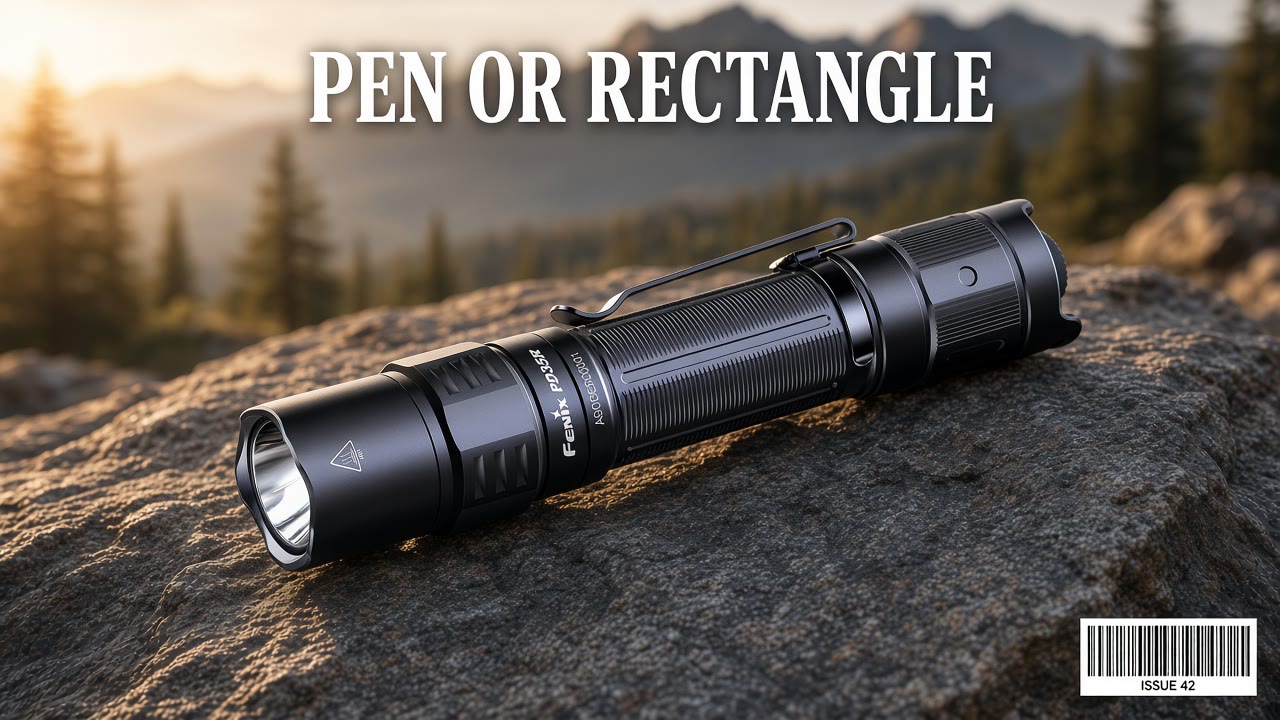
Choose Fenix model PD35R+ORG for the bundle. Both lumen cells say 1700. The time cells say 100 hours and 2 hours without naming a mode. The included line lists a flashlight, a holster, a lanyard, and a USB-C cable. Choose Streamlight model 88082, UPC 080926880825, for 500 lumens, 6,800 candela, and 165 meters. The time cells say 5 hours and 2 hours. The shape cell says Rectangular.
Key takeaways
- PD35R+ORG prints 1700 lumens twice. Battery life says 100 hours. Runtime says 2 hours.
- The bundle includes a flashlight, a holster, a lanyard, and a USB-C cable. The shape cell says Pen.
- 88082 prints 500 lumens twice, plus 6,800 candela and 165 meters. UPC 080926880825.
- The Streamlight shape cell says Rectangular. The bulb cell says Wedge. IPX7 is on this card only.
Buy the Fenix PD35R+ORG bundle, model PD35R+ORG, when you want the rechargeable light the brightness cell calls 1700 lumens, and when you will ignore a battery-life cell that says 100 hours next to a runtime cell that says 2 hours. Buy the Streamlight ProTac 2L-X USB, model 88082, UPC 080926880825, when you want the light the brightness cell calls 500 lumens, and when you will ignore a shape cell that says Rectangular on a flashlight and a bulb-base cell that says Wedge. These are pocket lights. They are not water filters and they are not multi-tools.
Short version. A fixed blade and a pocket multi-tool cut and turn screws. Two more multi-tools do the same class of job. Two fire starters make heat. Two water filters make water you can drink. Model PD35R+ORG and model 88082 make light. Match the model before you match the word tactical.
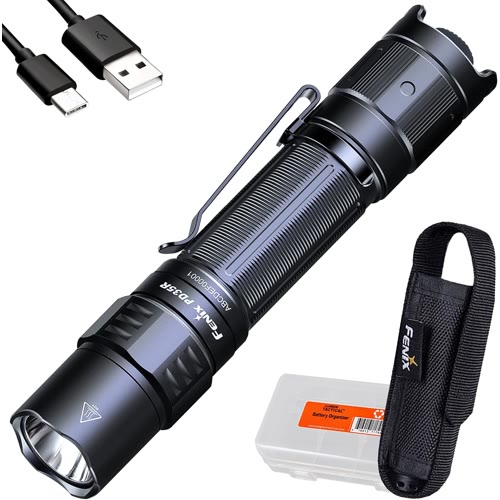
The Fenix card is the PD35R+ORG bundle, not a bare PD35R with nothing else in the title and not a PD36R Pro. The model cell says PD35R+ORG. The white-brightness cell says 1700 lumens. The light-output-maximum cell also says 1700 lumens. Those two cells agree, which is rarer than it should be. The color cell says Black. The finish cell says Anodized. The style cell says compact. The manufacturer cell says Fenix Light. The warranty cell says 24 months. The unit-count cell says 1. The mounting-type cell says Clip-on. The additional-features cell says Easy To Use. The water-resistance cell says Waterproof. The specification-met cell says ANSI. The included-components line lists a flashlight, a holster, a lanyard, and a USB-C charging cable. Easy To Use is not a mode chart. ANSI is not a lumen number. The 1700 is the lumen number, and it is printed twice.
The battery-type cell says Lithium Polymer. The number-of-batteries cell says 1 lithium-ion battery required, and it says the battery is included. The battery-description cell says Lithium-Ion Polymer. Lithium polymer, lithium ion, and lithium-ion polymer are three labels for a rechargeable cell. They are not three batteries. The included cable is USB-C, which is the charging path this card names. The conflict that matters is the time. The battery-life cell says 100 hours. The runtime cell says 2 hours. One hundred hours and two hours cannot both be the turbo runtime of a 1700-lumen light. They can be two different modes, a high mode and a low mode, filed in two cells that do not name the mode. The card does not print a mode table in the specification rows. Do not tell a partner the 1700-lumen setting runs for 100 hours. Do not tell them it runs for 2 hours unless you are ready to say the cell does not name the mode. A search result for this ASIN also shows 0.91 by 1 by 5.35 inches and 5 ounces. Those figures showed up as a search snippet, not as a detail-table row you can point at next to the 1700. Treat them as snippet text. The cells you can cite for output are 1700 and 1700. The cells you can cite for time are 100 hours and 2 hours, and they disagree.
The light-path-distance cell says 386 yard, singular. Yards are not meters. Three hundred eighty-six yards is a long throw for a pocket light, and the grammar is a marketplace singular. The card does not print candela next to that yard figure. The shape cell says Pen. A PD35R-style light is a tube with a head and a pocket clip. Pen is closer than the Streamlight card's rectangle, and it is still a sloppy word. A pen light is usually a thinner inspection lamp. This card's 1700-lumen cells are not a pen-light output. Clip-on agrees with a pocket clip. Waterproof agrees with a rain claim and does not print an IP number. The Streamlight card is the one that prints IPX7. Do not move IPX7 onto the Fenix card. The holster, the lanyard, and the USB-C cable are the bundle the model suffix ORG is doing on this listing. A bare PD35R without the organizer pieces is a different buy even if the head says PD35R. Count the holster and the cable when the box arrives.
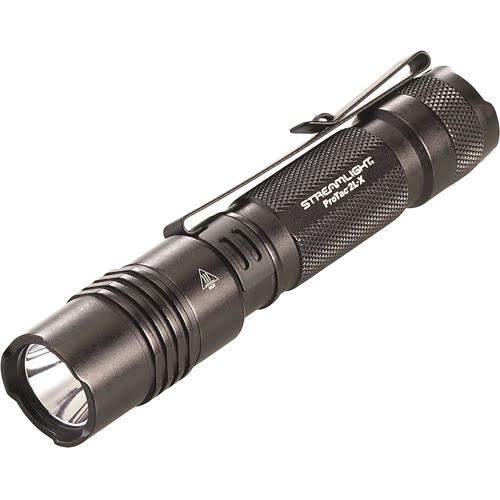
The Streamlight card is model 88082, the ProTac 2L-X USB. The UPC is 080926880825. The GTIN is 00080926880825. The white-brightness cell says 500 lumens. The light-output-maximum cell says 500 lumens. Those two agree with each other and disagree with the Fenix's 1700. The highlight line says 500 lumens, 6,800 candela, a 165-meter beam, USB rechargeable capable, and IPX7 waterproof. The light-path cell says 165 meters. The highlight and the light-path cell agree on 165 meters. They do not agree with the Fenix's 386 yards, and they should not. Different lights, different throws. One hundred sixty-five meters is about 180 yards, not 386. Cite each card's own distance cell.
The battery-life cell says 5 hours. The runtime cell says 2 hours. Five and two are the Streamlight's version of the Fenix's 100 and 2. Neither cell names the mode. The highlight does not print a runtime next to the 500 lumens. Do not assign 5 hours to high and 2 hours to turbo without the card saying so. Say the cells disagree and the mode is unlabeled. The battery-type cell says Lithium Ion. The number-of-batteries cell says 1, included. That is cleaner than the Fenix's three chemistry labels. The voltage cell says 3.7. A single lithium-ion cell at 3.7 volts is a familiar nominal voltage. The card does not say 18650 or 18350 in the specification row. Do not add a cell size the row does not print.
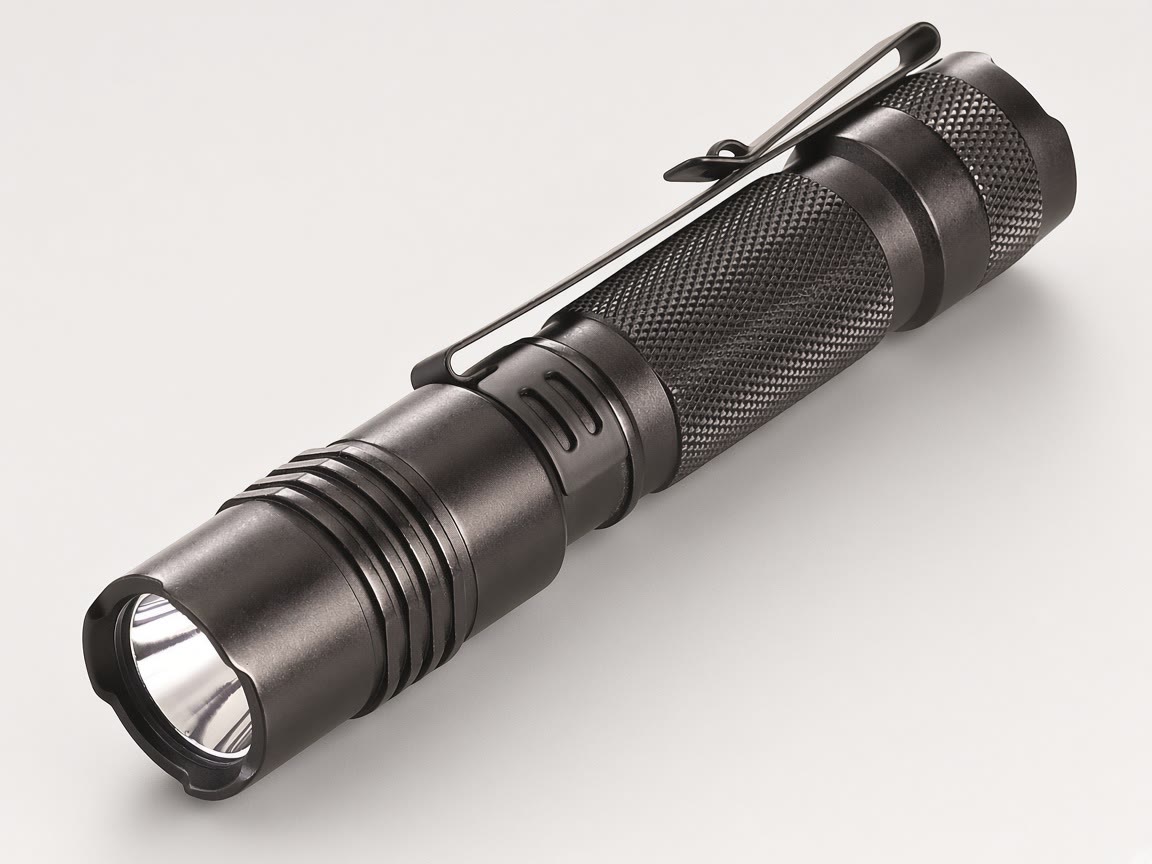
The shape cell says Rectangular. The flashlight in the photo is a round tube. Rectangular is the wrong shape word, the same class of error as the Fenix's Pen, except Pen is at least a tube. The bulb-base cell says Wedge. The bulb-shape-size cell says B10. A rechargeable LED flashlight does not take a wedge-base incandescent lamp, and B10 is a bulb-code from a different aisle. Ignore wedge and B10. The wattage cell and the light-source-wattage cell both say 9.62 watt-hours. Watt-hours are energy. Watts are power. Filing energy in a wattage column is the conflict. Nine point six two watt-hours is a battery-energy figure, not a 9.62-watt bulb. The voltage cell of 3.7 sits next to that energy figure without a capacity in milliamp-hours. Do not divide 9.62 by 3.7 and publish a capacity the card did not print, unless you are showing the arithmetic as arithmetic and not as a cell. The item-length cell says 5.05 inches. The water-resistance cell says Waterproof. The specification-met cell says ANSI FL1, CE, and IPX7. IPX7 is the ingress line. ANSI FL1 is the flashlight standard the cell names. The color cell says Black. The style cell says Clear Retail Packaging. TEN-TAP is in the special-features list. TEN-TAP is Streamlight's name for a switch sequence that picks a mode. The card does not print the tap map. Do not invent the sequence. The maker's family page for the 2L-X talks about a micro-USB port and about 5.14 inches and 4.4 ounces. This Amazon card says 5.05 inches and does not say micro-USB in the cells above. Keep the maker sheet separate. Quote 5.05 inches here. Do not call this card micro-USB. The included highlight says USB rechargeable capable, which does not name the connector.
| Job | Fenix PD35R+ORG | Streamlight 88082 | Buy |
|---|---|---|---|
| Output cells | 1700 lumens and 1700 lumens | 500 lumens and 500 lumens. Highlight adds 6,800 candela | Fenix if you are buying the larger lumen cell. Streamlight if 500 is the number you want printed twice. |
| Time cells | Battery life 100 hours. Runtime 2 hours. Modes unlabeled | Battery life 5 hours. Runtime 2 hours. Modes unlabeled | Do not assign either number to turbo without a mode name. |
| Distance | 386 yard | 165 meters, and the highlight agrees | Different units, different lights. Do not convert and merge them. |
| Battery words | Lithium polymer, lithium ion included, lithium-ion polymer. USB-C cable included | Lithium ion, one included, 3.7 volts. USB rechargeable capable | Fenix names USB-C. Streamlight's card does not name the plug. |
| Shape junk | Pen. Clip-on. Waterproof. ANSI. No IP number | Rectangular. Wedge base. B10. IPX7. ANSI FL1. 9.62 watt-hours filed as wattage | Ignore pen, rectangle, wedge, and B10. |
Who should buy the Fenix bundle, and who should buy the Streamlight?
Buy PD35R+ORG if you want the 1700-lumen cells, the USB-C cable, the holster, and the lanyard in the included line, and if you will hold 100 hours and 2 hours as unlabeled modes instead of a single runtime. Buy it if a 24-month warranty cell and an anodized black finish are the durability words you wanted on the card. Buy 88082 if you want 500 lumens printed in both output cells, 6,800 candela and 165 meters in the highlight, IPX7 and ANSI FL1 in the specification cell, and one lithium-ion battery included. Buy it if you will ignore Rectangular, Wedge, B10, and a wattage cell that says watt-hours.
Do not buy the Fenix because 100 hours at 1700 lumens sounded like a weekend of turbo. Do not buy the Streamlight because Rectangular sounded like a panel light. Do not buy either as a headlamp. The mounting cell on the Fenix says clip-on, which is a pocket clip, not a headband. The Streamlight card does not print a headband. Do not buy a PD36R Pro and expect this bundle's included list. The model is PD35R+ORG.
What PD35R+ORG is actually for
This card is a black anodized Fenix pocket light sold as a bundle. The useful identity is model PD35R+ORG, 1700 lumens in both output cells, a USB-C cable, a holster, a lanyard, a clip, a 24-month warranty, and a 386-yard distance cell. The warnings are 100 hours versus 2 hours, three battery-chemistry labels, the word Pen, and a waterproof cell with no IP number. Easy To Use does not tell you the mode map. ANSI does not tell you the candela. The card does not print 6,800 candela or any other candela. That figure belongs to the Streamlight highlight. A search snippet's 5.35 inches and 5 ounces are snippet text. If you need a length you can point to in a table, this card's detail rows did not give you one beside the lumens. Measure the light.
USB-C in the included line is the connector you can pack a cable for. The battery is included, whichever of the three chemistry names you believe. One battery, unit count 1. A second cell is a different order. The holster is a pouch, not a firearm holster. This article is a flashlight. There is no weapon-light claim on the card. Clip-on means it rides in a pocket or on a pack strap. It does not mean it clamps to a bicycle bar unless you add a mount the card does not include.
What model 88082 is actually for
This card is a black Streamlight ProTac 2L-X USB in clear retail packaging, which is the style cell and not a description of the lens. The useful identity is model 88082, UPC 080926880825, 500 lumens, 6,800 candela, 165 meters, IPX7, ANSI FL1, CE, 5.05 inches, one included lithium-ion battery, 3.7 volts, and TEN-TAP as a named switch feature without a printed map. The warnings are 5 hours versus 2 hours, Rectangular, Wedge, B10, and 9.62 watt-hours sitting in a wattage field. USB rechargeable capable does not name micro-USB or USB-C. The maker sheet's micro-USB note stays on the maker sheet. If the port on the light you unpack is a different shape from the cable you packed, the card did not warn you. Look at the port.
Five point zero five inches is the length cell. A maker page that says 5.14 inches is a different document. Do not average them. Clear retail packaging means a box you can see through, or it means the style name Streamlight uses for a hanging pack. It does not mean the bezel is clear. The lens is how the 165-meter beam leaves the head. IPX7 is a temporary-immersion claim as that code is usually read. The card does not print the depth and the minutes next to the code. Do not take the light swimming because the cell says IPX7. Waterproof on the Fenix card is even less specific. Rain is the outdoor job both words can support. A river crossing is a test the cells do not describe.
How to carry them without mixing the two cards
Clip either light where you can reach it with one hand. The Fenix card says clip-on and includes a holster and a lanyard, so you have three ways to carry that bundle if all three arrive. The Streamlight card does not list a holster in the cells above. Do not expect the Fenix pouch to be in the Streamlight box. Charge the Fenix with the USB-C cable the included line names. Charge the Streamlight with the cable that fits the port you see, because the card only says USB rechargeable capable. Do not plan a 100-hour search at 1700 lumens. Do not plan a 5-hour search at 500 lumens and also a 2-hour search at 500 lumens as if both cells were the same mode. Step down is how these lights behave, and neither card prints the step-down curve.
The distance cells are not interchangeable. Three hundred eighty-six yards and 165 meters answer different listings. Use the Fenix number only for the Fenix, and use it with the singular "yard" the cell printed so you remember it is a marketplace field. Use 165 meters and 6,800 candela together only for the Streamlight, because they appear on the same highlight. Candela is how the hotspot is specified. Lumens are how the total output is specified. A 1700-lumen cell without candela does not tell you the hotspot. A 500-lumen cell with 6,800 candela tells you more about the beam than the lumen number alone. That is a reason to buy the Streamlight card's specification, not a reason to invent candela for the Fenix.
What actually fails on these two cards
The Fenix card fails when 100 hours is pasted next to 1700 lumens as one mode. It fails when 2 hours is pasted the same way. It fails when lithium polymer and lithium ion are ordered as two spare batteries. It fails when Pen sends the order to a thin inspection lamp. It fails when a snippet's 5.35 inches is treated as a table cell and then fails a pouch you sized from it. It fails when IPX7 is borrowed from the Streamlight card. It fails when a PD36R Pro, or a bare PD35R without the holster and cable, is accepted because the head engraving looked right.
The Streamlight card fails when Rectangular, Wedge, and B10 are used to buy a lamp from the automotive-bulb aisle. It fails when 9.62 watt-hours is read as a 9.62-watt bulb. It fails when 5 hours and 2 hours are assigned to named modes the card does not name. It fails when the maker sheet's micro-USB port and 5.14-inch length replace the 5.05-inch cell and the unnamed USB phrase. It fails when 500 lumens is compared with 1700 and the candela line is ignored, or when candela is ignored and the lights are ranked on lumens only. It fails when TEN-TAP is demonstrated with a sequence the card never printed.
What this comparison is not
This is not a night-hiking guarantee. Neither card prints a trail test. This is not a headlamp comparison. This is not a price quote. Use the buttons for the live listing. This is not a water-filter, fire, or multi-tool review. Those links are the rest of a pocket kit. This is not the PD36R Pro. This is not a mode chart copied from a different country's product page. If a foreign listing prints a turbo time and an ultralow time, leave it there. This card's American cells say 100 hours and 2 hours without mode names, and 1700 lumens in both output cells.
So which flashlight should you buy?
Buy the Fenix if you want model PD35R+ORG, 1700 lumens in both output cells, a USB-C cable, a holster, and a lanyard, and if you will throw out a single runtime until the card names the mode. Buy the Streamlight if you want model 88082, 500 lumens, 6,800 candela, 165 meters, IPX7, and a 5.05-inch length cell, and if you will throw out Rectangular, Wedge, B10, and the watt-hour figure in the wattage column. Buy neither if you wanted a headlamp, a 100-hour spotlight, or a pen that writes. The model stamp is the decision. The cells are the warnings.
Darren Yeo's film, "Fenix PD35R Review: My Favourite POCKETABLE Tactical Flashlight!," shows a PD35R. The written box list on that review names an 18650 cell, a holster, a lanyard, and a manual. It does not name the organizer that model PD35R+ORG adds, and it does not show the Streamlight 88082. Use it for a PD35R in a hand. Do not use it as a reading of the 100-hour cell or of UPC 080926880825.
Frequently asked questions
Fenix PD35R+ORG or Streamlight 88082?
PD35R+ORG if you want both output cells at 1700 lumens, plus the USB-C cable, holster, and lanyard. 88082 if you want both output cells at 500 lumens, 6,800 candela, and IPX7.
Does the Fenix run 100 hours at 1700 lumens?
The battery-life cell says 100 hours. The runtime cell says 2 hours. Neither cell names the mode. Do not paste 100 hours onto the 1700-lumen setting.
Which battery chemistry does the Fenix card name?
The battery-type cell says lithium polymer. The count cell says one lithium-ion battery, included. The description cell says lithium-ion polymer. The included cable is USB-C.
Is the Streamlight a rectangle with a wedge bulb?
The shape cell says Rectangular. The bulb-base cell says Wedge. The bulb-size cell says B10. The photo is a round LED flashlight. Ignore those three cells.
Does the Streamlight card say micro-USB?
No. The highlight says USB rechargeable capable. It does not name the connector. A maker sheet that says micro-USB is a different document from this card's 5.05-inch length cell.
Does the video show both lights?
No. Darren Yeo's clip reviews a Fenix PD35R. It does not show the Streamlight 88082, and the box list in that review is not the PD35R+ORG organizer.