
How to Camp a Week on BLM Land Without Getting Moved Along
Written by John Wren|
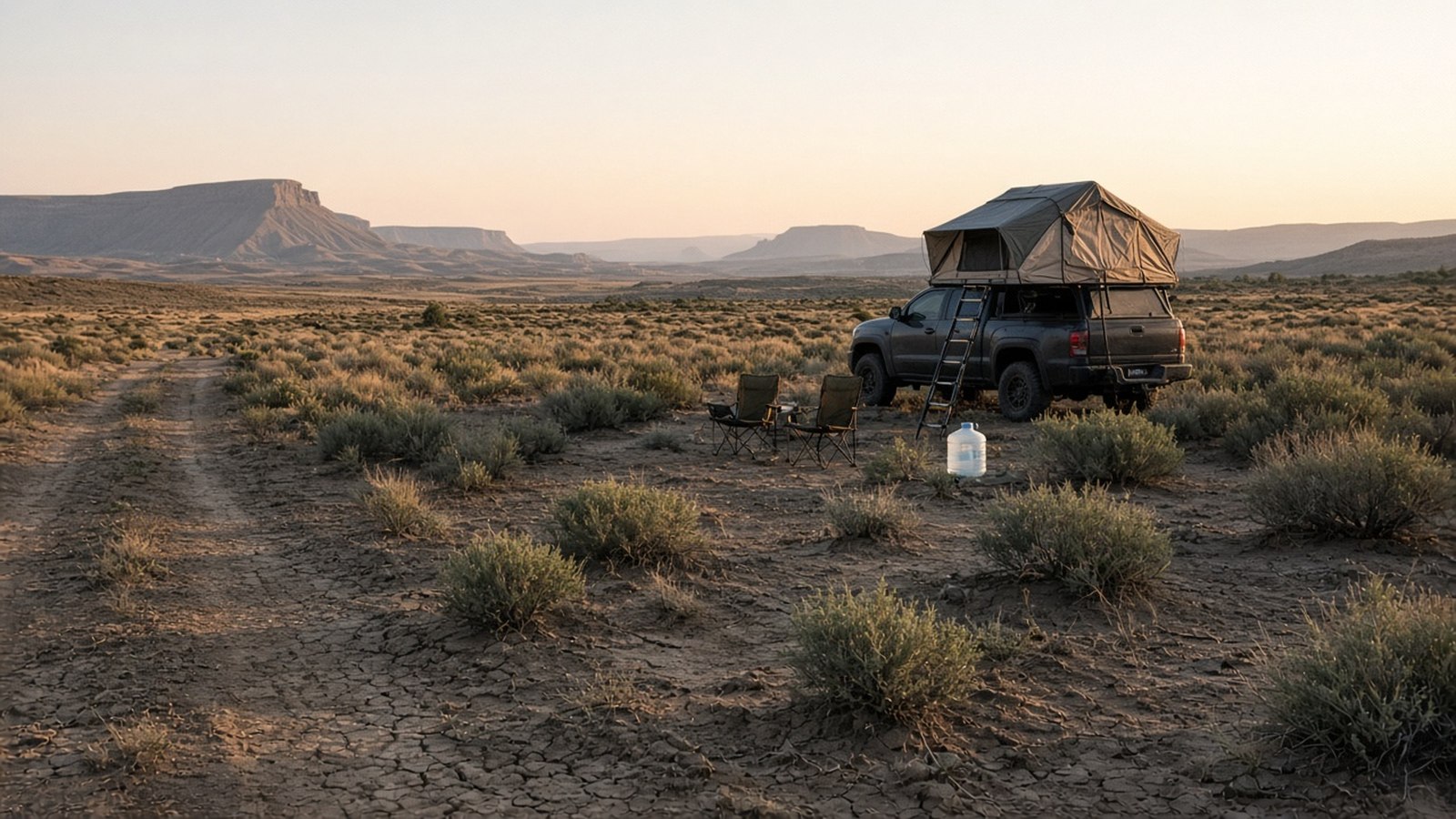
Check the specific BLM field office's current stay limit before you go, camp at least 100 to 200 feet from any live water source, and keep a compact, low-impact footprint. Plan real water and waste logistics for seven days, and check fire restrictions daily.
Key takeaways
- Check the specific field office's stay limit, not a general 14-day assumption.
- Camp 100–200 feet back from any live water source.
- A small, tidy footprint is what actually avoids attention.
- Fire restrictions can change mid-stay — check daily.
Camping a full week on BLM land without getting moved along comes down to three rules most people break in the first three days: know your actual stay limit before you arrive, keep your footprint small enough that a ranger driving past does not notice you, and never set up within the buffer distance from water, roads, or trailheads that most BLM field offices enforce. The 14-day rule is real in most areas, but a week-long stay done right rarely draws attention at all — it is the sprawling, permanent-looking camps that get a knock on the door.
Short version. Call or check the specific BLM field office's website for your area before you go — stay limits, fire restrictions, and dispersed camping boundaries vary by district, not just by state. Camp at least 100 to 200 feet from any live water source. Keep your camp compact: one vehicle footprint, no sprawling gear, no semi-permanent structures. Pair this with a real overland camping kit and the right vehicle setup. Check live prices.
BLM land is public, multiple-use land, and dispersed camping is a genuine right in most areas — but that right comes with real limits that vary district to district, and getting moved along usually happens because someone assumed a national blanket rule applied everywhere, when local field office rules are often stricter.
The 14-day rule is a starting point, not the whole answer
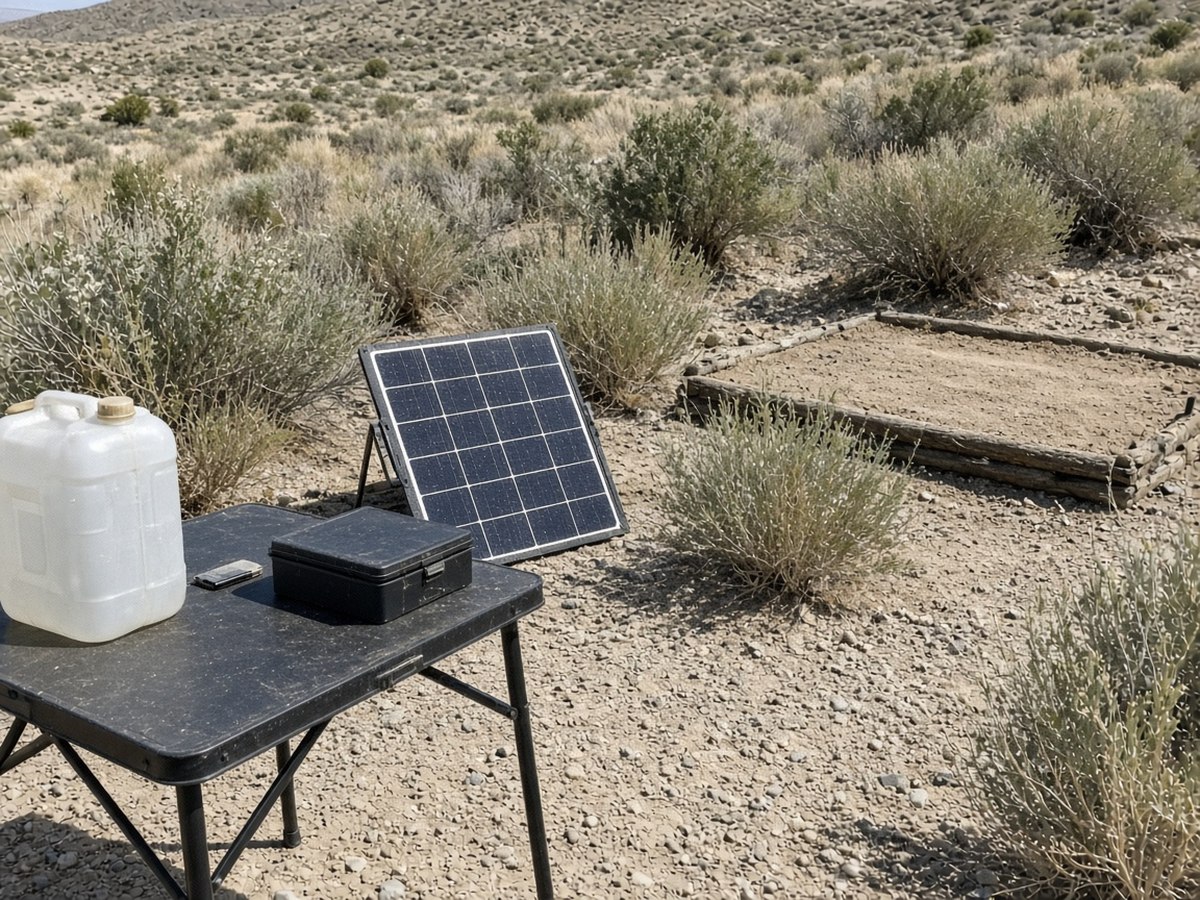
The Bureau of Land Management's general dispersed-camping policy allows up to 14 days in one location within a 28-day period on most BLM land, after which you must move at least 25 miles away before returning. That is the baseline — but individual field offices and specific management areas can set shorter limits, seasonal closures, or additional restrictions, especially near popular recreation areas, wildlife winter range, or drought-stressed regions.
Before you commit a full week to a specific piece of BLM land, call or check the website of the specific field office managing that land — not a general BLM overview page. A five-minute call can tell you the actual current stay limit, any fire restrictions in effect, and whether the specific area you are eyeing has a shorter posted limit than the general 14-day rule. Showing up with a week's worth of gear to a 3-day-limit area is the single most common way people get asked to move.
The water-distance buffer that gets overlooked
Most BLM field offices require dispersed camps to be set back 100 to 200 feet from any live water source — streams, rivers, springs, and lakes. This is not a suggestion; it protects water quality, wildlife access to water, and riparian vegetation that recovers slowly from repeated camping pressure. It is also one of the most commonly violated rules, because a spot right on the water is exactly where most people want to camp.
Carry your own water supply instead of camping streamside for convenience. A rigid water container gives you a week's drinking and cooking water without needing to camp on top of a spring or creek, and it is far easier to manage than hauling gallon jugs that puncture in a truck bed.

Keep the footprint small: the real key to not getting moved
Rangers and field office staff are not looking to move along a tidy, low-impact camper who is clearly following the rules. They are responding to complaints and visible impacts: sprawling multi-vehicle camps, permanent-looking structures, generators running at all hours, and camps that visibly damage vegetation or soil. Keep your vehicle footprint to a single previously-used site if one exists, avoid creating new tracks or clearing new ground, and resist the urge to spread gear across a wide area just because the land is open.
A week-long stay is a longer commitment than a weekend, which means small footprint choices compound. Rotate where you park within your site if the ground shows wear, use existing fire rings rather than building new ones where fire is permitted, and keep noise reasonable for neighboring dispersed campers who may be a quarter mile away but can still hear a generator running past 9 p.m.
Water, waste, and staying self-contained for a week
A full week without hookups means planning water and waste management seriously. Budget roughly a gallon per person per day for drinking and cooking at minimum, more if you plan to wash dishes or rinse off regularly, and bring at least one dedicated container for gray water that you pack out or dispose of properly rather than dumping on the ground.
Human waste is the rule most new dispersed campers get wrong. Many BLM areas require you to pack out solid waste or bury it at least 200 feet from water, trails, and camp, at a depth of six to eight inches. A portable toilet system is worth the investment for a week-long stay — it is more sanitary, faster than digging a cathole every time, and it eliminates the risk of leaving visible waste that draws complaints and closures for everyone who camps there after you.
Fire restrictions change fast — check them daily, not once
Fire restrictions on BLM land can change within your stay, especially during dry summer and fall conditions. A stage 1 or stage 2 fire restriction can go into effect mid-week without much public notice beyond the field office's website or social media. Check daily if you are camping through a dry stretch, and always have a way to fully extinguish a fire — enough water to drown it, stir it, and confirm it is cold to the touch, every single time, even under a "no restrictions" designation.
A camp stove is the safer default for cooking through a full week regardless of official restrictions, since it eliminates the risk of an escaped ember during a windy afternoon that a small dispersed campfire can create. A solid camp kitchen setup built around a stove rather than an open fire also means you are not dependent on finding dry firewood for every meal.
Sharing dispersed land without becoming the complaint
Popular BLM dispersed areas near national parks and recreation hotspots see heavy seasonal use, and a week-long stay puts you in longer contact with rotating weekend campers around you. Give new arrivals real space rather than crowding an open area just because it looks empty on day one — a spot that feels isolated on Monday can have three new camps by Friday if it is a popular access point.
Leave the land in better condition than you found it. Pack out trash that is not yours, especially near popular sites where previous campers left something behind. Land managers who see visitors actively cleaning up, rather than just using the land, are the strongest argument against tightening dispersed camping rules in response to complaints from the areas that do get trashed.
| Rule | Typical limit | Why it gets enforced |
|---|---|---|
| Stay limit | 14 days in 28, but check local field office | Prevents de facto permanent residency on public land |
| Water setback | 100–200 feet from live water | Protects riparian habitat and water quality |
| Waste disposal | Pack out or bury 200 feet from water/camp | Sanitation and preventing area closures |
| Fire restrictions | Varies, checked daily in dry conditions | Wildfire prevention, can change mid-stay |
Our take: call the specific field office before you go, camp small and tidy well back from water, plan real water and waste logistics for seven days, and check fire restrictions every single day you are out there. That is how a week on BLM land goes by without a ranger ever needing to knock on your window. Check live prices.
Choosing the right BLM area for a week, not a weekend
Not every parcel of BLM land is a good fit for a full week. Areas within easy weekend driving distance of major cities see heavy rotating traffic and higher enforcement attention simply because more people pass through and more complaints get filed. Areas farther from population centers, or in less-publicized districts, tend to see far less scrutiny and offer a genuinely quieter week — often at the cost of a longer drive and less cell signal, which is a trade worth making deliberately rather than discovering by accident three days in.
Research the specific BLM Resource Management Plan for the area if you can find it online — these documents lay out designated camping corridors, seasonal wildlife closures, and any special recreation management areas with tighter rules than the general district. A little homework before you commit a week of driving and setup time saves you from arriving to discover the exact parcel you planned around is under a seasonal elk-calving closure or a stricter stay limit than the surrounding land.
Weather and seasonal planning for a full week outdoors
A weekend trip can absorb a bad forecast day. A full week cannot, especially in the arid and high-desert terrain where most popular dispersed BLM camping happens. Check extended forecasts for temperature swings, wind events, and flash flood risk if you are anywhere near a wash or dry creek bed — desert washes that look perfectly dry can flood fast and hard from a storm miles away, and BLM land in flood-prone terrain is not a place to camp inside a wash regardless of how flat and convenient it looks.
Shoulder seasons — spring and fall — are usually the most comfortable and least crowded windows for a week-long BLM stay in desert terrain, avoiding both summer heat that makes midday activity miserable and winter cold that strains water systems and batteries. Wind is the most underestimated seasonal factor on open BLM land; a week-long stay through a multi-day wind event with a rooftop tent or an awning deployed can turn into a genuinely stressful and gear-damaging experience if you have not checked the forecast and planned to stow gear low during the worst of it.
The vehicle and site choice that keeps you off the radar
Choosing a site that already shows signs of previous legal camping — a cleared flat spot, an existing fire ring where fire is allowed, tire tracks leading to an obvious pull-off — keeps your impact concentrated where the land has already absorbed it, rather than spreading new disturbance across untouched ground. A vehicle set up for extended dispersed stays, with enough water and fuel capacity to avoid frequent town runs, also reduces how often you are driving unfamiliar two-track roads and risking new, unnecessary tracks across the land.
Frequently asked questions
How long can I camp on BLM land in one spot?
Most BLM land allows up to 14 days within a 28-day period before you must move at least 25 miles away. Some field offices set shorter limits, so check the specific district before a week-long stay.
How far from water do I need to camp on BLM land?
Typically 100 to 200 feet from any live water source like streams, rivers, or springs. This protects water quality and wildlife access, and it is one of the most commonly enforced rules.
Do I need a permit to camp on BLM land?
Most dispersed camping on BLM land does not require a permit, but some high-use areas do. Check the specific field office's website before you go, since rules vary by district.
How do I handle human waste on a week-long BLM camping trip?
Pack it out with a portable toilet system, or bury it at least 200 feet from water, trails, and camp at six to eight inches deep, per your area's specific rules.
Can fire restrictions change during my stay?
Yes, often with little public notice beyond the field office's website. Check daily during dry conditions and default to a camp stove instead of an open fire when in doubt.
What is the biggest reason campers get asked to move on BLM land?
A large, sprawling footprint that looks semi-permanent or damages vegetation, more often than the stay-limit rule itself. A small, tidy, well-set-back camp rarely draws attention.