
Attwood Sahara 4505-7 vs SEAFLO SFBP1-G500-01
Written by John Wren|
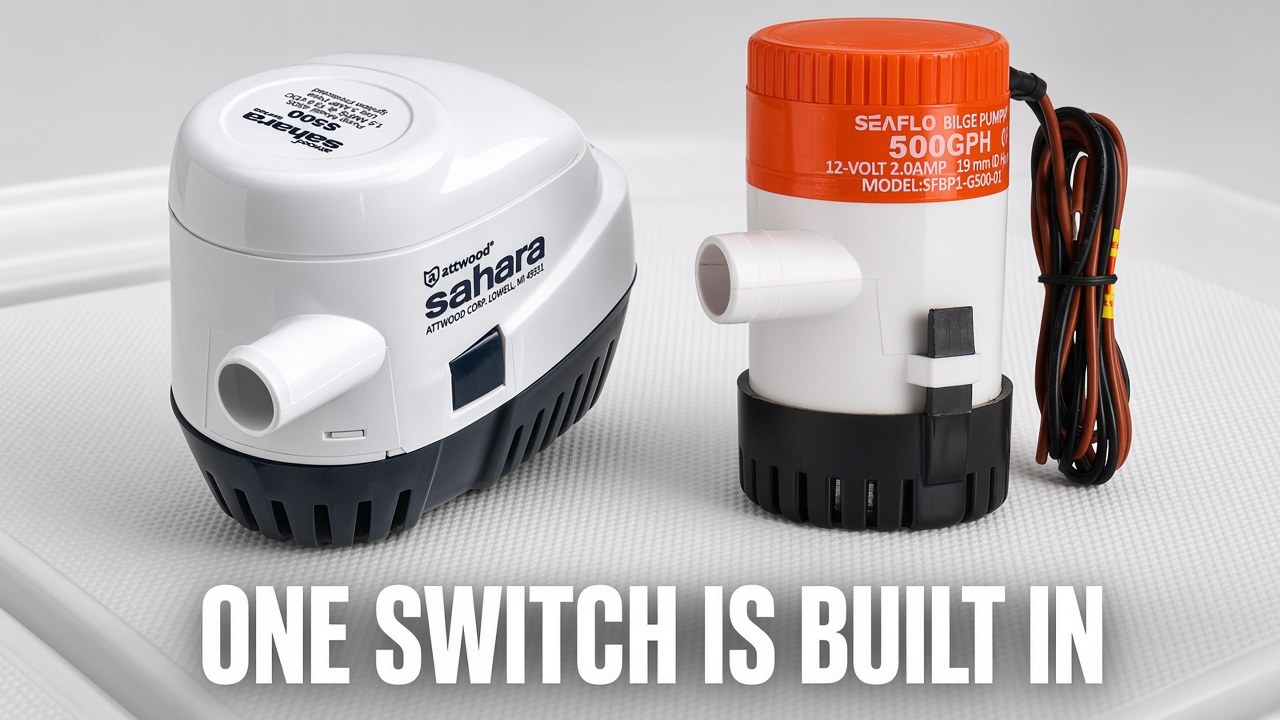
Choose Attwood model 4505-7 for the small Sahara automatic, the S500 end of that family, with a cartridge you can pull and a switch chandleries already know. Choose SEAFLO SFBP1-G500-01 for a 500 GPH automatic at a price that makes a spare reasonable. Both ratings are open flow. A high hose loop and a thin wire steal capacity from either one.
Key takeaways
- 4505-7 is the Sahara S500 automatic, not a larger Sahara.
- SFBP1-G500-01 is the SEAFLO 500 GPH automatic on this card.
- 500 GPH is an open-flow rating. Head and wire size cut it.
- Test both pumps with a bucket before the boat goes back in the water.
The Attwood Sahara S500 is the better 500 GPH automatic bilge pump if you want a name that chandleries have been installing for years and a float switch built into a housing you can still buy parts around. The SEAFLO 500 GPH automatic is the better buy if you want the same job — water out of a small bilge without you standing on the switch — at a lower price and you are willing to treat it as a pump you will replace rather than a pump you will rebuild. Both move a rated 500 gallons per hour. Neither one is a big-boat pump.
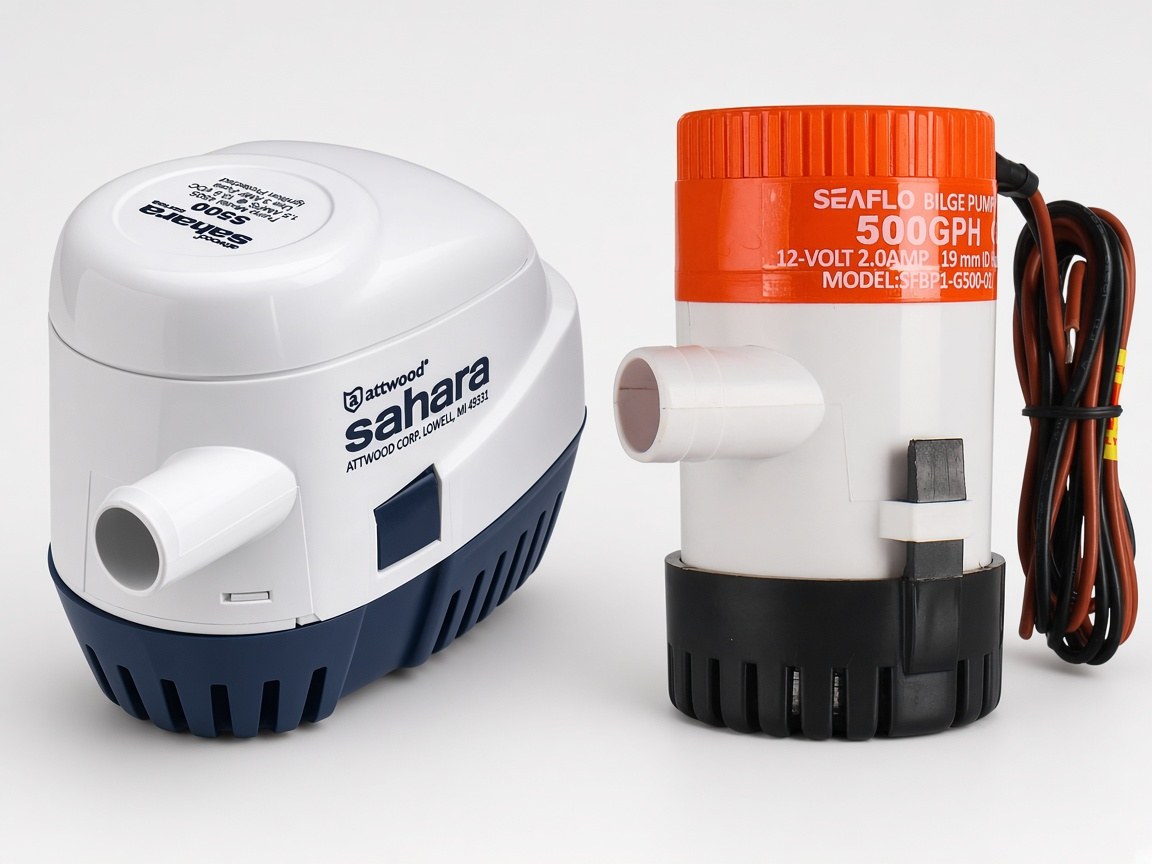
A 500 GPH automatic pump belongs in a jon boat, a skiff, a small center console, or a runabout whose bilge is a puddle and not a engine room. It is the pump that kicks on when rain or a leak puts water over the float, and shuts off when the water drops. It is not the pump you count on to save a boat that is taking a wave over the stern. Capacity, hose run, and a second manual pump matter more than the logo once the water is coming in faster than 500 gallons an hour.
What 500 GPH actually means
The rating is an open-flow number at the design voltage, measured with little or no head. A real installation has a hose, a rise to a thru-hull above the waterline, and a check so the hose does not drain back into the bilge. Every foot of rise and every tight bend steals capacity. A 500 GPH pump with a long uphill hose is not a 500 GPH pump anymore. Mount it low, keep the discharge run short, and use smooth hose of the size the maker calls for. Corrugated hose and a high loop will turn either of these pumps into a noisy disappointment.
At 12 volts on a small boat, wire size is the other thief. A long run of undersized wire drops voltage at the pump, and a bilge pump at low voltage moves less water and runs hotter. Fuse it the way the sheet says. Do not steal a tap off the stereo. The pump has to run when you are not aboard, which means it needs a connection that stays live, on a circuit you can still kill at the battery when you haul the boat.
How the automatic switch behaves
Both of these listings are automatic pumps. A float or a sensor turns the motor on when the water rises and off when it falls. The Sahara’s integrated switch is the version a lot of builders already know how to unclog. Debris in a small bilge — leaves, sand, bait bits — is the usual reason an automatic pump runs dry or refuses to start. The strainer at the base has to be clear. A pump buried in a nest of zip ties will not see the water until the water is over the floorboards.
The SEAFLO automatic uses its own built-in switch. Install it so the switch can actually rise. If you screw the pump down in a pocket where the float jams against a stringer, you have installed a manual pump by accident. Test it in the driveway with a bucket before you trust it overnight on a trailer. Pour water in. Confirm it starts. Confirm it stops. Confirm the water leaves through the thru-hull and does not pour back down the hose.
Cycling is normal. Short-cycling, where the pump kicks on every few minutes all night, means the hose is draining back or the switch is set where residual water keeps tripping it. A riser loop, or the check the installation calls for, fixes the drain-back. Moving the pump slightly, or cleaning the switch, fixes a lot of the rest. A pump that runs continuously is a stuck switch or a real leak. Find out which before you leave it.
Build and what you are paying for
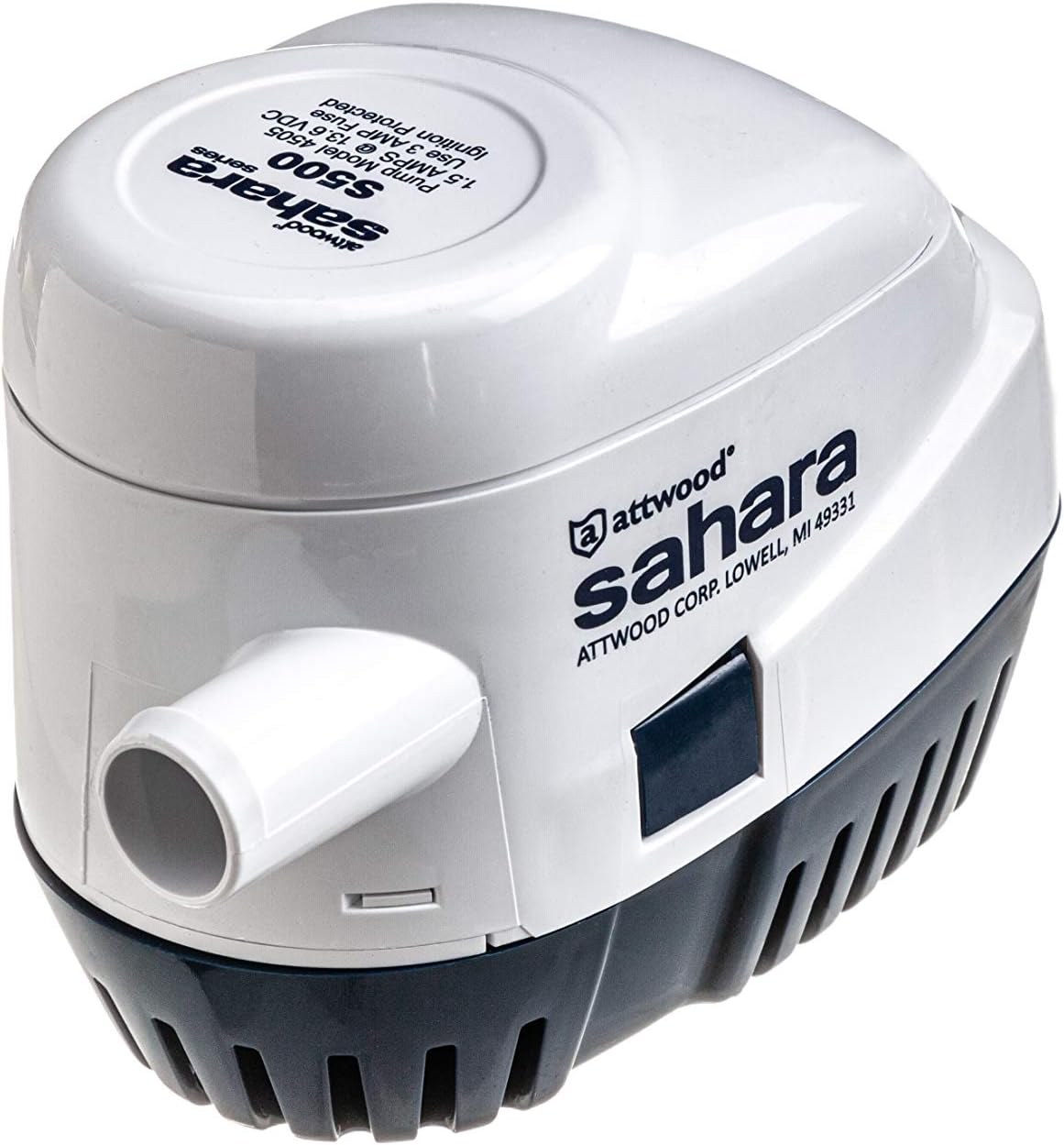
Attwood is the brand you will find in a marine catalog next to the hose and the thru-hull. The Sahara housing is a known shape, and the S500 is the small end of that family. You are paying for a pump that matches the install diagrams in a lot of boat manuals and for a cartridge design that, on this family, is meant to lift out for cleaning. That serviceability is the practical difference on a boat you keep for years.
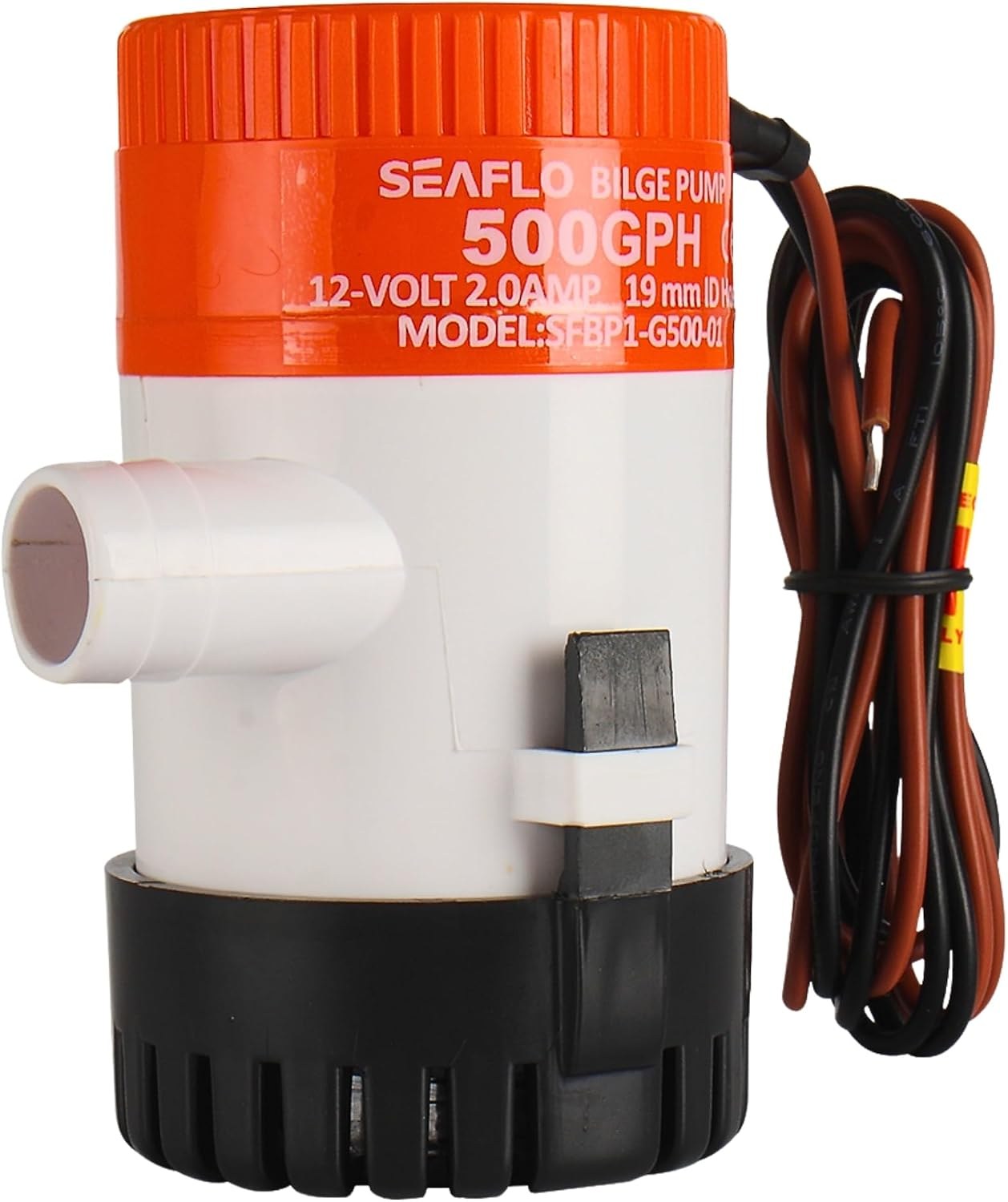
SEAFLO sells a 500 GPH automatic at a price that makes it reasonable to keep a spare in the locker. The housing is a straightforward submersible with an integrated switch. It does the job. It is not a pump with a deep replacement-cartridge ecosystem at every marina. If it dies mid-season, the rational move is often a new pump, not a rebuild. Budget for that and the SEAFLO is an honest tool. Pretend it is a twenty-year install and you will be annoyed.
Installation that keeps the pump alive
Mount the pump at the lowest point of the bilge where it can sit flat and where you can still reach it. Stainless screws, the right length, so you are not driving a fastener through the hull. A base strainer that comes off without a tool is worth more than a fancy housing you cannot clean. Hose clamps, not a friction fit. A thru-hull above the waterline, with a loop or a riser so a following sea cannot pour back in through the discharge. Sealant that belongs on a thru-hull, not whatever was in the truck.
The pump must be able to run dry for a moment without you panicking, and it must not be asked to run dry for an hour because the switch is stuck. Listen when you first power it. A rattle is debris. A hum with no water is a switch or a seized impeller. Kill it and look. Do not “let it work itself out” while you drive to the ramp.
A manual override, or a second switch you can hold on, is worth wiring even on an automatic pump. Automatic is for the night in the slip. Manual is for when you are underway and you want the bilge empty now, or when you do not trust the float. Many boats land on a three-way switch: off, automatic, manual. If your boat does not have one, add it when you add the pump.
Which boats should skip a 500
Anything with a deep bilge, an inboard, or a cockpit that can ship a real volume of water needs more pump than this. A 500 GPH unit can be a handy secondary high in a compartment. It should not be the only pump on a boat that sleeps aboard or runs an inlet. Step up in capacity, and add a manual pump you can work when the battery is dead. The comparison here is between two small automatics, not between a small automatic and a proper offshore setup.
What the clip shows
The clip is Attwood’s own Sahara Mk2 installation film: where the pump sits, how the hose runs, and how the wires land. It does not show the SEAFLO. Model 4505-7 is the small Sahara in that family. Follow the sheet in the box you opened, then use the film for the sequence.
What to buy
Buy the Attwood Sahara S500 if this pump is going into a boat you maintain and you want the cartridge-style small Sahara that chandleries already know. Buy the SEAFLO 500 GPH automatic if you need the same rated flow, the price matters, and you will keep a spare rather than a rebuild kit. Either way, size the hose, the wire, and the thru-hull as carefully as you size the pump. A good pump on a bad install moves less water than the box promised.
The rest of the bilge
A pump does not clean the bilge it sits in. Oil, leaves, and bait bits kill floats. Wipe the sump when you install either pump, and look at it again the first time you pull the boat. Vinyl and plastic around the pump age in the sun. A vinyl protectant is a different job from a bilge pump, and it does not belong in the sump. Keep it on the upholstery. Keep the pump on the fuse the sheet names.
Model 4505-7 is the small Sahara. A larger Sahara in the same family is a different pump with a different rating. SFBP1-G500-01 is the SEAFLO 500 on this card. If the outlet barb on the pump you received is not the hose size you already own, change the hose, not the rating story. A reducer stuffed under a clamp is a leak you will meet after the first trailer ride. Test both the automatic start and the shutoff with a bucket before the boat goes back in the water.
Match the model on the housing
4505-7 is the Sahara S500 end of Attwood’s automatic line. A box that says S750, S800, or S1200 is a bigger pump with a different model, even if the housing looks related in a thumbnail. SFBP1-G500-01 is the SEAFLO automatic rated 500 GPH. A SEAFLO manual pump, or a 1100, is not this card. The rating is open flow. Your hose rise will be less. That is true of both. It is not a reason to buy the wrong model and hope the number on a different box applies.
Wire the automatic lead so the pump can run when you are gone, on a fuse, and so you can kill it at the battery when the boat is stored. Do not tap the stereo. Pour a bucket in the driveway. If it does not start, the float is jammed or the fuse is open. If it does not stop, the hose is draining back or the switch is stuck. Fix that before you call the pump a lemon. Then look at the thru-hull and make sure the water left the boat. A 500 GPH rating with a high loop and a skinny wire is no longer 500 gallons an hour. Short hose, right wire, low mount. That is the install that matches the number on the box.
Frequently asked questions
Will a 500 GPH pump keep up with a leaking boat?
It will keep up with rain, spray, and a slow seep. It will not keep up with a failed through-hull or a wave that fills the cockpit. If the inflow is faster than the pump, you need more capacity and you need to find the leak. Do not shop for a bigger logo on the same 500 GPH rating and call it a safety upgrade.
Do I still need a manual pump?
Yes, if the boat is anything you cannot easily beach. An automatic pump needs power. A manual pump needs you. Boats that leave the dock should have both, even when the automatic is the one that runs all week in the slip.
Why does the pump short-cycle?
The discharge hose is usually draining back into the bilge, so the switch sees the same water again. Raise a loop in the hose or fit the check the maker allows. Also clean the switch. Debris holds a float up or down.
Can I run it off the stereo circuit?
No. The pump has to be able to run when you are gone, on a fused lead that does not die with the house switch. It also has to be disconnectable at the battery when you store the boat. A stereo tap fails both tests.
Are these pumps interchangeable in the same hose?
Only if the outlet size matches the hose you already have. Check the outlet diameter on the sheet before you assume a 500 from one brand drops into another brand’s plumbing. A reducer stuffed in with a clamp is a leak you will meet later.
How do I test it before I trust it?
In the driveway, with a bucket. Confirm it starts as the water rises, stops when the water falls, and sends the water out the thru-hull. Then check the bilge in the morning the first night it sits in the slip. A test you skip is the night the float was jammed.